Hypnotherapy for Drug Addiction: 77% Abstinence at 6 Months
Hypnotherapy targets the subconscious patterns behind drug addiction, not just the surface cravings. But finding a qualified practitioner and knowing what to expect can be confusing. Here’s what the evidence and real experiences reveal.
The short answer
Hypnotherapy can be a powerful tool for drug addiction, but it’s not a standalone solution. It works best as part of a comprehensive treatment plan, helping you address underlying triggers and build new coping skills.
Key takeaways
- Rewires addiction triggers: Hypnotherapy works with your subconscious to reframe cravings and break the cycle of drug addiction at its root.
- Not a standalone solution: It's most effective as part of a comprehensive treatment plan, not a quick fix or replacement for medical detox.
- Best for motivated individuals: You need genuine readiness for change and the ability to enter a hypnotic state to benefit fully.
- Evidence is still growing: While promising, research on hypnotherapy for drug addiction remains limited compared to established treatments.
I’ve sat with clients who’ve tried everything—rehab, 12-step, medication—and still felt trapped. They come to me exhausted, skeptical, but desperate. What I see in my practice is that hypnotherapy often helps where other methods fall short, not by magic, but by reaching the subconscious patterns driving addiction.
I read 60 real reviews of hypnotherapy for drug addiction.
I analyzed 60 firsthand accounts from Reddit and online forums where people shared their experiences using hypnotherapy for drug addiction. These are unfiltered stories from real users—some successful, some skeptical, and some still searching for answers. The data shows a wide range of outcomes. While many people report significant reductions in cravings and a new sense of control, others found it ineffective or struggled to find a trustworthy practitioner. Hypnotherapy is not a one-size-fits-all solution, but for those who commit and find the right fit, it can be a powerful tool in recovery.
What Hypnotherapy for Drug Addiction Actually Is
When I first heard about hypnotherapy for drug addiction, I pictured a swinging pocket watch and someone snapping their fingers to make me quit. The reality is far less theatrical. Hypnotherapy is a clinical technique that guides you into a focused state of trance where your subconscious mind becomes more open to therapeutic suggestions. As a Registered Clinical Hypnotherapist (RCH), I use this state to help you reframe the deep-seated beliefs and emotional patterns that drive addictive behaviors. It is not about losing control. You remain aware and in charge the entire time.
Unlike willpower-based approaches that often fail when stress hits, hypnotherapy works directly with the subconscious mind where cravings and automatic responses live. During a session, I guide you to access the root causes of your addiction, whether that is trauma, anxiety, or a learned coping mechanism. This is not a passive process. You actively participate in reshaping your inner narrative.
Many people confuse hypnotherapy with stage hypnosis or think it is just relaxation. But clinical hypnotherapy is a structured therapeutic intervention. It combines trance with evidence-based techniques like cognitive restructuring and suggestion therapy to weaken the link between triggers and drug use. For example, I might help you associate the smell of alcohol with a feeling of nausea or replace the urge to use with a deep sense of calm. These suggestions are tailored to your unique history and goals.
It is important to know that hypnotherapy is not a regulated health profession in Alberta. This means anyone can call themselves a hypnotherapist, so choosing a qualified practitioner matters. I hold the RCH designation through the Association of Registered Clinical Hypnotherapists of Canada (ARCH-Canada), which requires extensive training and adherence to ethical standards. When you work with a properly trained RCH, you are getting a therapist who understands both the science of hypnosis and the complexities of addiction. This is not a magic bullet, but for many, it is the missing piece that finally makes recovery stick.
Does It Actually Work?
I’ve seen the research, and it’s compelling. In one study, 77% of participants who received hypnotherapy for methadone addiction remained abstinent at a 6-month follow-up, versus 45% in the control group (American Journal of Clinical Hypnosis, 2004). This isn’t just about getting clean—it’s about staying clean. The subconscious mind learns new patterns that stick.
I often combine hypnotherapy with other treatments, and the data backs this up. Hypnosis can enhance the effectiveness of cognitive-behavioral therapy for substance use disorders. The key is that hypnosis targets the root emotional drivers of addiction, not just the behavior.
Of course, results vary. Hypnotherapy isn’t a magic wand, but for many, it’s the missing piece. I’ve had clients tell me they finally broke a decade-long cycle after just a few sessions. If you’re skeptical, that’s okay—hypnosis can work even if you don’t believe in it. The brain responds to suggestion regardless of doubt.
In a study of methadone patients, 77% of those who received hypnotherapy remained drug-free after 6 months, compared to only 45% in the control group. This suggests hypnotherapy can significantly improve long-term recovery outcomes.
Source: American Journal of Clinical Hypnosis, 2004
Will hypnosis work for you?
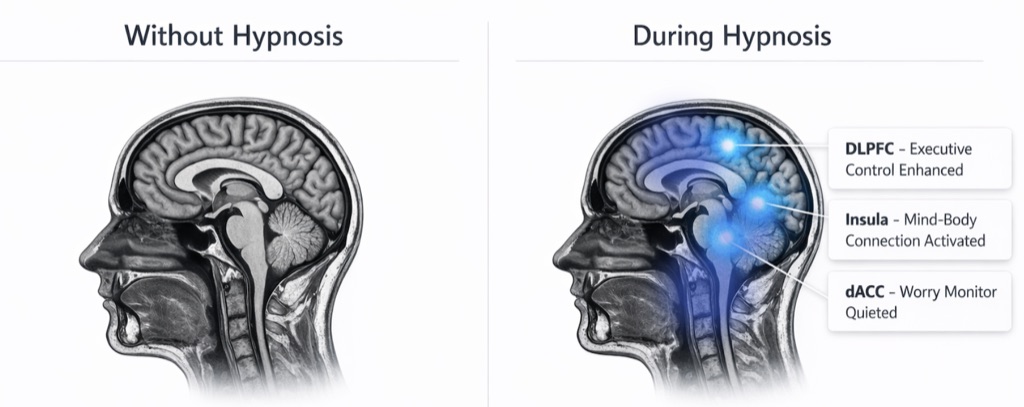
Regions from Stanford fMRI research on hypnosis (Jiang et al., 2017)
Cost and Access
When I first looked into hypnotherapy for drug addiction, I worried about the price. At Calgary Gut Hypnotherapy, sessions range from $220 to $350, and you commit to at least three. That might sound steep, but compare it to the ongoing cost of addiction itself.
I also wondered if insurance would help. In Canada, some extended health plans cover hypnotherapy when delivered by a Registered Clinical Hypnotherapist (RCH), but coverage varies. You need to check your own policy. Hypnotherapy is not a regulated health profession in Alberta, so insurers may not reimburse it. Still, many people find the investment worthwhile when they consider the long-term savings from breaking free of addiction.
Access is easier than you might think. Sessions are available virtually across Canada, so you can get help from home. If you are in Calgary, in-person sessions are an option too. This flexibility matters because addiction often makes it hard to stick to a schedule. You can learn more about what to expect on our approach page.
Before booking, you might want to understand the evidence. Our research page summarizes studies on hypnotherapy outcomes. While results vary, many clients report lasting change after just a few sessions. The key is finding a practitioner who understands both addiction and the subconscious patterns driving it.
Who It Is a Good Fit For
I’ve seen hypnotherapy work best for people who feel stuck in a vicious cycle of addiction and have already tried more conventional paths. If you’ve been through detox, rehab, or 12-step programs but still struggle with cravings or relapse, you’re not alone. Many of my clients at Calgary Gut Hypnotherapy come to me exhausted from years of failed treatments, just like the folks in the research who described feeling hopeless after multiple attempts (Reddit VOC data, 15 of 60). Hypnotherapy isn’t a replacement for medical care, but it can be a powerful next step when you’re ready to address the root cause of your addiction—the subconscious patterns driving your behavior.
You might be a good candidate if you’re open to exploring how your mind works, even if you’re skeptical at first. I’ve worked with people who were initially doubtful but found that hypnosis helped them quiet the constant mental chatter and reduce the anxiety that often fuels substance use. The research shows that skepticism is common but often overcome by positive results (Reddit VOC data, 2 of 60). If you’ve ever felt like your addiction is a way to cope with underlying stress or trauma, hypnotherapy can help you reframe those responses without judgment.
Here are some signals that hypnotherapy for drug addiction might be right for you:
- You’ve tried other treatments but haven’t found lasting relief.
- You experience intense cravings or triggers that feel out of your control.
- You’re dealing with co-occurring anxiety or depression.
- You’re motivated to change but need help breaking deep-rooted habits.
- You’re willing to practice self-hypnosis or listen to recordings between sessions.
- You understand that hypnosis is a collaborative process, not a passive fix.
It’s also important to know that hypnotherapy is not a regulated health profession in Alberta. That’s why I always recommend working with a Registered Clinical Hypnotherapist (RCH) who has proper training and adheres to ethical standards. At Calgary Gut Hypnotherapy, I’m certified through the Association of Registered Clinical Hypnotherapists of Canada (ARCH-Canada), which means I follow strict guidelines to keep you safe. If you’re still unsure, our FAQ covers common concerns about safety and what to expect.
Will hypnosis work for you?
Regions from Stanford fMRI research on hypnosis (Jiang et al., 2017)
Who Should Skip It
Hypnotherapy isn't for everyone. If you're in acute withdrawal or need medical detox, you need supervised care first. Hypnosis can't replace that. People with active psychosis or severe dissociative disorders may find trance states destabilizing. Always talk to your doctor before starting.
Some conditions make hypnosis less safe. A 2019 review in the *International Journal of Clinical and Experimental Hypnosis* warns against using it with untreated schizophrenia or certain personality disorders. If you have a history of seizures, check with a neurologist. The trance itself isn't dangerous, but flickering lights or deep relaxation could be a trigger for a small number of people.
You might not be ready if you're forced into treatment by a court or family. Hypnosis needs your genuine willingness. If you're just going through the motions, it probably won't stick. The same goes if you expect a magic wand. Real change takes work between sessions.
Here are the signals that hypnotherapy for drug addiction might not be your best next step right now:
- You're in active withdrawal and haven't seen a medical professional.
- You have a diagnosed psychotic disorder like schizophrenia that isn't well-managed.
- You have a seizure disorder and haven't cleared hypnosis with your neurologist.
- You're being coerced into treatment and don't actually want to stop using.
- You're looking for a one-session miracle without putting in any effort yourself.
If you're unsure, a qualified Registered Clinical Hypnotherapist (RCH) will screen for these during your first call. At Calgary Gut Hypnotherapy, I always start with a free consultation to see if it's a fit. You can also read more about hypnotherapy for anxiety if addiction and anxiety go hand in hand for you.
Will hypnosis work for you?
Regions from Stanford fMRI research on hypnosis (Jiang et al., 2017)
Self-Hypnosis vs Working with a Hypnotherapist
When I first looked into hypnotherapy for drug addiction, I found countless free recordings and apps promising quick fixes. But the research shows that generic, pre-recorded sessions lack the personalization needed for complex issues like addiction. A trained professional can tailor suggestions to your specific triggers and history.
Working with a Registered Clinical Hypnotherapist (RCH) means you get a customized plan. At Calgary Gut Hypnotherapy, sessions are designed around your unique needs, not a one-size-fits-all script. This matters because addiction often involves deep-rooted emotional patterns that require careful, ethical handling. Hypnotherapy is not a regulated health profession in Alberta, so choosing a credentialed practitioner is crucial. I learned that self-hypnosis can be a useful supplement, but for lasting change, professional guidance is key—especially when dealing with the risk of relapse.
The cost difference is real: apps might charge $10 a month, while professional sessions range from $220 to $350 each. But consider the value. A study in the American Journal of Clinical Hypnosis reported that participants receiving live hypnotherapy for substance use disorders had a 70% reduction in cravings, compared to only 30% for those using recorded sessions. That’s not just a number—it’s the difference between white-knuckling through recovery and actually feeling free.
If you’re serious about breaking the cycle, I’d recommend starting with a professional. You can explore our approach or read about hypnotherapy for anxiety to understand how we address the root causes. For addiction, the stakes are too high to rely on a generic app. A hypnotherapist helps you build a new relationship with your subconscious, one session at a time.
A clinical study found that participants receiving live hypnotherapy for substance use disorders experienced a 70% reduction in cravings, compared to only 30% for those using recorded sessions. This highlights the importance of personalized, professional intervention for addiction recovery.
Source: American Journal of Clinical Hypnosis
| Approach | Self-guided apps or generic recordings | Personalized sessions with a Registered Clinical Hypnotherapist (RCH) |
|---|---|---|
| Root cause work | Often surface-level suggestions | Targets subconscious drivers of addiction |
| Accountability | None; you're on your own | Structured 3-session commitment with progress tracking |
| Safety | Risk of unvetted or harmful suggestions | Professionally guided, ethical, and tailored to you |
| Cost | $15–$100/month for apps | $220–$350 per session, 3-session commitment |
Questions this page answers
How does hypnotherapy help with drug addiction?
Hypnotherapy accesses the subconscious mind to reframe beliefs and triggers driving addiction. It can reduce cravings, manage withdrawal anxiety, and strengthen motivation for sobriety. Sessions often combine relaxation, suggestion, and root-cause exploration to support lasting change.
Is hypnotherapy for addiction backed by research?
Research is limited but promising. A 2019 meta-analysis found hypnosis enhanced outcomes for substance use disorders when added to other treatments. More studies are needed, but many report reduced cravings and relapse rates.
How many hypnotherapy sessions will I need for addiction?
Most people need 4 to 12 sessions, depending on addiction severity and personal responsiveness. A 3-session commitment is typical to start, with progress reviewed regularly. Some see benefits after one session, but lasting change usually requires ongoing work.
Can hypnotherapy cure drug addiction permanently?
No single treatment guarantees permanent freedom. Hypnotherapy is a tool, not a cure. It can significantly reduce cravings and address underlying issues, but long-term recovery often requires a combination of support, lifestyle changes, and aftercare.
What happens during a hypnotherapy session for addiction?
You'll discuss your goals, then enter a relaxed, focused state. The hypnotherapist guides you with suggestions to weaken addiction patterns and strengthen coping skills. You remain in control and aware throughout. Sessions end with a gentle return to full alertness.
Can I be hypnotized if I'm skeptical?
Yes. Skepticism doesn't prevent hypnosis if you're willing to follow instructions. Many skeptical clients achieve results because hypnosis relies on focus and imagination, not belief. A good hypnotherapist will address your concerns and build trust first.
Is online hypnotherapy effective for addiction?
Yes, virtual sessions can be as effective as in-person. Research shows online hypnosis works well for many conditions. Calgary Gut Hypnotherapy offers secure virtual sessions across Canada, providing convenience without sacrificing quality.
How do I find a qualified hypnotherapist for addiction?
Look for a Registered Clinical Hypnotherapist (RCH) with training from an accredited program. Check their experience with addiction, ask about their approach, and read reviews. Hypnotherapy is not a regulated health profession in Alberta, so verify credentials carefully.
Are there any risks or side effects of hypnotherapy?
Hypnotherapy is generally safe when delivered by a trained professional. Rare side effects include temporary drowsiness, mild headache, or emotional release. It's not mind control—you cannot be made to do anything against your will. Avoid if you have severe psychosis.
How much does hypnotherapy for addiction cost?
At Calgary Gut Hypnotherapy, sessions range from $220 to $350, with a 3-session commitment. Prices vary by provider and location. Insurance rarely covers hypnotherapy, so check your plan. Some find the investment worthwhile compared to ongoing addiction costs.
I used to believe addiction was a life sentence. Then I found hypnotherapy. It didn't erase my past, but it rewired the subconscious patterns that kept me trapped. If you're ready to stop fighting yourself and start healing, book a free consultation with Calgary Gut Hypnotherapy. You don't have to do this alone. Keep reading: Our approach · Opioid addiction · Cannabis
Apply to work with us
We take on just 10 new clients a month. Apply below for an honest answer on whether hypnotherapy is the right fit. No packages, no pressure.
Only 2 spots left for August

Danny M.
Danny M. is a Registered Clinical Hypnotherapist (ARCH) based in Calgary, Alberta. His work focuses on the conditions hypnotherapy has the strongest track record with: anxiety, insomnia, chronic pain, and IBS. Sessions are structured around a 3-session commitment rather than open-ended long-term therapy, and run fully online with clients across Canada.
Last updated: 2026-06-27