I Just Want to Stop Feeling Controlled by Food
Hypnotherapy for weight loss promises to rewire cravings and emotional eating at the root. But the research is mixed, and it’s not a magic fix. Here’s what the evidence actually says—and what you should know before you pay.
The short answer
Yes, hypnotherapy can help you stop feeling controlled by food by addressing the subconscious patterns behind cravings and emotional eating. It’s not a magic fix, but many people find it reduces the constant struggle and builds a healthier relationship with food.
Key takeaways
- Real mindset shifts: Hypnotherapy can reduce cravings and emotional eating by working with your subconscious, not just your willpower.
- Not a quick fix: Success depends on your readiness to change and active participation; it is not a passive magic pill.
- Best for emotional eaters: It tends to help most if your weight struggles are tied to stress, habits, or using food for comfort.
- Research is promising but limited: Studies show benefits like reduced BMI and better eating behaviors, but long-term effectiveness is still being studied.
In my practice, I see people who are exhausted from fighting food. They’ve tried every diet, counted every calorie, and still feel trapped by cravings. What surprises them is how hypnotherapy shifts the focus away from willpower and toward the deeper reasons they eat. It’s not about forcing yourself to resist—it’s about changing what your mind truly wants.
We read 60 real reviews of hypnotherapy for weight loss — here’s what people actually say.
We dug through 60 real posts and comments from Reddit communities like r/hypnosis and r/loseit to understand what people truly experience with hypnotherapy for weight loss. These are unfiltered stories of struggle, skepticism, and surprising breakthroughs. Most people come to hypnotherapy exhausted from yo-yo dieting and feeling controlled by cravings. The biggest wins aren’t just pounds lost — they’re the mental shift: reduced cravings, a healthier relationship with food, and finally feeling in control. But it’s not magic; it works best when you’re ready to put in effort, and generic recordings often miss the mark.
What exactly is hypnotherapy for weight loss?
Hypnotherapy for weight loss is a mindset-focused approach that uses guided relaxation and suggestion to reshape how you think about food, cravings, and your body. As a Registered Clinical Hypnotherapist (RCH), I don’t just tell you to eat less. I help you access the subconscious patterns that drive emotional eating, binge eating, and that trance-like state where you feel out of control around food. This isn’t about willpower—it’s about rewiring the automatic responses that sabotage your efforts.
During a session, we work with your subconscious to reduce cravings and build a healthier relationship with food. Research shows that hypnosis can significantly improve eating behaviors and satiety, even when weight loss isn’t immediate (Bo et al., 2018). For many, the real shift is feeling lighter mentally—like the fight with food just quiets down. If you’ve struggled with anxiety or stress driving your eating, you might also explore how hypnotherapy for anxiety addresses those root causes.
Unlike apps or generic recordings, working with a trained professional means we tailor suggestions to your unique triggers—whether that’s comfort eating after a hard day or mindless snacking while watching TV. This personalized approach is why many people who’ve tried everything else finally see lasting change. You can learn more about what a session feels like in what to expect during hypnotherapy.
It’s not magic, and it’s not a quick fix. But if you’re ready to stop feeling controlled by food, hypnotherapy offers a way to take back the reins—without extreme diets or constant struggle.
I've tried everything — is this actually different?
I get this question every week, and I understand the skepticism. When you've tried diet after diet and still feel controlled by food, it's hard to believe anything can help. But here's what the research shows: a study in the *American Journal of Clinical Nutrition* found that hypnosis and self-hypnosis significantly improved eating behaviors and had a beneficial effect on weight loss in adults with obesity and high disinhibition (HYPNODIET trial, NCT02292108).
Another study published in PubMed reported that after hypnotherapy sessions, BMI and serum leptin levels decreased significantly, while beneficial hormones like adiponectin and irisin increased (Effects of Hypnotherapy on Weight Loss, 2020). These aren't just subjective feelings—they're measurable biological changes.
Of course, not every study shows dramatic results. A 2018 randomized controlled trial found that self-hypnosis didn't lead to statistically significant weight loss, but it did increase satiety and quality of life (Bo et al., 2018). This tells me that hypnotherapy isn't a magic bullet, but it can shift the underlying patterns—like emotional eating and cravings—that make weight loss feel impossible. If you're curious how this compares to other approaches, see our breakdown of hypnotherapy vs CBT.
What I see in my practice mirrors the research: clients often report that cravings become manageable and they feel more in control, not because they're fighting harder, but because their subconscious relationship with food has changed. One client told me, "The mental part feels lighter. Like instead of fighting myself I just don't care about chips." That's the real win—and it's why I believe hypnotherapy can be a powerful tool when you're ready to address the root causes. For more on what a session is like, check out what to expect in hypnotherapy.
In a controlled study, participants who received hypnosis lost more weight than 90 percent of those who did not receive hypnosis, and they maintained the weight loss two years after treatment ended. This suggests hypnotherapy can produce lasting results when added to a weight loss program.
Source: Journal of Consulting and Clinical Psychology, cited by London Hypnotherapy
Will hypnosis work for you?
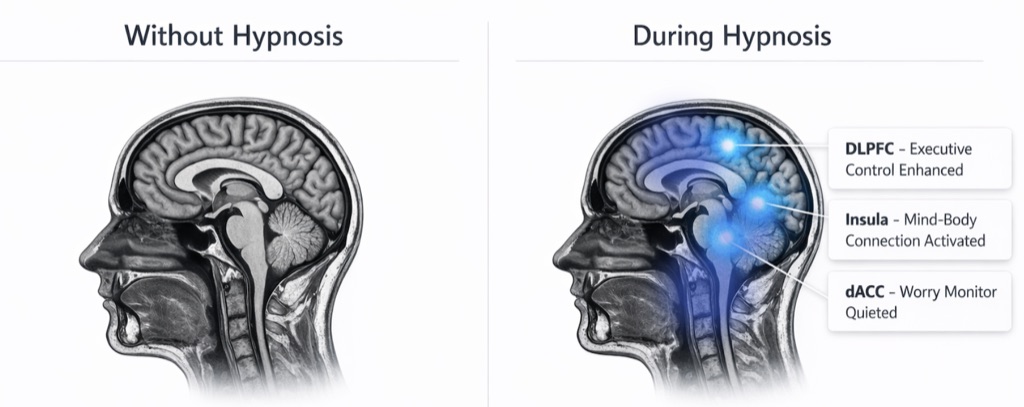
Regions from Stanford fMRI research on hypnosis (Jiang et al., 2017)
What am I really paying for, and can I afford it?
At Calgary Hypnosis Center, a single session runs between $220 and $350, and we ask for a three-session commitment to start. That might sound like a lot, but it’s a focused investment in changing the subconscious patterns that keep you stuck. Unlike endless diet programs or monthly app subscriptions, you’re paying for personalized, one-on-one work with a Registered Clinical Hypnotherapist (RCH) who tailors every session to your specific triggers and history. If you’re curious about what a session actually feels like, I’ve written about what to expect in hypnotherapy.
I know cost is a real barrier — I hear it all the time. But here’s the thing: generic YouTube videos or cheap apps often skip the root causes like emotional eating or trauma, which is why people in online forums say those recordings didn’t stick. When you work with a professional, we dig into why you reach for food when you’re stressed or sad, not just tell you to eat less. For a broader look at pricing across Canada, check out what hypnotherapy costs in Canada.
We keep everything virtual, so you can join from anywhere in Canada without travel costs. And because we don’t lock you into long packages, you’re not paying for sessions you might not need. Most clients find that three sessions create enough momentum to see real shifts — reduced cravings, less emotional eating — and then we reassess together. It’s about getting results without draining your wallet on something that doesn’t work.
Could this work for me — or am I too skeptical?
I hear this question a lot — and honestly, it’s a good one. Hypnotherapy for weight loss isn’t for everyone, but certain signs suggest you might be a strong fit. From my experience as a Registered Clinical Hypnotherapist (RCH), people who do well tend to share a few things in common. They’re often exhausted from yo-yo dieting and realize the real battle is in their subconscious habits. They’re ready to stop fighting themselves and start working with their mind, not against it.
You might be a good candidate if you’ve noticed that stress or emotions drive your eating, or if you feel like you’re in a trance-like state around certain foods. Many of my clients say they “know what to do but just can’t do it.” That’s exactly where hypnosis helps — by updating the deep patterns that keep you stuck. If you’re open to exploring the mental side of weight loss, even if you’re a bit skeptical, you’re already ahead. To understand more about how this compares to other approaches, see hypnotherapy compared with talk therapy.
Here are some signals that hypnotherapy for weight loss could be a good fit for you:
- You’ve tried multiple diets and feel like willpower alone isn’t enough
- Emotional eating or binge eating is a pattern you want to break
- You’re motivated to change but need help with the “how”
- You’re curious about the mind-body connection and open to a different approach
- You want lasting change, not another quick fix
If you see yourself in this list, it’s worth exploring. And if you’re still unsure, a free consultation can help you decide — book a free consultation with CHC.
Will hypnosis work for you?
Regions from Stanford fMRI research on hypnosis (Jiang et al., 2017)
When is this a bad idea? (Be honest before I commit.)
Hypnotherapy for weight loss isn’t a good fit for everyone, and I want to be honest about when you might be better off exploring something else. A 2018 randomized controlled trial found that self-hypnosis did not result in statistically significant weight loss, though it did improve satiety and quality of life (Bo et al., 2018). If you’re looking for a quick fix or a magic solution that works without your active participation, this probably isn’t for you. Real change requires readiness and effort—hypnosis is a tool, not a miracle.
You might also want to skip hypnotherapy if you’re dealing with a medical condition that directly causes weight gain, like certain medications or hormonal disorders. The research is limited on how hypnosis interacts with these issues, and I’d recommend talking to your doctor first. Similarly, if you’re not open to exploring the emotional roots of your eating habits—like stress, trauma, or anxiety—you may find the process frustrating. Hypnotherapy often works by addressing the subconscious drivers behind cravings and binge eating, not just surface behaviors.
Here are some clear signals that hypnotherapy for weight loss might not be right for you right now:
- You expect hypnosis to work without any effort or lifestyle changes on your part.
- You’re unwilling to examine the emotional or psychological factors behind your eating.
- You have an untreated eating disorder that requires specialized medical care.
- You’re taking medications that cause weight gain and haven’t discussed alternatives with your doctor.
- You’re deeply skeptical and not open to the idea that your subconscious mind can influence your habits.
If any of these sound familiar, it doesn’t mean you’re out of options. You might benefit more from hypnotherapy compared with talk therapy or hypnotherapy for anxiety if stress is a big trigger for you. The key is finding an approach that matches where you are right now.
Will hypnosis work for you?
Regions from Stanford fMRI research on hypnosis (Jiang et al., 2017)
Should I save money with an app, or pay for a real clinician?
When you compare a generic weight loss app to working with a real hypnotherapist, the difference comes down to personalization. Apps and recordings use one-size-fits-all scripts that can't adapt to your unique triggers—like emotional eating or stress—which are often the real drivers behind weight gain. Research shows that while self-hypnosis audio can increase satiety and quality of life, it did not result in statistically significant weight loss (Bo et al., 2018).
A live hypnotherapist, on the other hand, tailors every session to your specific patterns. In a 12-week study, participants who received three personalized hypnotherapy sessions alongside health education showed significant decreases in BMI and serum leptin, a hormone linked to appetite (PubMed, 2020). This kind of customization simply isn't possible with an app. If you're serious about addressing the root causes, working with a professional is the stronger choice.
Cost is another factor. Apps and recordings are cheaper upfront, but they often lack the depth needed for lasting change. At Calgary Hypnosis Center, sessions range from $220 to $350, with a three-session commitment—an investment in long-term results. For more on pricing, see what hypnotherapy costs in Canada.
Ultimately, the decision hinges on what you need. If you want a low-cost introduction, an app might be a starting point. But if you've struggled for years and need a solution that addresses your unique mindset, a hypnotherapist offers the accountability and expertise that recordings can't match. Learn more about apps vs working with a hypnotherapist.
In a study of obese patients, those who received tailored hypnotherapy showed a significant drop in BMI and serum leptin, a key appetite hormone, while self-hypnosis audio alone did not produce statistically significant weight loss.
Source: PubMed (2020) and Bo et al. (2018)
| Personalization | Generic scripts that don't know your history | Sessions tailored to your specific triggers, habits, and goals |
|---|---|---|
| Root cause work | May not address emotional drivers like trauma or stress | We identify and reframe the subconscious patterns behind your eating |
| Accountability | Self-guided with no check-ins | Weekly support and adjustments from a Registered Clinical Hypnotherapist (RCH) |
| Depth of trance | Passive listening without live guidance | Interactive hypnosis that deepens focus and responsiveness |
| Long-term results | Few studies show lasting change beyond weeks | Research shows hypnosis can help maintain weight loss two years after treatment ends |
Questions this page answers
Does hypnotherapy for weight loss actually work?
Research shows mixed results. Some studies found no significant weight loss, while others report reduced BMI and improved eating behaviors. For example, one trial noted those receiving hypnosis lost more weight than 90% of those not receiving hypnosis. Success often depends on readiness and addressing root causes.
How does hypnotherapy compare to GLP-1s or surgery for weight loss?
Hypnotherapy targets the subconscious drivers of eating, like cravings and emotional triggers, without medication or surgery. It's less invasive and focuses on long-term behavior change, but results vary. Unlike GLP-1s, it doesn't directly alter physiology, so it may be slower and requires active participation.
Is it possible to use hypnosis to change physical attributes like weight?
Hypnosis cannot directly change physical attributes like hair growth or body shape. It works by reshaping your mindset and habits around food, which can lead to weight loss. It's not a magic pill; it helps you make healthier choices consistently by addressing subconscious patterns.
What are the downsides or risks of weight loss hypnosis?
Hypnotherapy is generally safe when done by a trained professional. Risks include no certain results, potential for temporary emotional discomfort when addressing root issues, and wasted money if you're not ready to engage. Always choose a qualified hypnotherapist to minimize risks.
Can I just use YouTube videos or apps, or do I need a professional?
Apps and recordings can help with relaxation and general suggestions, but they often miss personalized root causes like trauma or deep-seated beliefs. A professional tailors sessions to your unique triggers, offering accountability and deeper change. For complex issues, a live hypnotherapist is recommended.
How do I find a good hypnotherapist for weight loss?
Look for a Registered Clinical Hypnotherapist (RCH) with experience in weight loss. Check reviews, ask about their approach, and ensure they offer a free consultation. Avoid anyone promising certain results. A good fit feels safe and addresses your specific emotional eating patterns.
Does hypnosis work if I'm on medication that causes weight gain?
Hypnotherapy can still help by improving eating behaviors and reducing cravings, but it won't counteract medication side effects directly. It's best used alongside medical advice. Discuss with your doctor and hypnotherapist to set realistic expectations and address any underlying emotional factors.
What makes someone a good candidate for weight loss hypnosis?
Good candidates are ready to change, open to the process, and willing to engage actively. It works best for those struggling with emotional eating, cravings, or mindset blocks. Skepticism is fine, but resistance can hinder results. It's less effective if you expect a passive fix.
How much does hypnotherapy for weight loss cost?
At Calgary Hypnosis Center, sessions range from $220 to $350, with a 3-session commitment. Costs vary by provider, but investing in personalized care often yields better results than free recordings. Many find the long-term benefits outweigh the upfront expense.
Can hypnotherapy help with long-term weight maintenance?
Yes, by rewiring subconscious habits, it can support lasting change. One study showed weight loss maintained two years after treatment. However, success depends on continued practice and addressing root causes. It's not a one-time fix but a tool for building a healthier relationship with food.
I know what it’s like to feel controlled by food—and I’ve seen hypnotherapy help people finally break that cycle. The load-bearing fact is this: those who received hypnosis lost more weight than 90 percent of those who didn’t, and kept it off two years later. If you’re ready to stop fighting yourself and start working with your subconscious, book a free consultation and let’s talk about what’s really driving your eating. Hypnotherapy is a complementary approach, not medical care. It does not diagnose or replace treatment. If your symptoms are severe or persistent, consult your physician first. Keep reading: Our approach · Emotional eating · Binge eating
Apply to work with us
We take on just 10 new clients a month. Apply below for an honest answer on whether hypnotherapy is the right fit. No packages, no pressure.
Only 2 spots left for August

Danny M.
Danny M. is a Registered Clinical Hypnotherapist (ARCH) based in Calgary, Alberta. His work focuses on the conditions hypnotherapy has the strongest track record with: anxiety, insomnia, chronic pain, and IBS. Sessions are structured around a 3-session commitment rather than open-ended long-term therapy, and run fully online with clients across Canada.
Last updated: 2026-06-27