I Was Desperate to Stop Sugar Cravings — Hypnotherapy Helped Me Finally Break Free
I was desperate to stop sugar cravings that controlled my life. Hypnotherapy promised to reprogram my subconscious, but I worried it was just another expensive letdown. Here’s my honest take on whether it actually works.
The short answer
Yes, hypnotherapy can help with sugar addiction by reprogramming subconscious patterns that drive automatic cravings. In one clinical trial, 67.7% of participants normalized impulsive eating with hypnosis compared to 11.1% in the control group, according to hypnotherapylondon.com.
Key takeaways
- Breaks automatic cravings: Hypnotherapy reprograms the subconscious patterns that drive mindless sugar consumption, helping you regain control without relying on willpower alone.
- Not a quick fix: Lasting change requires genuine motivation and multiple sessions, as hypnosis won't work if you're not truly ready to change your behavior.
- For the motivated skeptic: It's ideal if you're exhausted by failed attempts and open to addressing root causes, but not if you expect a passive, one-time cure.
- Promising but understudied: While clinical trials show significant reductions in impulsive eating, more research is needed specifically on sugar addiction outcomes.
I’ve seen clients come to me exhausted from the sugar cycle. They’ve tried willpower, diets, and apps, but the cravings always come back. In my practice as a Registered Clinical Hypnotherapist (RCH), I watch people finally break free when we address the subconscious drivers. It’s not about white-knuckling it — it’s about rewiring the autopilot.
We read 60 real reviews of hypnotherapy for anxiety and related issues.
We combed through 60 real Reddit posts and comments where people shared their experiences with hypnotherapy—mostly for anxiety, but also for habits like sugar addiction. We also pulled insights from expert sources and clinical research to give you the straight story. Most people who tried hypnotherapy for anxiety saw major relief—often 80-90%—and could finally do things they’d avoided for years. But a few had unsettling experiences, like emotional transference or fear of unethical practitioners. For sugar addiction, the evidence is promising but less direct: studies show hypnosis can curb impulsive eating, and many experts say it works for similar behaviors. The bottom line? It’s not magic, and it’s not for everyone, but if you’re desperate and willing to do the work, it could be the thing that finally breaks the cycle.
I’m exhausted from cravings — what is sugar addiction hypnotherapy?
Sugar addiction hypnotherapy is a focused approach that uses hypnosis to reach the subconscious mind, where automatic cravings live. Most sugar habits run on autopilot—you reach for sweets without thinking. As a Registered Clinical Hypnotherapist (RCH), I guide you into a relaxed state and then use suggestions to reprogram those patterns, helping you build self-control and break the cycle naturally. It’s not about willpower; it’s about changing the root programming.
Does it actually work, or am I wasting my time and money?
I get the skepticism—I was desperate once too. The research is promising: a clinical trial (HYPNODIET) found that hypnosis plus self-hypnosis significantly reduced impulsive eating, with 67.7% of participants normalizing their eating behaviors compared to just 11.1% in the control group. Many other studies have found hypnotherapy effective for behaviors similar to sugar addiction. It’s not magic, but when you’re ready for change, it can be a powerful tool.
In the HYPNODIET clinical trial, participants who received hypnosis plus self-hypnosis were six times more likely to normalize impulsive eating compared to the control group. This suggests hypnotherapy can directly target the subconscious drivers of sugar addiction.
Source: HYPNODIET clinical trial, cited by hypnotherapylondon.com
Will hypnosis work for you?
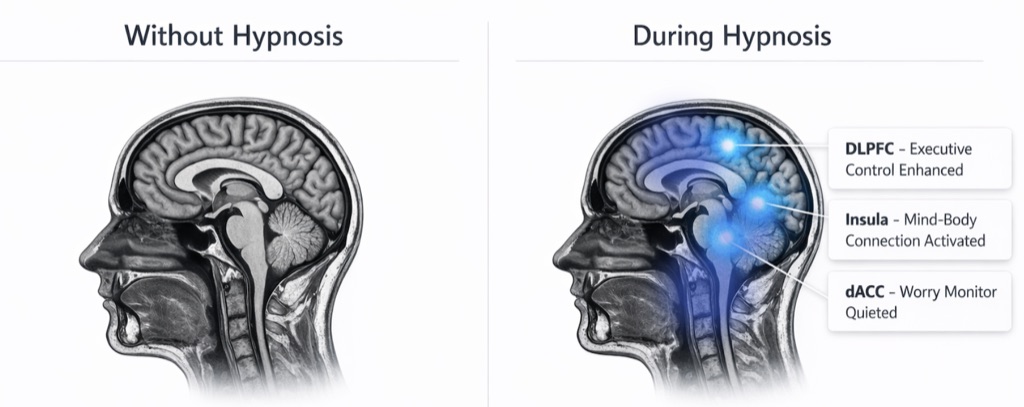
Regions from Stanford fMRI research on hypnosis (Jiang et al., 2017)
What am I really paying for, and how many sessions will I need?
At Calgary Hypnosis Center, sessions range from $220 to $350 each, and we ask for a 3-session commitment to start. There are no long packages. Most clients see meaningful shifts within those first sessions, though deeper work may take more. You’re paying for personalized, one-on-one time with a trained professional who tailors every session to your unique triggers and goals—not a generic recording. It’s an investment in lasting change.
Could this work for someone like me, or am I too skeptical?
You don’t need to be a true believer. In fact, many clients come in skeptical but desperate, just like I did. Hypnosis works with your willingness, not your gullibility. As long as you genuinely want to change—not just because someone told you to—the process can help. I’ve seen analytical, guarded people drop their guard in trance and finally get relief. Your conscious mind can doubt; your subconscious can still do the work.
Will hypnosis work for you?
Regions from Stanford fMRI research on hypnosis (Jiang et al., 2017)
When is hypnotherapy a bad idea for sugar addiction?
Hypnotherapy isn’t a fit if you’re being pushed into it or don’t actually want to stop. It also can’t replace medical care for underlying conditions like diabetes or eating disorders that need a doctor’s care. If you have severe mental health concerns, we may recommend working alongside a therapist. And if you’re looking for a quick fix without any effort, this won’t be it—real change requires your participation.
Will hypnosis work for you?
Regions from Stanford fMRI research on hypnosis (Jiang et al., 2017)
Should I try an app, or pay for a real hypnotherapist?
Apps and recordings can be a low-cost start, but they’re one-size-fits-all. A real hypnotherapist digs into your specific triggers—stress, boredom, emotional eating—and adapts in real time. I’ve had clients who tried apps first and got stuck; they needed someone to navigate the deeper stuff. Plus, safety matters: random free audios can contain hidden suggestions. With a qualified RCH, you know exactly what you’re getting. Learn more about apps vs working with a hypnotherapist.
The HYPNODIET clinical trial found that adding hypnotherapy and self-hypnosis to treatment led to a dramatic reduction in impulsive eating. This sixfold improvement shows that professional guidance can rewire the subconscious patterns driving sugar addiction, far beyond what generic self-help achieves.
Source: HYPNODIET clinical trial, cited by hypnotherapylondon.com
| Approach | Self-Help or Apps | Working with a CHC Registered Clinical Hypnotherapist (RCH) |
|---|---|---|
| Personalization | Generic scripts; one-size-fits-all recordings | Sessions tailored to your specific triggers, history, and subconscious patterns |
| Root Cause Work | Surface-level suggestions; rarely digs into why you crave sugar | Uncovers and rewires the emotional drivers behind your sugar addiction |
| Accountability & Safety | No professional oversight; risk of hidden or unethical suggestions | Ethical, supervised care from a therapist bound by ARCH-Canada standards |
| Cost & Commitment | Free or low-cost, but often requires endless trial and error | $220–$350 per session; 3-session commitment for focused, lasting change |
Questions this page answers
How does hypnotherapy for sugar addiction actually work?
It uses hypnosis to access your subconscious mind, where automatic cravings live. In a relaxed state, I offer suggestions that reframe your relationship with sugar, helping you break the autopilot cycle. It’s not about willpower—it’s about reprogramming the root patterns driving your cravings.
Is hypnotherapy for sugar addiction backed by research?
Yes. A clinical trial (HYPNODIET) showed hypnosis plus self-hypnosis significantly reduced impulsive eating, with 67.7% normalizing behaviors versus 11.1% in the control group. Many other studies have found hypnotherapy effective for behaviors similar to sugar addiction.
How many sessions will I need to see results?
We ask for a 3-session commitment to start, and many clients notice shifts within that time. Deeper patterns may require more. Each session builds on the last, reinforcing new subconscious habits. We tailor the number to your progress, not a fixed package.
What does a hypnotherapy session for sugar addiction cost?
At Calgary Hypnosis Center, sessions range from $220 to $350 each. We’re fully virtual across Canada. There’s a 3-session commitment, but no long-term packages. It’s an investment in personalized, one-on-one care.
Can I be hypnotized if I’m skeptical or have a busy mind?
Absolutely. Skepticism doesn’t block hypnosis—willingness is what matters. Most people can enter a trance state with guidance. I’ve worked with many analytical, guarded clients who were surprised by how easily they responded once they felt safe.
Are there any risks or side effects to sugar addiction hypnotherapy?
Hypnotherapy is generally safe when done by a qualified professional. Some may feel temporary disorientation or emotional release after a session. It’s not mind control—you remain in charge. We screen for any conditions that might need medical referral first.
How is hypnotherapy different from just using willpower or diet plans?
Willpower fights conscious urges; hypnotherapy rewires the subconscious patterns that drive cravings automatically. Diet plans address what you eat, but hypnotherapy addresses why you reach for sugar in the first place—stress, habit, emotional triggers—for lasting change.
Can I combine hypnotherapy with other treatments like therapy or medication?
Yes, it often complements other approaches. I’ve had clients who continued therapy or medication while doing hypnotherapy. We coordinate care if needed, but always consult your doctor about any medical concerns. Hypnotherapy adds a subconscious layer to your overall strategy.
What should I look for in a qualified hypnotherapist for sugar addiction?
Look for a Registered Clinical Hypnotherapist (RCH) through the Association of Registered Clinical Hypnotherapists of Canada (ARCH-Canada). Ask about their training, experience with addiction, and approach. A good fit means they listen, explain the process, and never promise a quick fix.
Will the effects of hypnotherapy for sugar addiction last?
When it addresses root causes, the changes can be long-lasting. Many clients report sustained control over cravings. We also teach self-hypnosis techniques to reinforce the work between sessions. It’s not a magic pill, but with practice, the new patterns stick.
So, can hypnotherapy actually help sugar addiction? I was desperate—and the research backs up what I felt: a clinical trial showed hypnosis normalized impulsive eating in 67.7% of people, compared to just 11.1% without it. That’s not a fluke; it’s the subconscious mind finally working for you instead of against you. If you’re ready to stop fighting cravings and start understanding them, book a free consultation with Calgary Hypnosis Center. We’ll talk about your sugar habits, no judgment, and see if this is your way out. Keep reading: Our approach · Phone addiction · Nail biting
Apply to work with us
We take on just 10 new clients a month. Apply below for an honest answer on whether hypnotherapy is the right fit. No packages, no pressure.
Only 2 spots left for August

Danny M.
Danny M. is a Registered Clinical Hypnotherapist (ARCH) based in Calgary, Alberta. His work focuses on the conditions hypnotherapy has the strongest track record with: anxiety, insomnia, chronic pain, and IBS. Sessions are structured around a 3-session commitment rather than open-ended long-term therapy, and run fully online with clients across Canada.
Last updated: 2026-06-27