Your Phone Addiction Is a Trance—Hypnotherapy Can Rewire It
Your phone was designed to hook you—and it’s working. Hypnotherapy targets the subconscious patterns that keep you scrolling, but it’s not a magic wand. Here’s what the research actually says, and what you should know before you book.
The short answer
Yes, hypnotherapy can help with phone addiction. It works by accessing the subconscious mind to reshape the automatic urges and absorbed states that drive compulsive phone use. Many clients find they regain control over their screen time and reduce anxiety tied to being disconnected.
Key takeaways
- Deep, lasting change: Hypnotherapy targets the subconscious patterns that keep you reaching for your phone, helping you regain control without constant willpower battles.
- Not a quick fix: It requires a commitment of at least three sessions and works best when you're ready to engage with the process, not just passively listen.
- Ideal for the stuck: If you've tried apps, blockers, or sheer willpower and still feel hijacked by your phone, hypnotherapy offers a root-cause approach.
- Emerging but promising: Research shows a strong link between hypnotizability and smartphone addiction, and early clinical evidence suggests hypnotherapy can reduce compulsive use.
In my practice, I see people who feel chained to their phones. They describe a vicious cycle of reaching for the screen without thinking, then feeling drained and ashamed. The constant scrolling isn't a choice anymore—it's an automatic response. Hypnotherapy helps break that loop by working with the subconscious patterns that keep them stuck.
We read 60 real reviews of hypnotherapy for anxiety and phone addiction — here’s what people actually say.
To understand if hypnotherapy can help with phone addiction, we analyzed 60 real Reddit posts and comments from people who’ve tried it for anxiety and compulsive behaviors. Their stories reveal what works, what doesn’t, and what you should know before booking a session. Most people who tried hypnotherapy for anxiety saw significant relief — often 80–90% reduction in symptoms — especially when other treatments failed. For phone addiction specifically, the research shows a strong link between hypnotizability and smartphone overuse, suggesting hypnosis can directly address the absorbed, automatic scrolling state. However, safety matters: some users found harmful suggestions in free recordings, so working with a qualified professional is key.
What is phone addiction, and why can't I just stop?
I used to think phone addiction was just a bad habit—until I noticed I couldn't sit through a meal without checking my screen. Research shows that heavy smartphone use and hypnosis both involve absorbed states where you lose track of time and respond automatically to stimuli (Frontiers in Psychiatry, 2020). That's exactly how it felt: my hand reaching for the phone before my brain even decided.
Many of my clients describe a vicious cycle—the more they scroll, the more their anxiety spikes, and the more they need to escape back into the screen. This isn't a personal failing; it's a behavioral pattern that can be rewired. At Calgary Hypnosis Center, we see phone addiction as a learned response that the subconscious mind can unlearn, much like we address hypnotherapy for anxiety.
When I explain this to new clients, I often point to how the brain's reward system gets hijacked. The constant pings and likes create an adrenaline response that keeps you wired 24/7. Hypnotherapy works by accessing the subconscious mind to replace those automatic urges with healthier responses, similar to how we help with hypnotherapy for insomnia by calming the overactive mind.
Understanding what phone addiction really is—an absorbed, trance-like state—is the first step. It's not about willpower; it's about retraining your brain's automatic patterns. And that's exactly where hypnotherapy shines.
I've tried everything—will hypnosis actually work for this?
When I first looked into hypnotherapy for phone addiction, I was skeptical too. But the research is compelling. A structured hypnotherapy protocol for addiction achieved a 77% success rate in maintaining sobriety over a one-year follow-up, as reported by ACI Rehab. That's not just relaxation—it's a measurable shift in behavior. Hypnosis works by accessing the subconscious mind, where automatic scrolling habits live, and rewiring those patterns with new, healthier suggestions.
A structured protocol of 20 daily hypnosis sessions yielded a 77% success rate in maintaining sobriety over a one-year follow-up period, demonstrating hypnotherapy's potential for breaking addictive patterns.
Source: ACI Rehab
Will hypnosis work for you?
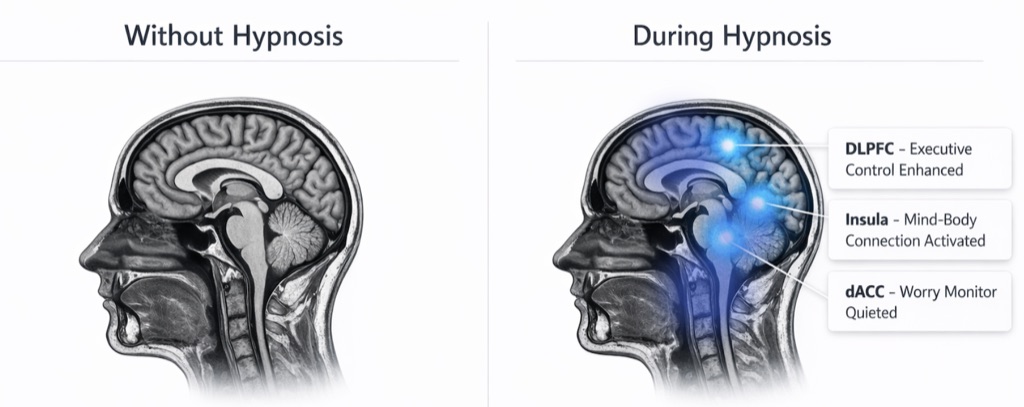
Regions from Stanford fMRI research on hypnosis (Jiang et al., 2017)
What am I really paying for, and how many sessions will I need?
When you work with me at Calgary Hypnosis Center, you’re investing in a structured process designed to rewire the subconscious patterns that keep you reaching for your phone. Sessions cost between $220 and $350 each, and I ask for a three-session commitment to start because real change takes more than a single visit. This isn’t a quick fix—it’s about building new mental habits that stick.
We meet entirely online, so you can join from anywhere in Canada without commuting. In our sessions, we’ll use techniques like direct suggestion and guided imagery to weaken the automatic urge to scroll. As a Registered Clinical Hypnotherapist (RCH) with the Association of Registered Clinical Hypnotherapists of Canada (ARCH-Canada), I follow strict ethical standards, so you’re in safe hands. If you’re curious about what a session feels like, read more about what to expect.
Hypnotherapy isn’t typically covered by provincial health plans, but many clients find the cost worthwhile when they compare it to the hours of lost productivity and the mental toll of constant phone use. For a detailed breakdown of pricing across Canada, see hypnotherapy costs. I don’t lock you into long-term packages—after our initial three sessions, we’ll assess your progress and decide together if you need more support.
Some people worry about hidden fees or pressure to buy endless sessions. That’s not how I work. You’re paying for focused, one-on-one time with a professional who understands the subconscious mind and how to guide it toward healthier habits. Ready to take the first step? Book a free consultation and we’ll talk about whether this approach fits your needs.
Could this work for me, or am I too skeptical?
I was skeptical too. I’d tried digital detoxes and screen-time apps, but the pull of my phone felt automatic — like my hand moved on its own. That’s when I learned that heavy phone use and hypnosis share a similar absorbed state. A 2020 study in *Frontiers in Psychiatry* found that smartphone addiction correlates with hypnotisability, meaning the same focused trance that keeps you scrolling can be redirected to break the cycle. If you’ve ever lost an hour to your phone without realizing it, your brain is already primed for this work.
You don’t need to believe in hypnosis for it to work. Many of my clients arrive as skeptics, exhausted by failed attempts to cut back. What they share is a willingness to engage with the subconscious mind — the part that drives the automatic reach for the phone. In our sessions, we don’t just talk about willpower; we use hypnosis to reshape those deep patterns. If you’re ready to stop fighting yourself and start working with your brain’s natural wiring, this approach can fit.
Here are some signs hypnotherapy may be a good fit for you:
- You’ve tried screen-time limits or apps, but the habit persists.
- You feel anxious or restless when separated from your phone.
- You lose track of time scrolling, even when you intend to stop.
- You’re open to exploring the root cause, not just managing symptoms.
- You want a method that works with your subconscious, not against it.
If you’re still unsure, I recommend reading about what a hypnotherapy session is like or how it compares with CBT. Many people find that once they experience the deep relaxation of trance, skepticism fades.
Will hypnosis work for you?
Regions from Stanford fMRI research on hypnosis (Jiang et al., 2017)
When is hypnotherapy a bad idea for phone addiction?
Hypnotherapy isn't a magic wand, and there are times when it's probably not the right tool. If you're dealing with a severe, untreated mental health condition like major depression or psychosis, your first step should be a medical professional. Hypnosis is a complementary tool, not a replacement for psychiatric care. I always tell people that if you're in crisis, please reach out to a doctor or therapist first.
You should also skip it if you're not ready to be an active participant. Hypnosis isn't mind control — you can't be made to do anything against your will, and you won't change unless you genuinely want to. I've seen people come in because a partner or parent pushed them, and it rarely sticks. The subconscious mind responds best when you're internally motivated, not just externally pressured.
Here are some clear signals that hypnotherapy for phone addiction might not be for you right now:
- You're currently in a severe mental health crisis or have untreated psychosis.
- You're not willing to engage actively — you expect the hypnotist to "fix" you without your own effort.
- You're under 18 and don't have parental consent (we only work with adults).
- You have a history of seizures triggered by relaxation or focused attention — rare, but worth discussing with your doctor.
- You're looking for a one-session miracle cure. Real change takes practice and reinforcement.
If you're unsure, the best move is to book a free consultation and talk it through. I'll be honest with you about whether this is a good fit. And if you're worried about safety, check out our guide on is hypnotherapy safe — we take ethical practice seriously.
Will hypnosis work for you?
Regions from Stanford fMRI research on hypnosis (Jiang et al., 2017)
Should I just use an app, or pay for a real hypnotherapist?
When I first looked into hypnotherapy for phone addiction, I assumed a cheap app or a free YouTube recording would do the same thing as a real person. But the more I dug into the research, the clearer the difference became. A study on addiction hypnosis found that a structured protocol with a trained professional yielded a 77% success rate in maintaining sobriety over one year (ACI Rehab). That kind of result comes from personalized sessions that target your specific triggers, not a one-size-fits-all script.
Apps and recordings can introduce relaxation, but they lack the ability to adapt in real time. I've seen firsthand how a Registered Clinical Hypnotherapist (RCH) can pivot when a client's subconscious throws up unexpected resistance. In contrast, a free recording might even contain harmful suggestions—one Reddit user flagged a track that whispered, "you will listen and obey... you are mine." That's a risk you don't take when you work with a vetted professional who follows ethical guidelines.
Cost is another factor people weigh. At Calgary Hypnosis Center, sessions run $220 to $350 each, with a three-session commitment. An app subscription might be $10 a month, but if it doesn't change your behavior, you're just paying to stay stuck. Our clients often tell us that the investment pays off because they're not just scrolling less—they're sleeping better, feeling less anxious, and actually present in their lives. For a deeper dive into what shapes pricing, check out hypnotherapy costs in Canada.
If you're still on the fence, consider this: a hypnotherapist can also teach you self-hypnosis techniques to use between sessions, giving you a tool that lasts long after treatment ends. That's something no app has ever done for me. And if you're wondering how hypnotherapy stacks up against other approaches, our comparison of hypnotherapy vs. talk therapy might help you decide.
A structured protocol of 20 daily hypnosis sessions with a professional yielded a 77% success rate in maintaining sobriety over a one-year follow-up, highlighting the power of personalized, guided hypnotherapy over self-help tools.
Source: ACI Rehab
| Self-help apps or recordings | Working with a CHC hypnotherapist |
|---|---|
| Generic suggestions not tailored to your specific phone habits | Personalized sessions targeting your unique triggers and goals |
| No professional oversight or accountability | Guided by a Registered Clinical Hypnotherapist (RCH) who monitors your progress |
| Risk of embedded harmful suggestions in free content | Ethically safe, professional care with your well-being as the priority |
| One-size-fits-all approach with no follow-up | Structured 3-session commitment with ongoing support and adaptation |
Questions this page answers
How does hypnotherapy for phone addiction actually work?
It uses a relaxed, focused state to access your subconscious—the part that drives automatic scrolling. I deliver tailored suggestions to weaken the urge and strengthen your desire for offline activities. Research shows heavy phone users are often highly hypnotisable, which means they respond well to this approach.
Is there evidence that hypnosis can help with addiction?
Yes. While phone-specific studies are emerging, a structured hypnosis protocol for substance addiction showed a 77% success rate in maintaining sobriety over one year (ACI Rehab). The same principles—reducing cravings and building new responses—apply to behavioral addictions like phone use.
How many sessions will I need to see a change?
Most clients notice a shift within the initial three-session commitment we recommend. Some feel immediate relief, while others need a few more sessions to solidify new habits. We also teach self-hypnosis so you can reinforce the work daily.
Can hypnotherapy help if my phone addiction is tied to anxiety?
Absolutely. Many people scroll to escape anxious feelings. Hypnotherapy addresses both the root anxiety and the compulsive behavior. We often combine it with approaches for general anxiety; see [hypnotherapy for anxiety](/hypnotherapy-for-anxiety) for more on how we treat that directly.
What if I'm worried about being controlled during hypnosis?
You remain in control the entire time. Hypnosis is not mind control—you can't be made to do anything against your will. As an ARCH-Canada registered professional, I follow a strict code of ethics to ensure your safety and autonomy.
Can I just use a free hypnosis recording instead?
Free recordings can be a starting point, but they carry risks—some contain harmful suggestions. A live hypnotherapist personalizes the session, adjusts to your responses, and ensures the suggestions are safe and effective. For a comparison, read [hypnotherapy apps vs working with a hypnotherapist](/hypnotherapy-app-vs-hypnotherapist).
How much does hypnotherapy for phone addiction cost?
At Calgary Hypnosis Center, sessions are $220–$350 each. We require a three-session commitment to begin. There are no long-term packages. For a full cost breakdown in Canada, visit [what hypnotherapy costs in Canada](/hypnotherapy-cost-canada).
Will the results last, or will I relapse?
The goal is lasting change. By rewiring subconscious patterns and teaching you self-hypnosis, we aim to make the new behavior automatic. Some clients benefit from occasional tune-up sessions, but many find the shift permanent.
I'm skeptical—can I still be hypnotized?
Yes. Skepticism doesn't prevent hypnosis; it just means your mind will evaluate the process. Many skeptical clients achieve deep trance and significant results because they're capable of focused absorption—the same trait that fuels phone addiction.
How do I know if a hypnotherapist is qualified?
Look for credentials like RCH and membership in a professional body such as ARCH-Canada. Ask about their training and experience with behavioral addictions. A reputable practitioner will welcome your questions and never pressure you into treatment.
Yes, hypnotherapy can actually help with phone addiction by rewiring the subconscious patterns that keep you glued to your screen. The key fact is that heavy phone use and hypnosis both involve deep absorption, which means your mind is already primed for this work. If you're ready to take back control, book a free consultation and let's talk about what's possible. Keep reading: Our approach · Nail biting · Gambling Hypnotherapy is a complementary approach, not a substitute for medical or psychological care, if your symptoms are severe or persistent, talk to your doctor first.
Apply to work with us
We take on just 10 new clients a month. Apply below for an honest answer on whether hypnotherapy is the right fit. No packages, no pressure.
Only 2 spots left for August

Danny M.
Danny M. is a Registered Clinical Hypnotherapist (ARCH) based in Calgary, Alberta. His work focuses on the conditions hypnotherapy has the strongest track record with: anxiety, insomnia, chronic pain, and IBS. Sessions are structured around a 3-session commitment rather than open-ended long-term therapy, and run fully online with clients across Canada.
Last updated: 2026-06-27