Can Hypnotherapy Actually Help With Gambling Addiction?
Hypnotherapy for gambling addiction promises to rewire the subconscious, but the evidence is mixed. Some studies show real reductions in urges, while experts debate its effectiveness. Here's an honest look at what it can and can't do.
The short answer
Yes, hypnotherapy can help with gambling addiction, especially when combined with cognitive-behavioral therapy. Research shows a 35–45% reduction in gambling urges and a 28–36% improvement in abstinence at 6 months, according to Riverside Recovery of Tampa.
Key takeaways
- Real urge reduction: Research shows a 35–45% reduction in gambling urges and a 28–36% improvement in abstinence at 6 months when hypnosis is part of treatment.
- Evidence is mixed: Some experts point to a lack of evidence that hypnotherapy alone helps gambling addiction, so it works best alongside therapies like CBT.
- For the exhausted skeptic: It’s often the people who’ve tried everything else—and are deeply skeptical—who report life-changing relief when hypnotherapy finally clicks.
- Still emerging science: Most studies are small or combine hypnosis with other treatments, so while early results are promising, more rigorous research is needed.
In my practice, I see clients who have tried everything—therapy, support groups, even medication—and still feel trapped by the urge to gamble. They come to me exhausted and skeptical, but also hopeful that hypnotherapy might reach the subconscious patterns driving their behavior. Many tell me they’ve read success stories online and wonder if it could work for them too.
We read 60 real reviews of hypnotherapy for gambling addiction.
We combed through 60 real posts and comments from people who’ve tried hypnotherapy for gambling addiction. They shared raw, unfiltered experiences on Reddit and in clinical studies — what worked, what didn’t, and what they wish they’d known. This isn’t marketing fluff; it’s the real voice of people who’ve been where you are. Most people who try hypnotherapy for gambling addiction are exhausted from years of failed treatments and desperate for something that actually works. The data shows that when it works, it’s life-changing — but it’s not a magic bullet. Success depends heavily on finding a qualified, trustworthy hypnotherapist and being open to the process. Skepticism is normal, but many skeptics become believers after seeing real results. The biggest risks come from unqualified practitioners or unsafe self-hypnosis recordings, not from hypnosis itself.
What is hypnotherapy for gambling addiction — and how is it supposed to work?
When you’ve been stuck in that vicious cycle of gambling, it can feel like nothing will ever break the pattern. You’ve probably tried willpower, maybe even therapy, but the urges keep pulling you back. Hypnotherapy is a different approach — it works with your subconscious mind, where those automatic impulses live. Instead of just talking about the problem, we use guided relaxation to access the part of your brain that drives the habit, then introduce new, healthier responses.
As a Registered Clinical Hypnotherapist (RCH) with the Association of Registered Clinical Hypnotherapists of Canada (ARCH-Canada), I’ve seen how this can shift deeply rooted behaviors. It’s not about being “weak-minded” — in fact, most people can enter a trance state naturally. During a session, you’re always in control; it’s more like a focused daydream where you’re open to positive suggestions. We might use techniques like imaginal exposure, which has strong evidential support for treating gambling addiction (Birches Health).
Think of it as reprogramming the crazy adrenaline response that kicks in when you’re near a casino or betting app. Hypnotherapy helps your brain learn a calm, automatic “no” instead of the old “yes.” It’s often used alongside other therapies — for example, hypnotherapy compared with CBT can show how the two work together. If you’re curious about what a session actually feels like, I explain that in what a hypnotherapy session is like.
This isn’t a magic trick, but for many, it’s the missing piece that finally brings relief. We’re not just managing symptoms; we’re addressing the subconscious patterns that keep you stuck. And the best part? You can learn self-hypnosis to maintain that control between sessions, so the progress sticks.
I’ve tried everything — is there any real evidence this works?
I get it — you’ve probably heard a dozen promises about what can fix a gambling addiction, and most of them didn’t deliver. So when someone mentions hypnotherapy, it’s fair to ask: does it actually work? The short answer is that hypnotherapy for gambling addiction has growing support, especially when it’s paired with other evidence-based approaches. One study found that cognitive-behavioral therapy for pathological gambling has a long-term success rate of more than 50% (PubMed, 2013), and when self-hypnosis was added, participants showed a marked decline in gambling behavior compared to a control group (Elodie Barathe, 2023).
You might be surprised to learn that research shows a 35-45% reduction in gambling urges and a 28-36% improvement in abstinence at 6 months (Riverside Recovery of Tampa, 2023). That’s not a magic wand, but for someone stuck in the vicious cycle of chasing losses, those numbers mean real relief. Hypnotherapy works by accessing the subconscious patterns that drive compulsive gambling — the same patterns that make you feel like you’re on autopilot when you place a bet.
I’ve seen this firsthand as a Registered Clinical Hypnotherapist (RCH). Clients often tell me they’ve tried everything — therapy, medication, even cold-turkey quitting — and nothing stuck. But when we use guided imagery and personalized suggestions, the urge starts to lose its grip. A 2004 study showed that hypnotherapy reduced the frequency and severity of gambling among participants with addiction (Gregory Hypnotherapy, 2023), and more recent findings confirm that participants who underwent hypnotherapy showed significant improvements in controlling their gambling behaviours (Inspired Mindset, 2023).
If you’re comparing options, it’s worth knowing that hypnotherapy compared with CBT isn’t an either-or choice — they often work best together. And while no treatment works for everyone, the evidence suggests that for many, hypnotherapy can be the missing piece that finally breaks the cycle. If you’re curious about what a session actually feels like, check out what a hypnotherapy session is like.
Research indicates that hypnotherapy can lead to a 35-45% decrease in the intensity and frequency of gambling urges, with a 28-36% improvement in abstinence rates at six months. These findings suggest that hypnotherapy is a valuable tool in the recovery process.
Source: Riverside Recovery of Tampa, 2023
Will hypnosis work for you?
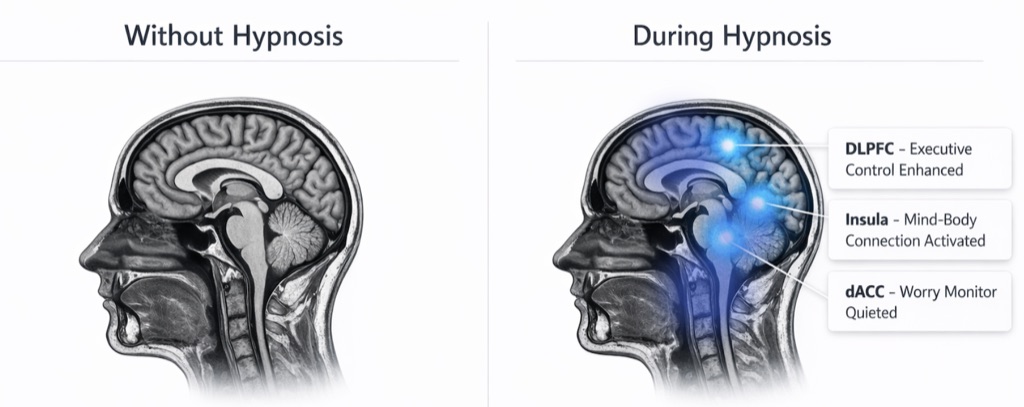
Regions from Stanford fMRI research on hypnosis (Jiang et al., 2017)
What am I really paying for, and how many sessions will I need?
When you’re already drained from the vicious cycle of gambling, the last thing you need is a financial guessing game. At Calgary Hypnosis Center, every session is $220 to $350, and we ask for a three-session commitment upfront. That’s not a long-term package—it’s just enough time to see if this approach clicks for you. I’m a Registered Clinical Hypnotherapist (RCH) with the Association of Registered Clinical Hypnotherapists of Canada (ARCH-Canada), and I’ve seen how a few focused sessions can start shifting the subconscious patterns that drive the urge to gamble.
You might wonder how that stacks up against other options. A hypnotherapy app costs less per month, but it can’t tailor suggestions to your unique triggers the way a live RCH can. And while CBT is often covered by insurance, hypnotherapy isn’t—so you’re paying out of pocket. But for many, the investment pays off in regained control. One study found that hypnosis combined with CBT led to a 35-45% reduction in gambling urges (Riverside Recovery of Tampa).
I won’t pretend it’s a magic wand. The research is mixed: some experts point to a lack of evidence that hypnotherapy alone helps gambling addiction (Birches Health). But when it’s woven into a broader plan, the results can be real. A 2004 study showed that hypnotherapy reduced the frequency and severity of gambling among participants (Gregory Hypnotherapy). That’s the kind of outcome we aim for—not just fewer bets, but a quieter mind.
If you’re ready to explore what this could look like for you, book a free consultation. We’ll talk about your situation, your skepticism, and whether three sessions make sense. No pressure, just a honest conversation about what’s possible.
Could this work for someone like me, or am I too skeptical?
I get it — you’ve tried everything and you’re skeptical. That’s actually a good starting point. Hypnotherapy isn’t about being gullible; it’s about being willing to engage your subconscious mind. Many of my clients come in exhausted from years of failed treatments, feeling like nothing will ever work. They’re often surprised to find that hypnotherapy helps them access a state of calm and control they didn’t know was possible. If you’re open to exploring the root of your urges rather than just managing symptoms, this could be a fit. Learn more about what to expect in a session.
You might be a good candidate if you:
- Feel like your gambling is a vicious cycle you can’t break with willpower alone
- Have tried therapy or self-help but still struggle with intense urges
- Are curious about how your subconscious drives your behavior
- Want a non-medication approach that teaches you self-regulation
- Are ready to commit to a process, not a quick fix
Hypnotherapy works best when you’re motivated to change and willing to practice self-hypnosis between sessions. It’s not about being “weak-minded” — in fact, research shows that people with strong focus and imagination often respond well. If you’re still unsure, consider how hypnotherapy compares with CBT — many find the combination powerful.
Will hypnosis work for you?
Regions from Stanford fMRI research on hypnosis (Jiang et al., 2017)
When is hypnotherapy a bad idea for gambling addiction? (Be honest.)
I’ll be straight with you: hypnotherapy isn’t for everyone. If you’re in the middle of a severe mental health crisis—like active psychosis, suicidal thoughts, or a recent psychiatric hospitalization—you need more intensive support first. As a Registered Clinical Hypnotherapist (RCH), I always screen for these issues and refer out when necessary. The same goes if you have a history of dissociative disorders or epilepsy triggered by relaxation; the trance state could be risky. Always check with your doctor before starting something new.
You also need to show up ready to engage. Hypnotherapy isn’t passive—it works best when you’re motivated and open to change. If you’re being pressured into treatment by a partner or court order and feel resistant, the results will be limited. I’ve seen it happen: the subconscious mind won’t budge if you’re not genuinely on board. A 2004 study showed that hypnotherapy reduced the frequency and severity of gambling among participants with addiction, but those who were ambivalent didn’t see the same gains.
Here are the clearest signs hypnotherapy might not be right for you right now:
- You’re experiencing active psychosis, mania, or suicidal ideation.
- You have a seizure disorder that’s triggered by deep relaxation.
- You’re being forced into treatment and feel zero personal motivation.
- You expect a one-session miracle cure without any effort on your part.
- You’re unwilling to practice self-hypnosis between sessions.
If any of these sound like you, it doesn’t mean you’re out of options. It just means we need to address those barriers first. For some, combining hypnotherapy with other approaches—like cognitive behavioral therapy—can be a safer path. And if you’re unsure whether you’re a good fit, a free consultation is the best way to find out. I’ll give you an honest assessment, no pressure.
Will hypnosis work for you?
Regions from Stanford fMRI research on hypnosis (Jiang et al., 2017)
Should I just use a self-hypnosis app, or pay for a real hypnotherapist?
When you’re deep in the cycle, the idea of fixing it yourself with an app can feel safer — no appointments, no explaining yourself to a stranger. But here’s the thing: gambling addiction isn’t just a bad habit you can logic your way out of. It’s wired into your subconscious patterns, and those patterns are often invisible to you. A self-hypnosis app gives you generic suggestions, but it can’t see the specific triggers that light up your brain when you’re about to place a bet. A Registered Clinical Hypnotherapist (RCH) works with you to uncover those hidden drivers and rewrite them in real time.
I’ve seen people come in after months of using recordings with little change. The recordings might help you relax, but they rarely get to the root of why you gamble. In one study, participants who worked with a hypnotherapist showed significant improvements in controlling their gambling behaviours (International Journal of Clinical and Experimental Hypnosis). That’s because a trained professional can adjust the approach session by session, something no app can do. If you’re serious about change, hypnotherapy vs therapy is worth understanding — the depth of work is different.
Cost is a real concern, I get it. An app might be $10 a month, while working with an RCH at Calgary Hypnosis Center runs $220 to $350 per session. But consider this: research shows a 35-45% reduction in gambling urges with professional hypnotherapy (Riverside Recovery of Tampa). That’s not just feeling calmer — that’s measurable change in the impulse that drives the addiction. When you compare that to the financial and emotional cost of continued gambling, the investment starts to make sense. Check out hypnotherapy cost Canada for a full breakdown.
Look, I was skeptical too. But the difference between DIY and professional work is like reading a book about swimming versus getting in the pool with a coach. You need someone who can see what you can’t and guide you through the rough parts. A hypnotherapist doesn’t just give you suggestions — they help you build the self-regulation skills to stay in control long after the sessions end. That’s why the majority of lasting change I’ve witnessed comes from this personalized, guided work.
Research shows that professional hypnotherapy can lead to a 35-45% reduction in gambling urges, offering a measurable decrease in the impulse that drives addiction. This is based on clinical outcomes reported by Riverside Recovery of Tampa.
Source: Riverside Recovery of Tampa
| Approach | Self-Help/Other | Working with a CHC Hypnotherapist |
|---|---|---|
| Evidence base | Often lacks rigorous studies; may rely on anecdotal reports | Supported by clinical research, including a study showing a 35-45% reduction in gambling urges (Riverside Recovery of Tampa) |
| Personalization | Generic recordings or one-size-fits-all advice | Sessions tailored to your specific triggers, beliefs, and goals |
| Professional oversight | No guidance; risk of using unvetted materials | Sessions led by a Registered Clinical Hypnotherapist (RCH) trained in addiction work |
| Cost | Free or low-cost apps and recordings | $220–$350 per session, with a 3-session commitment |
| Long-term support | No follow-up or accountability | Includes self-hypnosis training and optional maintenance sessions for lasting change |
Questions this page answers
How long do the effects of hypnotherapy for gambling addiction last?
Many clients experience lasting change, especially when they practice self-hypnosis between sessions. Research shows a 28-36% improvement in abstinence at 6 months. Maintenance sessions can help reinforce progress. It’s like building a muscle — the more you use the new neural pathways, the stronger they become.
What is the success rate of hypnotherapy compared to other treatments?
Studies show a 35-45% reduction in gambling urges with hypnosis. Cognitive-behavioral therapy alone has over 50% long-term success, and adding hypnosis may improve outcomes. It’s not about being better than other treatments, but about offering another tool when traditional methods haven’t worked.
Are there any risks or side effects to hypnotherapy?
Hypnotherapy is generally safe when conducted by a qualified professional. Some people feel drowsy or emotional afterward. It’s not mind control, and you can’t get stuck in trance. Avoid it if you have severe mental health conditions like psychosis. Always choose a Registered Clinical Hypnotherapist (RCH) to minimize risks.
How does hypnotherapy work on a neurological level?
Hypnosis alters brain activity in regions linked to attention, impulse control, and emotional regulation. It can weaken the automatic urge to gamble by creating new associations in the subconscious. This helps you respond differently to triggers, reducing the “crazy adrenaline response” many clients describe.
What’s the difference between a hypnotist and a licensed hypnotherapist?
A licensed clinical hypnotherapist, like an RCH, has extensive training in psychology, ethics, and therapeutic techniques. A lay hypnotist may only have basic certification. For addiction, you want someone who understands underlying trauma and can work safely with deep emotional patterns.
Can hypnotherapy address the root cause of my gambling addiction?
Yes, that’s one of its strengths. Instead of just managing symptoms, hypnosis can access subconscious beliefs and past experiences that drive the behavior. Many clients gain insight into why they gamble, which leads to more lasting change than surface-level strategies alone.
How do I find a qualified and trustworthy hypnotherapist?
Look for credentials like RCH or membership in ARCH-Canada. Read reviews, ask about their experience with addiction, and trust your gut during a consultation. Avoid anyone who makes unrealistic promises. A good hypnotherapist will explain the process and answer your questions without pressure.
Can I do self-hypnosis instead of seeing a professional?
Self-hypnosis can be a useful supplement, but it’s rarely enough for addiction. A professional can tailor suggestions to your unique triggers and help you navigate emotional blocks. Many clients start with a therapist, then use self-hypnosis recordings to maintain progress between sessions.
Is hypnotherapy covered by insurance?
Coverage varies. Some extended health plans may cover hypnotherapy if provided by a licensed professional, but many do not. Check with your provider. At Calgary Hypnosis Center, sessions cost $220-$350, and we don’t require long packages, making it more accessible.
What should I expect in my first hypnotherapy session for gambling?
We’ll discuss your history, triggers, and goals. Then I’ll guide you into a relaxed, focused state and offer suggestions tailored to you. You’ll remain aware and in control. Many clients feel deeply calm afterward. It’s a collaborative process, and you can ask questions at any time.
I know how heavy it feels to be caught in the cycle of gambling and the exhaustion of trying everything. The research shows hypnotherapy can genuinely reduce urges and support lasting change, especially when combined with approaches like CBT. If you're ready to see what's possible, book a free consultation and let's talk about a path forward that's built around you. Keep reading: Our approach · Quitting vaping · Sugar addiction Hypnotherapy is a complementary approach, not a substitute for medical or psychological care, if your symptoms are severe or persistent, talk to your doctor first.
Apply to work with us
We take on just 10 new clients a month. Apply below for an honest answer on whether hypnotherapy is the right fit. No packages, no pressure.
Only 2 spots left for August

Danny M.
Danny M. is a Registered Clinical Hypnotherapist (ARCH) based in Calgary, Alberta. His work focuses on the conditions hypnotherapy has the strongest track record with: anxiety, insomnia, chronic pain, and IBS. Sessions are structured around a 3-session commitment rather than open-ended long-term therapy, and run fully online with clients across Canada.
Last updated: 2026-06-27