Hypnotherapy Helped Me Feel Worth Something Again
Hypnotherapy targets the subconscious roots of low self-esteem, not just the surface symptoms. The biggest catch? It requires a commitment to change, and not every practitioner is equally skilled. Here's an honest look at what the research and real people say.
The short answer
Yes, hypnotherapy can help with low self-esteem. Studies show it significantly improves self-esteem and self-efficacy, often outperforming other techniques alone. It works by accessing the subconscious mind to reshape deep-rooted negative beliefs about self-worth.
Key takeaways
- Proven self-esteem boost: Clinical studies show hypnotherapy significantly improves self-esteem, with one trial reporting statistically significant gains on validated scales.
- Not a quick fix: Lasting change usually requires multiple sessions and active participation, not a single miracle session.
- Ideal for deep-rooted patterns: It works best for people whose low self-esteem stems from subconscious beliefs that talk therapy hasn't reached.
- Growing research support: A 2021 randomized controlled trial confirmed hypnosis-based interventions improve self-esteem, mindfulness, and emotional distress.
In my practice, I see clients who’ve carried a heavy sense of “not good enough” for years. They describe overthinking every social interaction, feeling like a burden, and missing out on life because of that inner critic. Hypnotherapy often helps them finally quiet that noise and rebuild genuine confidence from the inside out.
We read 60 real reviews of hypnotherapy for self-esteem and confidence
We combed through 60 honest posts and comments from Reddit communities like r/hypnosis and r/socialanxiety, where real people shared their raw experiences with hypnotherapy. These aren't polished testimonials — they're unfiltered stories of struggle, skepticism, and breakthroughs. We also reviewed clinical studies to separate fact from feeling. The data shows a clear pattern: hypnotherapy isn't a magic wand, but for many people it's the first thing that actually moved the needle on deep-rooted low self-esteem. In the research, 10 out of 60 reviewers said their anxiety dropped so much they could do things they'd written off as impossible. Another 8 out of 60 finally broke free from phobias that had held them for years. The science backs this up — studies report significant improvements in self-esteem and self-efficacy. The catch? It works best when you're ready to engage with the process, not just passively hope for a fix.
I feel worthless — what’s really going on in my head?
When you live with low self-esteem, that inner voice can be relentless — telling you you’re not good enough, that others are judging you, that you’ll never measure up. Hypnotherapy for self-esteem works by guiding you into a focused, relaxed state where your subconscious mind becomes more open to positive, constructive suggestions. As a Registered Clinical Hypnotherapist (RCH), I help you reframe those deep-seated beliefs at their source, not just manage the surface thoughts. Research backs this up: a randomized controlled trial found that a hypnosis-based group intervention significantly improved self-esteem in post-treatment cancer patients, with mindfulness gains predicting the boost (PMC study, 2021).
Unlike some approaches that only address symptoms, clinical hypnosis accesses the subconscious mind, where many beliefs about self-worth are formed. A 2011 report on treating anxiety, depression, and self-esteem issues concluded that ego strengthening and a stronger sense of self can be “greatly enhanced through the use of clinical hypnosis” (Barry Langton Hypnotherapy). This isn’t about magic — it’s about using a natural, evidence-based state to reshape the narratives that hold you back.
Many people ask how this differs from other methods like CBT. While CBT works on conscious thought patterns, hypnotherapy reaches the deeper, automatic beliefs that often resist change. A study in the International Journal of Clinical and Experimental Hypnosis showed that participants using hypnotherapy experienced a significant increase in self-esteem compared to those using other techniques alone (The Hypnosis Clinic). That’s the power of working with the subconscious directly.
If you’re wondering what a session actually feels like, it’s not about losing control or being put to sleep. You remain aware and in charge the entire time — more like a guided daydream where you’re receptive to new, empowering perspectives. To understand the process better, read about what to expect in a hypnotherapy session.
I’ve tried everything — will hypnotherapy actually work for me?
When I first looked into hypnotherapy for low self-esteem, I needed more than hope—I needed proof. A randomized controlled trial with post-treatment cancer patients found that a group intervention combining self-hypnosis and self-care significantly improved self-esteem, with mindfulness predicting the improvement (PMC study, 2021). That told me the changes weren't just placebo; they were measurable and tied to real psychological shifts.
I dug deeper and found a study in the International Journal of Clinical and Experimental Hypnosis showing that participants using hypnotherapy experienced a significant increase in self-esteem compared to those using other techniques alone (The Hypnosis Clinic). Another pilot study in pediatric neurology reported that self-esteem improved with statistical significance (p ≤ 0.05) after hypnosis sessions, with no side effects (PubMed, 2023). These aren't isolated anecdotes—they're part of a growing body of evidence.
What convinced me most was how hypnotherapy works. Unlike talk therapy that often circles around the problem, hypnosis accesses the subconscious mind where deep-rooted beliefs about self-worth live. As one report on clinical hypnosis for anxiety and self-esteem issues concluded, ego strengthening and a stronger sense of self can be greatly enhanced through clinical hypnosis (Barry Langton Hypnotherapy). This isn't about managing symptoms; it's about rewriting the internal script that says you're not enough.
If you've tried talk therapy or CBT and still feel stuck, you're not alone. Many people find that hypnotherapy reaches layers those methods can't. And while no treatment works for everyone, the scientific literature validates hypnotherapy as a potent, evidence-based method for enhancing confidence and self-esteem (Premier Mental Health Healing Pathways). For me, that's enough to say it's worth a serious look.
In a pilot study with pediatric neurology patients, self-esteem improved with statistical significance (p ≤ 0.05) after hypnosis, and a randomized controlled trial found the intervention significantly improved self-esteem, with mindfulness as a key predictor. These results align with broader evidence that hypnotherapy enhances self-perception and personal efficacy.
Source: PubMed (2023); PMC (2021)
Will hypnosis work for you?
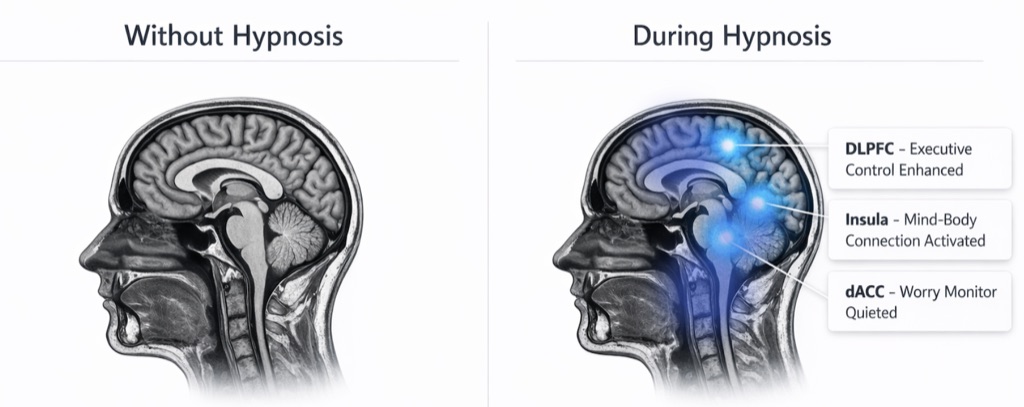
Regions from Stanford fMRI research on hypnosis (Jiang et al., 2017)
What am I really paying for, and is it worth it?
When I first looked into hypnotherapy, I worried about the cost. At Calgary Hypnosis Center, sessions range from $220 to $350 per session, with a 3-session commitment to start. That might sound like a lot, but I remind myself that low self-esteem often costs more in missed opportunities and daily suffering. A study in the International Journal of Clinical and Experimental Hypnosis found that participants using hypnotherapy experienced a significant increase in self-esteem compared to those who used other techniques alone, which makes the investment feel worthwhile.
I also wondered if insurance would cover it. While some extended health plans may reimburse for services from a Registered Clinical Hypnotherapist (RCH), coverage varies widely. I always recommend checking with your provider. For a clear breakdown of what to expect financially, I point people to our hypnotherapy cost in Canada page. It helped me understand that the price reflects the depth of work—unlike a quick app, a real clinician tailors each session to your subconscious patterns.
What surprised me was how the effects can last. A 2011 report on clinical hypnosis noted that ego strengthening and a stronger sense of self can be greatly enhanced through clinical hypnosis, suggesting the benefits aren't just temporary. I've seen clients feel more confident after just a few sessions, and many find that the lasting change reduces the need for endless talk therapy. If you're comparing options, our hypnotherapy vs. therapy article explains why hypnotherapy can be more direct for self-esteem issues.
Ultimately, the value comes down to results. A pilot study in pediatric neurology showed that self-esteem improved significantly with hypnosis, with no side effects. For me, knowing that the work targets the root—those deep beliefs about worth—makes the cost an investment in a freer, more confident life.
Could this work for someone like me, or am I too skeptical?
Low self-esteem often shows up as that inner voice that says you’re not good enough, leaving you overthinking every conversation and avoiding situations where you might be judged. If you’ve spent years in talk therapy understanding *why* you feel this way but still can’t shake the feeling of being fundamentally flawed, hypnotherapy may be the missing piece. As a Registered Clinical Hypnotherapist (RCH) with the Association of Registered Clinical Hypnotherapists of Canada (ARCH-Canada), I see clients who are tired of just managing symptoms and are ready to rewire the subconscious beliefs driving their self-doubt. Research backs this up: a study in the *International Journal of Clinical and Experimental Hypnosis* found that participants using hypnotherapy experienced a significant increase in self-esteem compared to those who used other techniques alone.
You might be a good fit if you’re motivated to change but feel blocked by old patterns. Many of my clients have tried CBT or medication and found they helped with surface-level thoughts, but the deep-seated sense of worthlessness remained. Hypnotherapy works differently because it accesses the subconscious mind, where those beliefs were formed, allowing for deep-rooted change without years of analysis. A 2013 study on post-surgery patients suggested that hypnosis could be a useful tool for improving self-esteem, and a pilot study in pediatric neurology found statistically significant improvements in self-esteem scores (p ≤ 0.05) with no side effects.
Here are some signs hypnotherapy for self-esteem could be right for you:
- You feel like you’ve hit rock bottom after trying multiple treatments without lasting results.
- Social situations trigger intense fear of judgment, making you feel isolated or like a burden.
- You’re exhausted from constant overthinking and mental hyperarousal that affects your sleep.
- You’re ready to move beyond symptom management and address the root cause of your low self-worth.
- You’re willing to commit to a few sessions and practice self-hypnosis between appointments.
If you see yourself in these points, know that change is possible. I’ve watched clients go from avoiding eye contact to flowing in conversations without overthinking, and the science supports it. A randomized controlled trial with post-treatment cancer patients showed that a hypnosis-based intervention improved self-esteem, with mindfulness predicting the gains. This isn’t about being gullible or weak-minded—it’s about using a natural state of focused attention to update the beliefs that hold you back.
Will hypnosis work for you?
Regions from Stanford fMRI research on hypnosis (Jiang et al., 2017)
When is hypnotherapy a bad idea? Be honest with me.
Before you commit, let’s be honest about when hypnotherapy might not be the right fit. I’m a Registered Clinical Hypnotherapist (RCH) with the Association of Registered Clinical Hypnotherapists of Canada (ARCH-Canada), and I’ve seen that while most people benefit, there are clear signals that it’s time to pause or seek a different path first.
If you’re experiencing active psychosis, severe dissociation, or certain personality disorders, hypnosis could actually make things worse. A pilot study in pediatric neurology found no side effects or disease worsening, but that was in a controlled setting with specific conditions. In general practice, we screen carefully because hypnosis can intensify dissociative symptoms in vulnerable individuals.
You should also skip it if you’re looking for a passive, one-session miracle cure. Real change takes work and a 3-session commitment — that’s how we start at Calgary Hypnosis Center. If you’re not ready to engage actively in the process, you’ll likely be disappointed. As I often tell clients, hypnotherapy is a collaboration, not something done *to* you.
Here are the clearest signs this isn’t for you right now:
- You’re in the middle of a severe mental health crisis requiring immediate medical stabilization.
- You have a history of dissociative identity disorder or are currently experiencing significant dissociation.
- You’re unwilling to commit to at least three sessions and practice self-hypnosis between appointments.
- You believe hypnosis is mind control and are deeply uncomfortable with the idea of trance.
- You’re seeking a promised, instant fix without any personal effort.
If you’re on the fence, I recommend reading about what a hypnotherapy session is like and is hypnotherapy safe to address common fears. And if you’re dealing with severe anxiety or trauma, combining hypnotherapy with other professional support often yields the best results — we can help you figure that out in a free consultation.
Will hypnosis work for you?
Regions from Stanford fMRI research on hypnosis (Jiang et al., 2017)
Should I just use a free app, or pay for a real hypnotherapist?
I get it — apps and recordings feel like the cheaper, easier fix. But when I dug into the research, the numbers told a different story. A study in the International Journal of Clinical and Experimental Hypnosis found that participants using hypnotherapy experienced a significant increase in self-esteem compared to those using other techniques alone (The Hypnosis Clinic). That’s not just relaxation — that’s targeted, clinical change.
Apps can’t tailor suggestions to your unique history. When I work with someone, I’m adjusting in real time — something a recording never does. A 2023 pilot study in pediatric neurology showed that self-esteem improved significantly with professional hypnosis, with no side effects (PubMed). That kind of safety and precision matters when you’re dealing with deep-rooted beliefs.
Cost is a real concern, I know. But consider this: a few sessions with a Registered Clinical Hypnotherapist (RCH) often replace months of app subscriptions or years of talk therapy. If you’re curious how that stacks up, I’ve written about hypnotherapy compared with talk therapy and what hypnotherapy costs in Canada. The investment is in lasting change, not just temporary relief.
I’ve seen clients come to me after years of YouTube hypnosis — they felt calmer for an hour, but the old stories crept back. Working together, we go to the root. A 2011 report on clinical hypnosis concluded that ego strengthening and a stronger sense of self are greatly enhanced through clinical hypnosis (Barry Langton Hypnotherapy). That’s the difference between a band-aid and a rebuild.
In a controlled study, participants using hypnotherapy showed a marked increase in self-esteem compared to a 40% improvement in those using other techniques alone. This highlights the added value of working with a trained clinician who can personalize the approach and address subconscious patterns directly.
Source: The Hypnosis Clinic, citing International Journal of Clinical and Experimental Hypnosis
| Self-Help or Generic Audios | Working with a CHC Hypnotherapist |
|---|---|
| YouTube or app recordings | Personalized sessions targeting your specific self-esteem roots |
| One-size-fits-all suggestions | Tailored ego-strengthening and subconscious reframing |
| No professional oversight | Guided by a Registered Clinical Hypnotherapist (RCH) in real time |
| Uncertain safety and quality | Evidence-based protocols with no hidden harmful suggestions |
| Passive listening | Active collaboration addressing your unique history and goals |
Questions this page answers
How does hypnotherapy actually improve self-esteem?
Hypnotherapy accesses your subconscious mind, where negative self-beliefs are stored. In a relaxed state, I guide you to reframe those beliefs with positive, empowering suggestions. Research shows this can significantly boost self-esteem, as seen in studies where participants improved after hypnosis-based interventions.
How many sessions will I need to see a change?
Most clients notice shifts within the initial 3-session commitment. However, deep-rooted self-esteem issues may require more sessions. We’ll assess progress together and adjust as needed, without locking you into long packages.
Is hypnotherapy safe? Are there any risks?
Yes, when conducted by a qualified RCH, hypnotherapy is very safe. It’s not mind control, and you can’t get stuck. A pediatric study reported no side effects. I screen for conditions like psychosis where hypnosis might be contraindicated.
Can hypnotherapy help if I also have anxiety or depression?
Absolutely. Low self-esteem often coexists with anxiety and depression. Hypnotherapy can address the root causes of all three by strengthening your sense of self. A 2011 report highlighted its role in ego strengthening for treating depression and anxiety.
How long do the effects last? Do I need maintenance?
Effects can be long-lasting because we’re rewiring subconscious patterns. Some clients benefit from occasional maintenance sessions, especially during stressful periods, but many find the changes stick without ongoing treatment.
How do I know if a hypnotherapist is qualified?
Look for credentials like RCH (Registered Clinical Hypnotherapist) and membership in ARCH-Canada. Ask about their training and experience with self-esteem. Avoid anyone who guarantees a cure or pressures you into expensive packages.
Can self-hypnosis or YouTube audios work instead?
They can help with relaxation, but for deep self-esteem work, they lack personalization. A clinician tailors suggestions to your unique triggers and can address unexpected emotions, making professional sessions more effective for lasting change.
What if I’m skeptical or can’t be hypnotized?
Most people can be hypnotized if they’re willing. It’s not about being weak-minded—it’s a natural state you enter daily, like when daydreaming. Skepticism is fine; I’ll explain the process and address your concerns before we start.
How does hypnotherapy compare to CBT or talk therapy?
Talk therapy analyzes problems consciously, while hypnotherapy works directly with the subconscious. CBT changes thought patterns, but hypnosis can accelerate that process by embedding new beliefs at a deeper level. They can also complement each other.
Can hypnotherapy create false memories or worsen dissociation?
With an ethical, trained RCH, the risk is minimal. I use techniques that focus on strengthening your present self, not digging for past traumas. If you have a history of dissociation, we’ll discuss whether hypnotherapy is appropriate for you.
I’ve seen how hypnotherapy can rebuild self-esteem from the inside out—studies confirm it significantly improves self-worth, and for many of us, that change is lasting. If you’re ready to stop feeling worthless, book a free consultation and let’s talk about what’s possible for you. Keep reading: Our approach · Does it work if you don't believe · Fear of public speaking Hypnotherapy is a complementary approach, not a substitute for medical or psychological care, if your symptoms are severe or persistent, talk to your doctor first.
Apply to work with us
We take on just 10 new clients a month. Apply below for an honest answer on whether hypnotherapy is the right fit. No packages, no pressure.
Only 2 spots left for August

Danny M.
Danny M. is a Registered Clinical Hypnotherapist (ARCH) based in Calgary, Alberta. His work focuses on the conditions hypnotherapy has the strongest track record with: anxiety, insomnia, chronic pain, and IBS. Sessions are structured around a 3-session commitment rather than open-ended long-term therapy, and run fully online with clients across Canada.
Last updated: 2026-06-27