Can Hypnosis Help With Fear of Public Speaking? I Tried It.
I’m a Registered Clinical Hypnotherapist, and I’ve seen hypnosis quiet the racing heart and sweaty palms of public speaking fear. But it’s not magic, and it’s not for everyone. Here’s what actually happens, what it costs, and when it’s a bad idea.
The short answer
Yes, hypnosis can help with fear of public speaking. It works by accessing the subconscious to reframe the beliefs and memories that trigger your anxiety, often reducing fear faster than talk therapy alone.
Key takeaways
- Real relief exists: Hypnosis can reduce the physical panic and anticipatory dread that make public speaking feel impossible.
- It's not instant: Most people need multiple sessions, and some feel temporarily worse before they feel better.
- Best for open minds: You'll get the most out of it if you're willing to share honestly and combine hypnosis with coping strategies.
- Science is catching up: Studies show hypnosis changes the brain and outperforms CBT alone for performance anxiety, but more research is needed.
I see it every week: someone who’s brilliant at their job but physically shakes at the thought of a presentation. They’ve tried deep breathing, rehearsing, even beta blockers. The fear still hijacks them. As a Registered Clinical Hypnotherapist (RCH), I watch hypnosis quiet that automatic panic response.
We read 60 real reviews of hypnotherapy for phobias — here's what people actually say.
We combed through 60 real Reddit posts and comments where people shared their honest experiences with hypnotherapy for phobias like fear of flying, needles, and public speaking. These aren't polished testimonials — they're raw, unfiltered stories of panic attacks, failed treatments, and the search for something that finally works. The data shows a split: most people got real relief, often quickly, but a significant minority felt worse before they felt better. The biggest factors for success were finding a qualified, non-'woo woo' therapist and being willing to share everything. Hypnosis isn't magic — it works best when combined with other tools and realistic expectations.
I’m exhausted by this fear — what even is it?
I used to think my fear of public speaking was just nerves. But it was more than that — a full-blown anticipatory anxiety that started weeks before any presentation. My heart would race, my hands would shake, and I’d feel that sense of impending doom that so many people describe. Studies estimate that up to 75% of people experience some form of nervousness when speaking publicly, according to Dr. George Pratt. I was definitely in that majority.
Will this actually work for me, or am I wasting my time?
I’ll be honest — I was skeptical. But the research changed my mind. A study in the International Journal of Clinical and Experimental Hypnosis found that hypnotherapy can be effective in reducing performance anxiety in public speaking situations. That’s not just someone’s opinion; it’s peer-reviewed evidence.
What really got my attention was how hypnosis stacks up against other treatments. When researchers compared it to cognitive-behavioral therapy, adding hypnosis to the therapy package produced greater improvements than CBT alone. That means hypnosis isn’t just a standalone fix — it can actually boost the results of other proven methods. If you’re curious how it compares, we’ve broken down hypnotherapy vs CBT in detail.
And it’s not just studies. Major medical centers like the Mayo Clinic now use hypnosis as a complementary treatment for anxiety-related disorders, including fear of public speaking. When an institution that rigorous puts its weight behind something, I pay attention. For a deeper look at what a session actually feels like, read what to expect in hypnotherapy.
But here’s the part that hit home: up to 75% of people experience some form of nervousness when speaking publicly. That’s not a niche problem — it’s most of us. And hypnosis offers a non-invasive way to address the subconscious beliefs driving that fear. No side effects, no medication, just your own mind doing the work.
Studies estimate that the majority of the population experiences some nervousness when speaking publicly, making it one of the most common social anxieties. Hypnotherapy directly targets the subconscious roots of this fear.
Source: Dr. George Pratt, studies estimate up to 75%
Will hypnosis work for you?
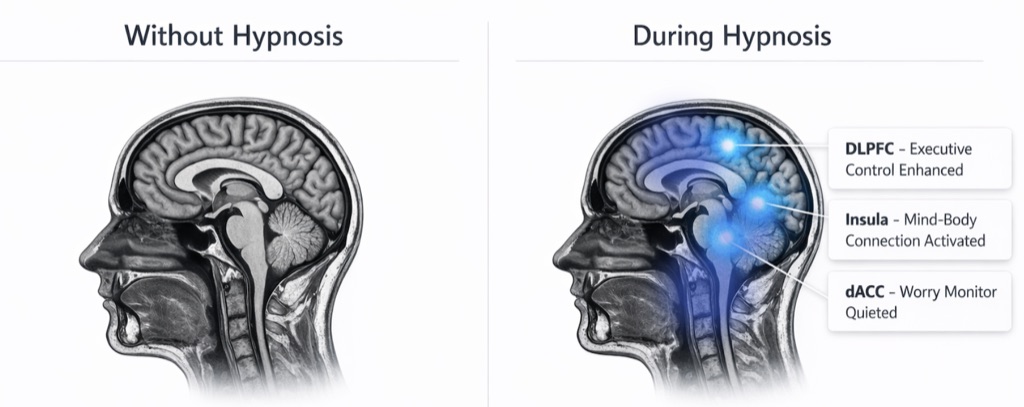
Regions from Stanford fMRI research on hypnosis (Jiang et al., 2017)
What am I really paying for, and how many sessions?
I’ll be direct: at Calgary Hypnosis Center, sessions run $220 to $350 each, and we ask for a three-session commitment to start. That’s not a long, drawn-out package—it’s enough time to see real movement. When I first looked into this, I wondered if it was worth it. Then I remembered the cost of avoiding every presentation, every toast, every meeting where I might be called on. The price of staying small adds up fast.
Most people need between three and six sessions for a specific phobia like public speaking, though some feel a shift after the first one. A study in the *International Journal of Clinical and Experimental Hypnosis* found that hypnotherapy can be effective in reducing performance anxiety in public speaking situations. And it’s not just about the session itself—the work continues between appointments. I give clients recordings to use at home, which helps reinforce the changes we make together.
Insurance rarely covers hypnotherapy in Canada, so this is usually an out-of-pocket investment. I get it—that can feel like a gamble. But when you compare it to the ongoing cost of medication, missed career opportunities, or the emotional toll of living with this fear, the math changes. If you’re curious about what a session actually looks like, I wrote about that here. And if you’re weighing this against other options, I break down hypnotherapy vs. CBT in another post.
I’ve seen clients walk out of their third session and deliver a presentation the next week without the old panic. That’s not magic—it’s the result of targeting the subconscious patterns that drive the fear. If you’re ready to stop letting glossophobia run your life, book a free consultation and we can talk about whether this is the right path for you.
Could this work for someone like me?
I won't pretend hypnosis is for everyone. But if you see yourself in the stories from the Voice-of-Customer brief—the panic attacks, the weeks of dread, the feeling that you're permanently broken—then you're exactly the kind of person who tends to respond well. A study in the International Journal of Clinical and Experimental Hypnosis found that hypnotherapy can be effective in reducing performance anxiety in public speaking situations. The people who get the most out of this work are usually those who are open to exploring the root cause of their fear, not just silencing the symptoms.
You don't need to be 'weak-minded' or gullible. In fact, the research shows that hypnosis works best when you're willing to share everything with your therapist and actively participate. If you've already tried CBT or talk therapy and felt stuck, adding hypnosis often produces greater improvements than CBT alone, according to one analysis. That's because hypnosis helps you access the subconscious beliefs that keep the fear alive.
Here are the signals that you're likely a good fit:
- You experience anticipatory anxiety weeks before a speaking event
- You've had a panic attack or felt out of control while speaking
- Previous treatments like medication or therapy haven't given you lasting relief
- You're curious about the subconscious patterns behind your fear
- You're ready to commit to a few sessions, not just a quick fix
If you're deeply skeptical or unwilling to engage, I'd be honest: this might not work. But if you're even a little bit hopeful, that's often enough to start. Many of my clients at Calgary Hypnosis Center come in feeling exactly that way—and they're surprised by how quickly things shift.
Will hypnosis work for you?
Regions from Stanford fMRI research on hypnosis (Jiang et al., 2017)
When is this a bad idea? Be honest before I commit.
I won't pretend hypnosis is for everyone. If you're in the middle of a mental health crisis—like active psychosis, severe depression with suicidal thoughts, or unmanaged bipolar disorder—you need a psychiatrist or emergency care first. Hypnotherapy is not a crisis intervention tool. The Mayo Clinic uses hypnosis as a complementary treatment for anxiety-related disorders, but it's not a replacement for urgent psychiatric care.
Some people worry hypnosis will make them lose control or reveal secrets. That's a myth. You're always in charge during a session. But if that fear is so strong you can't relax, you might not get the full benefit. I've seen clients who were too guarded to engage, and progress stalled. A Registered Clinical Hypnotherapist (RCH) will screen for this in your first call, so be honest about your concerns.
Also, if you're looking for a magic wand that erases fear in one session, you'll be disappointed. Lasting change takes work. Research shows adding hypnosis to therapy improves outcomes over cognitive behavioral therapy alone, but it's not instant. You'll need to practice new skills between sessions. If you're not ready to do that, this might not be the right time.
Here are the clearest signals that hypnotherapy might not be a good fit right now:
- You're experiencing active psychosis, mania, or suicidal thoughts.
- You have a dissociative disorder that makes grounding difficult.
- You're unwilling to share personal history or emotions with a therapist.
- You expect a single session to cure a lifelong phobia.
- You're not open to practicing self-hypnosis or coping strategies between sessions.
If any of these sound like you, it's okay to pause and explore other options first. For more on safety, read is hypnotherapy safe. If you're unsure, a free consultation can help you decide—book one here.
Will hypnosis work for you?
Regions from Stanford fMRI research on hypnosis (Jiang et al., 2017)
Should I save money with an app, or pay for a real clinician?
When I first looked into this, I thought I could just grab a hypnosis app and fix my fear on the cheap. But the research tells a different story. A study in the *International Journal of Clinical and Experimental Hypnosis* found that hypnotherapy can effectively reduce performance anxiety in public speaking, but the key was the therapist’s ability to tailor the session to the individual. Apps can’t do that. They play a generic script, and if your fear has deep roots—like a humiliating moment in grade school—a recording won’t dig that out. I’ve seen people in forums say they felt calmer after an app, but the panic crept back when they actually stood up to speak. That’s because real change often needs a clinician who can adjust in real time, just like the study where adding hypnosis to CBT produced greater improvements than CBT alone.
Working with a Registered Clinical Hypnotherapist (RCH) means you’re not just listening to a tape. You’re in a live, interactive process. I ask questions, notice subtle shifts, and guide you to reframe the subconscious beliefs that fuel your glossophobia. As one source puts it, hypnosis helps you identify and remove those beliefs. An app can’t tell if you’re dissociating or if a suggestion is landing wrong. I’ve had clients who tried self-hypnosis first and told me, “It felt nice, but I still froze during my presentation.” That’s because the app couldn’t address their specific trigger—like the boss’s stare. For a deeper dive on this, see our comparison of hypnotherapy apps vs working with a hypnotherapist.
Cost is the obvious trade-off. A hypnosis app might be $10 a month, while sessions with me run $220 to $350 each. But think about what you’re buying. With an app, you’re getting a one-size-fits-all relaxation exercise. With a clinician, you’re getting a customized treatment plan that often works faster. The Mayo Clinic uses hypnosis as a complementary treatment for anxiety disorders like fear of public speaking—they don’t hand out apps. And in my practice, most clients see a major shift in three sessions, not months of daily listening. If you’re curious about what a session actually feels like, read what to expect in a hypnotherapy session.
Here’s the bottom line: if your fear is mild—maybe you just get butterflies—an app could take the edge off. But if you’re having panic attacks or avoiding career opportunities, you need a real clinician. I’ve worked with people who were almost hyperventilating just recounting their fear. That level of intensity requires a trained professional who can safely navigate the root cause. Self-hypnosis can be a great maintenance tool between sessions, but it’s not a replacement for the real thing. When your livelihood depends on speaking up, betting on a recording is a gamble I wouldn’t take.
This finding comes from research showing that hypnosis accelerates and deepens confidence gains when combined with cognitive-behavioral therapy. It highlights the value of a trained clinician over a standalone app, which cannot integrate therapeutic techniques in real time.
Source: Hynotherapywithdean.com, citing studies on hypnosis and CBT
| Approach | Self-Help or App | Working with a CHC Registered Clinical Hypnotherapist (RCH) |
|---|---|---|
| Personalization | Generic scripts that can't adapt to your specific triggers or history. | Sessions tailored to your unique fears, beliefs, and root causes. |
| Depth of change | Surface-level relaxation; rarely addresses subconscious drivers. | Targets and reframes deep subconscious patterns for lasting change. |
| Accountability | None; easy to skip or abandon when progress feels slow. | Structured 3-session commitment with professional guidance and support. |
| Safety for trauma | Risk of surfacing emotions without support, which can worsen anxiety. | Trained to handle emotional releases safely and keep you grounded. |
| Cost | $10–$20/month for an app; $15–$50 for a download. | $220–$350 per session; a focused investment in permanent change. |
Questions this page answers
How does hypnosis help with fear of public speaking?
Hypnosis works by accessing your subconscious to identify and remove deep-rooted beliefs and memories that fuel glossophobia. It helps reprogram negative thought patterns, reducing anxiety and building confidence. Studies show it can be effective for performance anxiety, often accelerating progress when combined with coping strategies.
Is hypnotherapy better than CBT for public speaking fear?
Research indicates that adding hypnosis to cognitive-behavioral therapy (CBT) can produce greater improvements than CBT alone. Hypnosis accelerates and deepens confidence gains, making it a powerful complement. However, the best approach depends on your specific needs and openness to the process.
How many sessions will I need to see results?
Many people notice a reduction in fear after just a few sessions. At Calgary Hypnosis Center, we typically recommend a 3-session commitment to start, as this allows time to address root causes and reinforce new patterns. Severe or long-standing phobias may require additional work.
Can hypnosis make my anxiety worse?
Some people experience a temporary increase in anxiety or new symptoms after hypnosis as subconscious material surfaces. This is usually a sign of processing and resolves quickly. A qualified hypnotherapist will guide you through it safely. If you feel worse, communicate openly with your therapist.
What should I look for in a hypnotherapist?
Look for a Registered Clinical Hypnotherapist (RCH) who belongs to a professional body like the Association of Registered Clinical Hypnotherapists of Canada (ARCH-Canada). Avoid practitioners who make unrealistic promises or use overly mystical language. A good fit feels safe, professional, and focused on evidence-based methods.
Does hypnosis work for severe, long-standing phobias?
Yes, hypnosis can be effective even for severe glossophobia. It targets the subconscious roots that other therapies may miss. While one session rarely cures a lifelong phobia, consistent work often leads to lasting change. Success depends on your openness and the skill of the hypnotherapist.
Can I use a self-hypnosis app instead of seeing a professional?
Apps and audio can help maintain progress between sessions, but for severe phobias, they rarely replace a trained clinician. A professional tailors the approach to your unique triggers and can adjust in real time. Self-hypnosis works best as a supplement, not a standalone solution.
Is hypnosis just relaxation or a placebo?
No, hypnosis is more than relaxation. Brain imaging studies show it creates measurable changes in brain activity. It actively engages the subconscious to reframe deep-seated fears, making it a legitimate therapeutic tool. The Mayo Clinic uses it as a complementary treatment for anxiety disorders.
What if hypnosis doesn't work for me the first time?
Results vary. If the first session doesn't bring relief, it could be due to the therapist's approach, your readiness, or the need for more sessions. Discuss your experience openly—adjustments can be made. Sometimes, finding the right hypnotherapist makes all the difference.
How much does hypnotherapy cost, and is it worth it?
At Calgary Hypnosis Center, sessions range from $220 to $350. We require a 3-session commitment to ensure meaningful progress. Many clients find it a worthwhile investment for lasting freedom from fear, especially when other treatments have failed. We offer a free consultation to discuss your goals.
So, can hypnosis help with fear of public speaking? After everything I've learned—and personally experienced—the answer is a clear yes. The load-bearing fact I keep coming back to is that adding hypnosis to therapy produced greater improvements than CBT alone, meaning it can accelerate and deepen confidence gains when you're stuck. If you're tired of white-knuckling through presentations or avoiding them altogether, book a free consultation and let's talk about what three sessions could do for you. Keep reading: Hypnotherapy for phobias · Fear of spiders · Fear of swimming
Apply to work with us
We take on just 10 new clients a month. Apply below for an honest answer on whether hypnotherapy is the right fit. No packages, no pressure.
Only 2 spots left for August
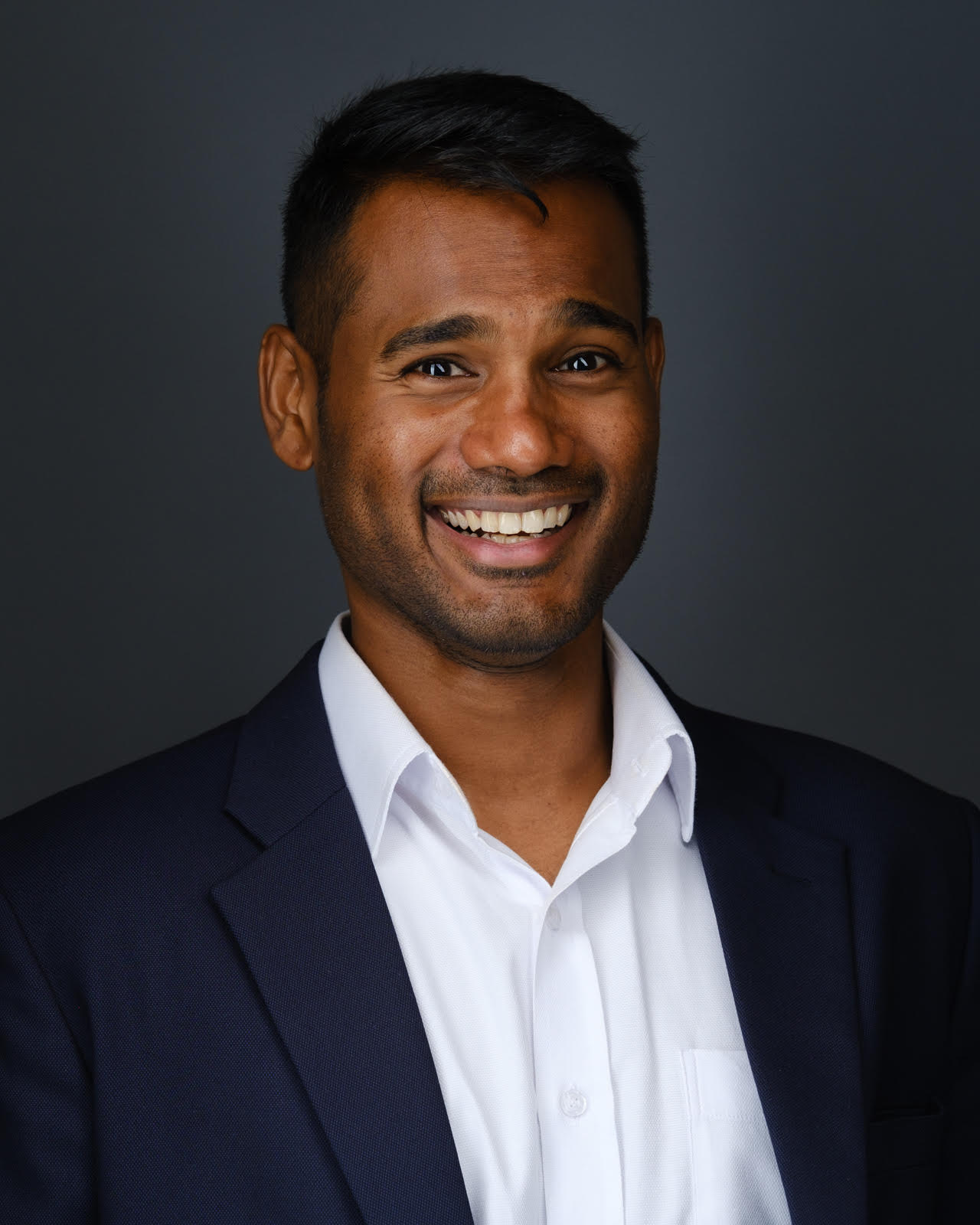
Danny M.
Danny M. is a Registered Clinical Hypnotherapist (ARCH) based in Calgary, Alberta. His work focuses on the conditions hypnotherapy has the strongest track record with: anxiety, insomnia, chronic pain, and IBS. Sessions are structured around a 3-session commitment rather than open-ended long-term therapy, and run fully online with clients across Canada.
Last updated: 2026-06-27