Hypnosis for Chronic Insomnia: What 18 Reddit Reports and 24 Studies Show
When counting sheep stopped working years ago, you tried everything else. Here is what hypnosis can and cannot do for it.
You know how to sleep. You did it fine for years. So why does your brain forget how every single night?
I help people with chronic insomnia retrain their brain to sleep naturally, without medication, through hypnotherapy that addresses the psychological patterns keeping you awake.
Will hypnosis work for you?
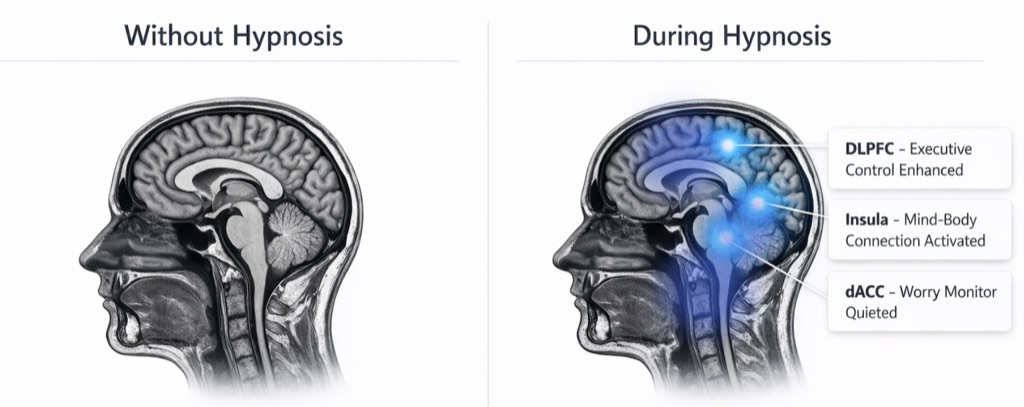
Regions from Stanford fMRI research on hypnosis (Jiang et al., 2017)
If you're reading this, you've probably been battling insomnia for months or years. You've tried the melatonin, the sleep apps, the weighted blankets. Maybe you've even done prescription sleeping pills.
And here you are. Still exhausted. Still lying awake at 2 AM wondering if tonight will be different.
The frustrating truth is that most insomnia treatments target the wrong thing. They try to force your body to sleep while ignoring the hyperactive mind that keeps hitting the override button. Hypnotherapy works differently because it addresses the psychological root of sleep problems, not just the symptoms.
Currently accepting 4 new weight loss clients per month
Next available: November 5th
What This Guide Covers
- Types of insomnia and why yours persists
- Why pills and sleep hygiene often fail
- How hypnotherapy rewires sleep patterns
- The 81% deep sleep nap study, and its limits
- What 18 Reddit reports say
- What treatment actually involves
- How to combine approaches for best results
Understanding Insomnia: More Than Just a Bad Night
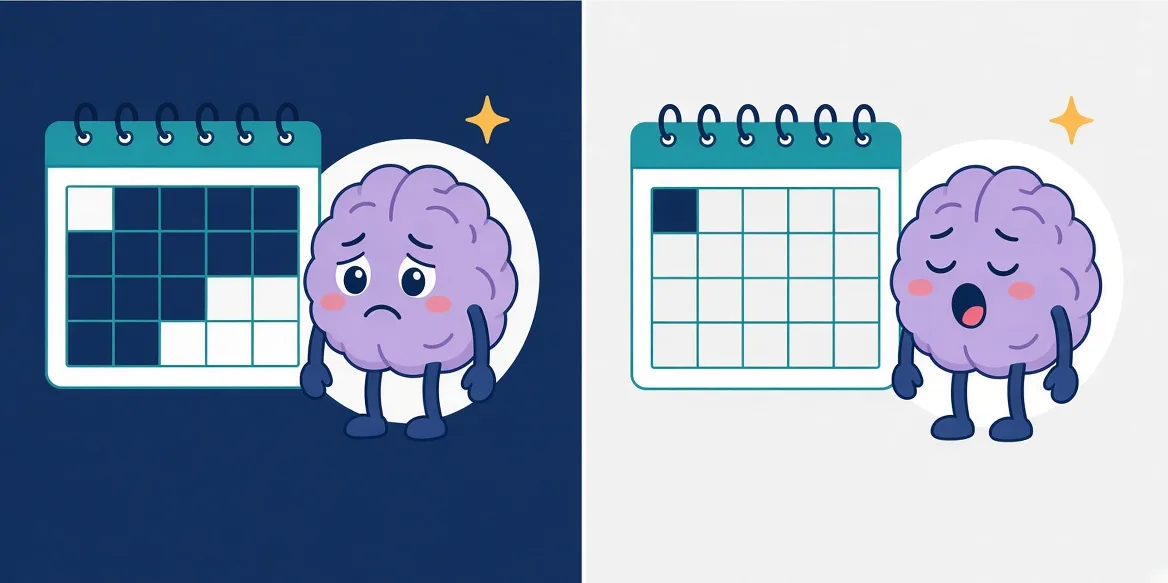
A few rough nights happen to everyone. Insomnia is different. It's a persistent pattern where your brain has learned to associate bed with wakefulness, anxiety, and frustration rather than rest.
Types of Insomnia
Understanding what type you're dealing with helps determine the best approach:
Acute Insomnia
Short-term sleep disruption lasting days to weeks, usually triggered by stress, travel, or life changes. Often resolves on its own.
Chronic Insomnia
Sleep difficulties occurring at least 3 nights per week for 3 months or more.
Primary Insomnia
Sleep problems not caused by another medical condition. The insomnia itself is the issue, often rooted in learned patterns and anxiety.
Secondary Insomnia
Sleep problems caused by another condition (pain, depression, medication). Treating the underlying cause is essential.
The Toll of Chronic Sleep Deprivation
You already know you feel terrible. But chronic insomnia does more than make you tired:
- Slower thinking and poor focus
- Weakened immune function making you more susceptible to illness
- Increased anxiety and depression in a vicious cycle with sleep loss
- Higher risk of cardiovascular problems and metabolic issues
- Impaired decision-making affecting work and relationships
This is not about being dramatic. This is about recognizing that sleep is not optional, and finding a solution that actually works.
Why Traditional Treatments Often Fall Short
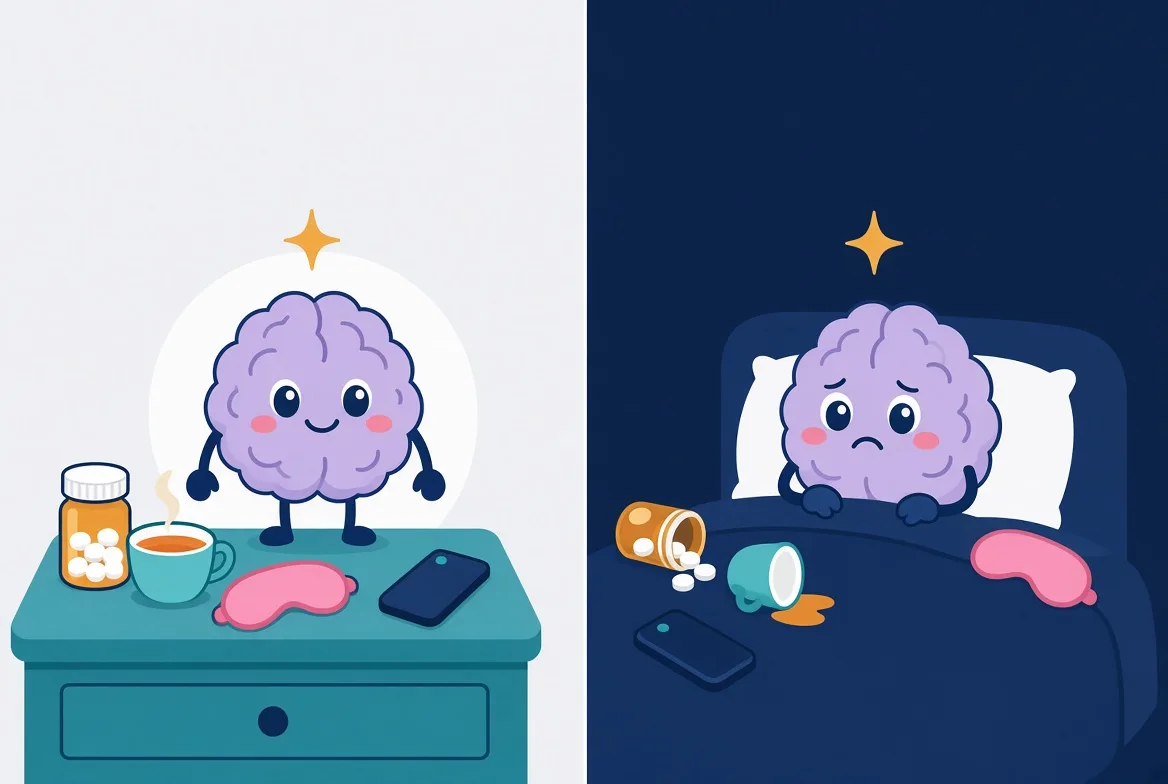
You have probably tried several approaches already. Here is why they may not have worked for you:
Sleeping Pills: The Tolerance Trap
Prescription sleep medications can help in the short term, but they come with significant problems:
Healthcare providers do not typically recommend prescription sleeping pills long-term because they are not a cure for insomnia.
Sleep Hygiene: Necessary But Insufficient
Keeping your room dark and cool, limiting screen time, and maintaining a consistent schedule are all helpful. But if your problem is psychological, sleep hygiene is like putting a band-aid on a broken bone.
You cannot out-optimize a mind that has learned to panic when the lights go out.
CBT-I: Effective, But Not for Everyone
Cognitive Behavioral Therapy for Insomnia (CBT-I) is considered the gold standard non-pharmacological treatment. It works well for many people. But research shows it does not work for everyone, and some people need additional or alternative approaches.
The American Academy of Sleep Medicine notes that medications may be needed for patients who are unable to participate in CBT-I, or those who still have symptoms after completing it.
How Hypnotherapy Addresses Insomnia
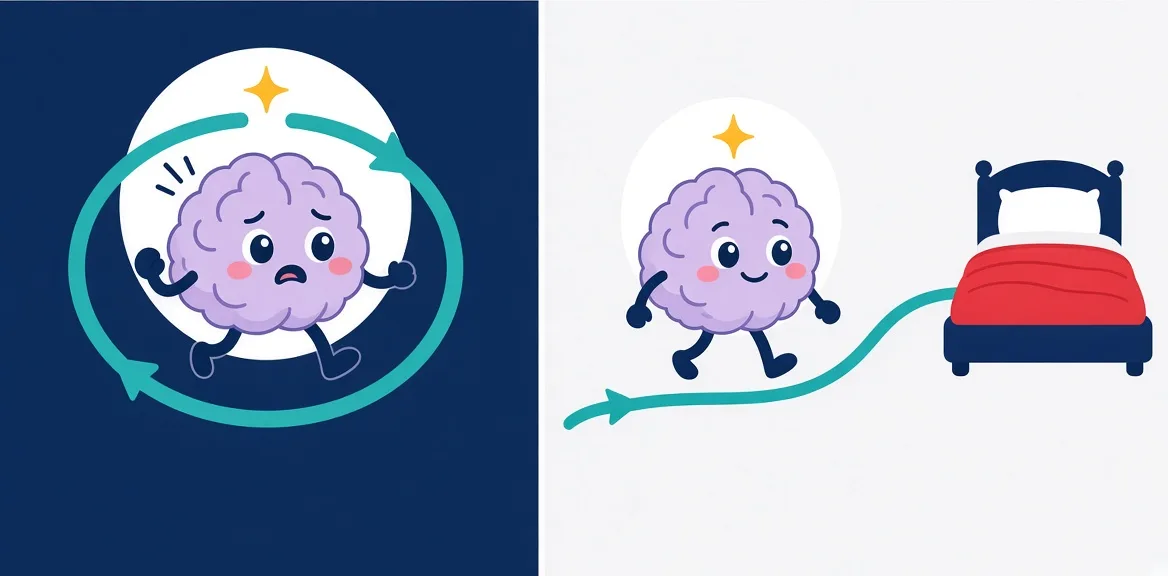
Hypnotherapy for insomnia works by accessing the subconscious mind, where your automatic associations with sleep are stored, and reprogramming them. Instead of lying in bed with a racing mind, you create new neural pathways that associate bed with calm, safety, and rest.
The Psychological Component
Chronic insomnia is often maintained by a psychological pattern:
- Anticipatory anxiety. You start worrying about sleep hours before bedtime.
- Hyperarousal. Your nervous system stays in fight-or-flight mode when it should be winding down.
- Negative conditioning. Your brain has learned to associate bed with frustration and wakefulness.
- Catastrophic thinking. You lie awake calculating how terrible tomorrow will be.
Hypnotherapy directly addresses each of these by:
Breaking Conditioned Patterns
Replacing the bed-equals-anxiety response with new associations of comfort and relaxation.
Calming the Nervous System
Training your body to shift from hyperarousal to parasympathetic (rest-and-digest) mode.
Addressing Underlying Anxiety
Reducing the worry that fuels the insomnia cycle at its source.
Training Self-Hypnosis
Giving you a tool to use at home, every night, that deepens with practice.
What the Research Shows
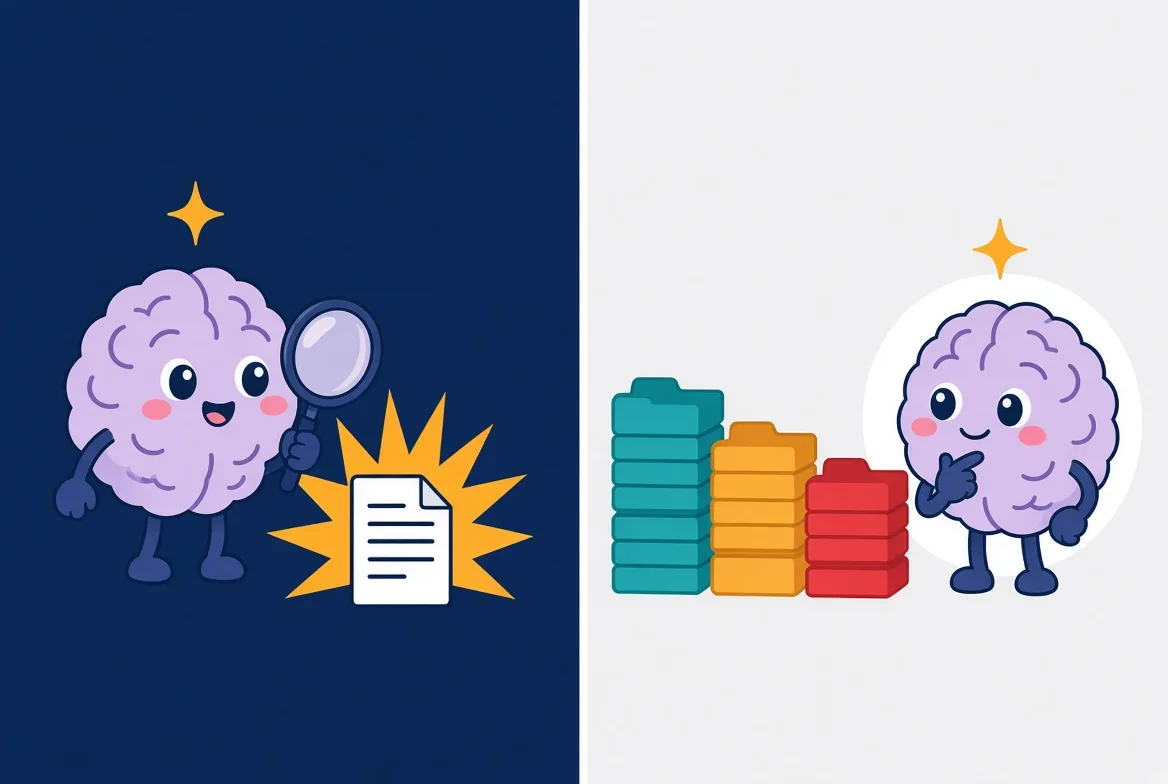
The most striking finding comes from a 2014 study at the University of Zurich, published in the journal Sleep.
In a 2014 study, 70 healthy young women napped for 90 minutes after a hypnotic "sleep deeper" tape. Women who were easy to hypnotize had 81% more slow-wave (deep) sleep than after a control tape. Women who were hard to hypnotize had no benefit.
Source: Cordi & Rasch, Sleep Journal (2014)
This is not small. Deep sleep is the most restorative stage, crucial for physical recovery, memory consolidation, and immune function. An 81% increase is large. But this was one nap in healthy young women, not people with chronic insomnia.
In the same group, time spent awake during the nap fell by 67%.
“Hypnosis is a promising treatment that merits further investigation. Available evidence suggests low incidence of adverse events.”
The Broader Evidence
A comprehensive systematic review in the Journal of Clinical Sleep Medicine examined 24 studies on hypnosis and sleep. The findings:
- 58.3% of studies reported benefits of hypnosis on sleep outcomes
- 12.5% reported mixed results
- 29.2% reported no benefit
- Side effects were uncommon across the studies
Most of these studies were small, and their quality was generally low.
The researchers concluded that hypnosis for sleep problems is “a promising treatment that merits further investigation.”
Who Responds Best
Some people respond better than others. The key factors:
- Moderate to high hypnotizability (which includes most people)
- Willingness to practice self-hypnosis between sessions
- Primary or psychophysiological insomnia responds best
For a deeper look at the science, see my comprehensive guide on hypnotherapy for sleep.
What 18 Reddit Reports Say About Hypnosis for Sleep
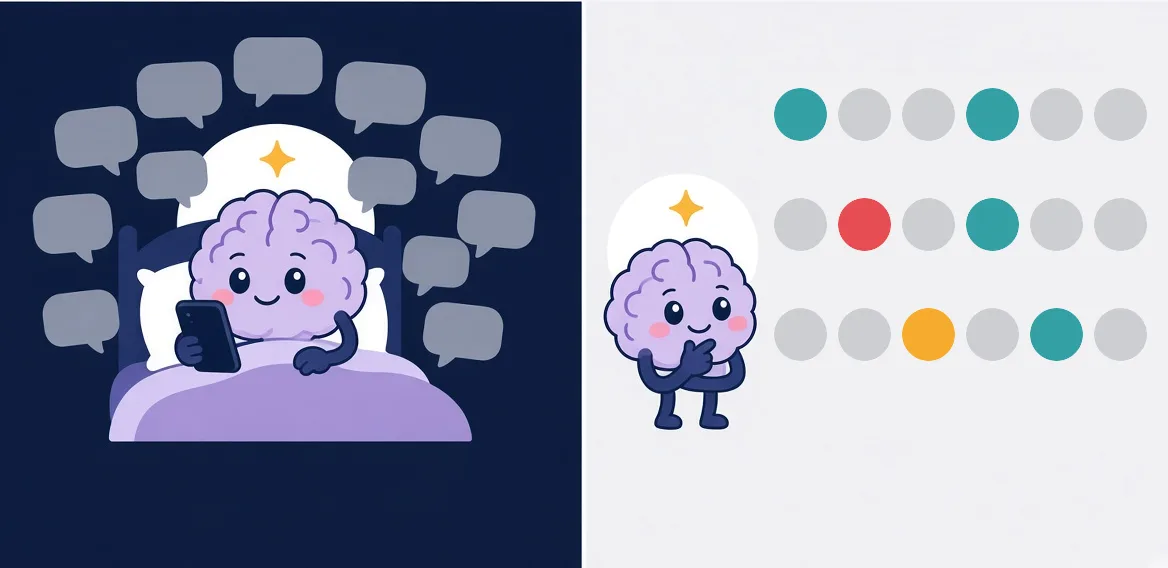
We keep a saved file of 1,506 Reddit posts and comments. For this page we used the 80 that came from r/sleep and r/insomnia, dated 2016-10-03 to 2026-04-12. Of those 80, 57 are about sleep. Of those 57, 18 mention hypnosis or trance.
Of the 18 hypnosis reports:
- 4 report a positive result only.
- 1 reports a negative result only.
- 1 reports a hedged or mixed result.
- 12 report no clear result.
One r/insomnia post from 2025-06-17 says:
I’ve finally been sleeping again thanks to hypnosis.
The hedged report, an r/sleep post from 2023-01-16, says:
ive also tried sleep hypnosis and that works sometimes but only rarely.
One of the positive posts adds a limit. This r/insomnia post is from 2024-06-08:
they do not work every time for me, but usually work to help me
Most of the 18 reports give no clear result. A positive post is one person's report, not a test of the method.
How we counted
- A report counts as about sleep if it uses a word such as sleep, insomnia, asleep, awake or bedtime.
- A result word counts only if it sits within 60 characters of a hypnosis word. Positive words include helped, worked and finally. Negative words include did not work, placebo and still awake. Hedged words include sometimes and rarely.
- A script applied these rules. We did not check every report by hand, and the rules read words, not meaning.
- Reddit users are not a random sample. These are raw counts from a small sample, not success rates.
What Treatment Looks Like
Hypnotherapy for chronic insomnia is not a one-session fix. It is a process of retraining your brain, and that takes time.
The Initial Assessment
We start by understanding your specific sleep patterns and history:
- When did the insomnia start? What triggered it?
- What does a typical night look like for you?
- What have you tried? What helped, even briefly?
- What thoughts run through your mind when you cannot sleep?
This helps me customize the approach. Your insomnia is not the same as someone else's.
Before I start, I check for a medical cause. I ask about signs of sleep apnea and about any sleep medication. If a medical cause may be part of the problem, I send you to a doctor first. If CBT-I is available to you, I would try it first and use hypnosis as an add-on.
Session Structure
Relaxation Induction
Progressive relaxation and breathing techniques bring you into a calm, focused state. Your body settles, your mind quiets.
Suggestion Phase
Targeted suggestions specific to your sleep challenges. Building new associations, calming anxious patterns, creating mental rehearsals of restful sleep.
Anchoring
Creating triggers you can use at bedtime. A breath pattern, a mental cue, or a visualization that helps you access relaxation on demand.
Self-Hypnosis Training
You will receive audio recordings to use at home. The clients who see the best results use these consistently between sessions.
“After 6 years of chronic insomnia, I was skeptical. By session 4, I was falling asleep in under 20 minutes. It has been 8 months now.”
Combining Approaches for Best Results
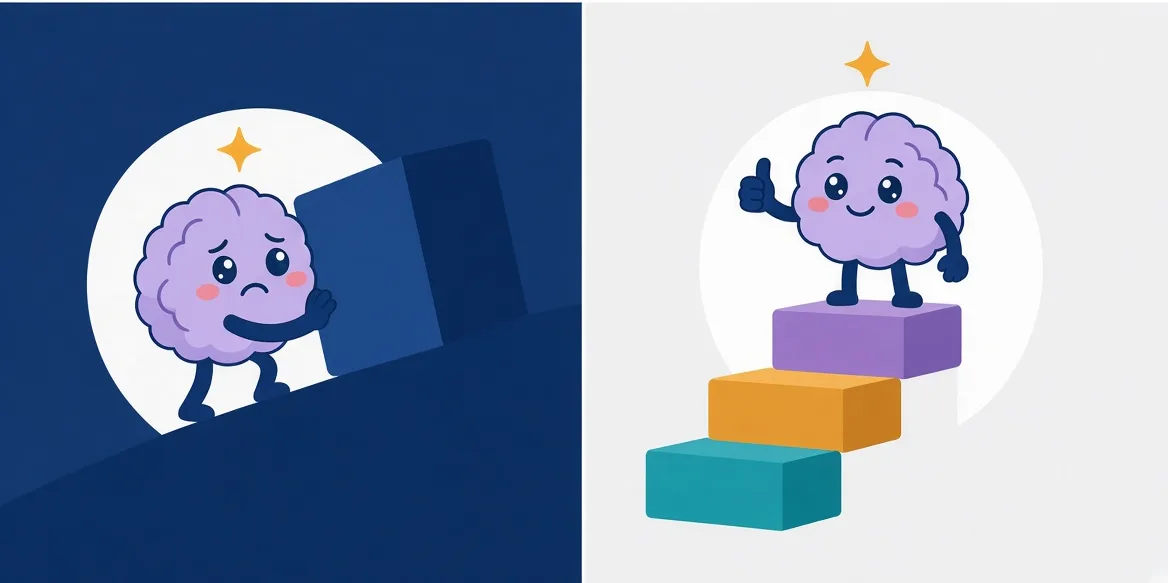
Hypnotherapy does not have to be your only approach. In fact, it often works best when combined with other evidence-based methods:
Hypnotherapy + Sleep Hygiene
Sleep hygiene creates the right physical environment. Hypnotherapy creates the right mental environment. Together, they reinforce each other.
Hypnotherapy + CBT-I
If you have done CBT-I with partial success, hypnotherapy can help break through the remaining resistance. The approaches complement each other well, with hypnotherapy addressing the deeper subconscious patterns that CBT-I may not fully reach.
Transitioning Off Medication
If you are currently on sleeping pills and want to stop, hypnotherapy can help you transition off gradually (always in coordination with your prescribing doctor). Many clients find that having a non-medication tool makes the transition less frightening.
We do not push expensive packages. You commit to three sessions, then you decide whether to renew.
See Your Options →When to See a Doctor First
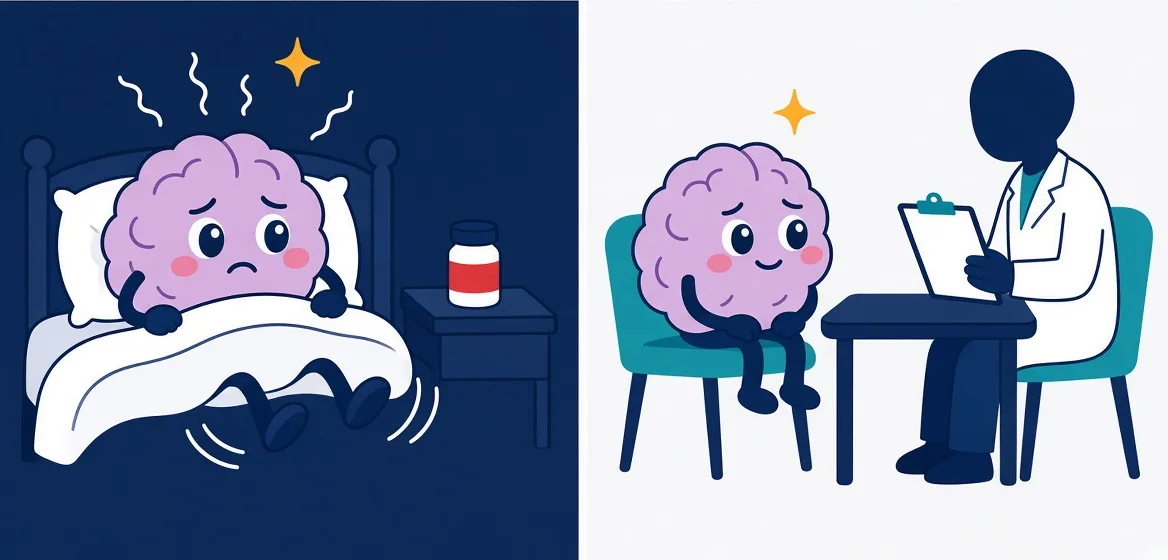
Some sleep problems need medical care before hypnosis. See your doctor first if you have any of these:
- Loud snoring, or pauses in breathing at night (possible sleep apnea)
- An urge to move your legs at night (possible restless legs)
- Sleep trouble that started with a new medication
- Sleep trouble from shift work
- Severe insomnia, or days with almost no sleep
Thyroid problems and alcohol use can also look like insomnia. A doctor can check for these.
Do not change a sleep medication without talking to your prescriber. If you have thoughts of self-harm, contact a doctor or emergency services now.
Who Should Skip Hypnosis for Now
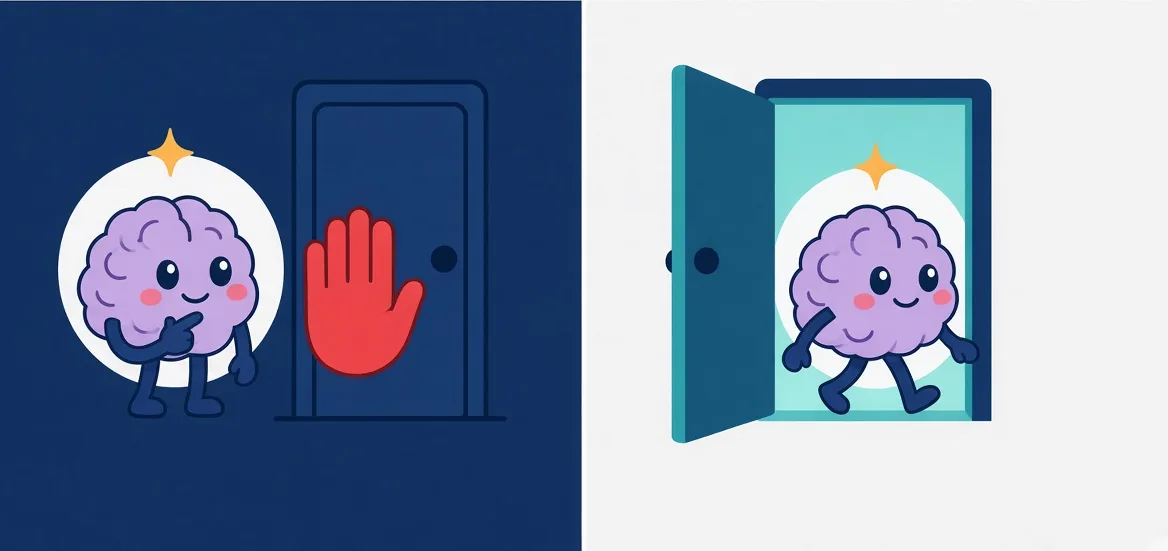
- You have severe or long-lasting insomnia and have not seen a doctor.
- You take sleep medication and have not talked to your prescriber.
- You want a result promised in advance. No honest provider can promise one.
- You are not comfortable with relaxation or suggestion.
- You need strong evidence before you try something. For chronic insomnia, the evidence for hypnosis is thin.
Frequently Asked Questions

Does hypnosis help chronic insomnia?
The evidence is thin. A 2018 review of 24 studies found a benefit in 58.3% of them, mixed results in 12.5% and no benefit in 29.2%, and most studies were small. In our Reddit count, 4 of 18 hypnosis reports describe a positive result. CBT-I comes first. Hypnosis may help some people as an add-on.
Does hypnosis work for severe insomnia?
See a doctor first. Severe insomnia can have causes that hypnosis cannot treat, such as sleep apnea or restless legs. Once a doctor has checked for these, hypnosis can be discussed as an add-on, not a replacement.
How many sessions for chronic insomnia?
I start with three sessions. Then you decide whether to renew. Each session builds on the last.
Can hypnotherapy cure insomnia?
“Cure” is a strong word. What hypnotherapy does is retrain your brain's sleep patterns. For many people, this results in lasting improvement. But it requires practice and commitment to the process.
Will it work if nothing else has?
Possibly. Hypnotherapy works differently than pills or sleep apps because it addresses the subconscious patterns maintaining your insomnia. Many of my clients came to me after trying everything else.
Is it safe?
For most people, yes. A 2018 review of 24 studies found side effects were uncommon. You remain aware and in control throughout every session.
Do I need to be highly hypnotizable?
If you can daydream or get absorbed in a movie, you can be hypnotized. We will assess this in your first session.
Are sessions in-person or virtual?
100% virtual via video call. Hypnotherapy works just as well online, and you get to be comfortable in your own space. No commute, no parking, no waiting room.
Ready to Sleep Again?
You have tried the pills. You have tried the apps. You have tried forcing yourself to relax (which never works).
Maybe it is time to try something that addresses why your brain will not let you sleep in the first place.
Chronic insomnia is not a character flaw. It is a pattern your brain learned, and patterns can be unlearned. For a comprehensive look at the science and approaches, read my full guide on hypnotherapy for sleep.
You deserve to wake up rested.
- Danny
Ready to Work Together?
- Three ways to get started (see options below)
- From self-paced audio ($220) to full 1:1 programs
- Choose what fits your needs and budget
- 100% virtual sessions from anywhere
📅 Currently accepting 4 new sleep clients per month
Investment & Options
Choose the path that fits your needs
Start with one session: $220 to $350, about 45 minutes, depending on complexity
- One session of about 45 minutes
- No program structure
Just want to see what it's like
Inquire via EmailAbout 45 minutes each. After three sessions, you decide whether to renew.
- 3 personalized sessions
- Custom to your triggers
- Direct support throughout
Best for complex cases or trauma-related eating
Apply- 6 full sessions (same content as 1:1)
- Self-paced, repeat anytime
- Lifetime access forever
We do not push expensive packages. You commit to three sessions, then you decide whether to renew.

Danny Mohan
Danny Mohan is a Registered Clinical Hypnotherapist (ARCH) specialising in gut-directed hypnotherapy for IBS, gut-related anxiety, and chronic gut-centred pain. Sessions follow the Manchester Protocol as a clinical reference framework, with a 3-session commitment structure. When he is not helping clients rewire their subconscious, you will find him at comedy improv. Reading people is a skill that works both ways.
Last updated: January 2026
Sources & References
- •Cordi MJ, Schlarb AA, Rasch B. (2014). Deepening Sleep by Hypnotic Suggestion. Sleep. Oxford Academic
- •Chamine I, Atchley R, Oken BS. (2018). Hypnosis Intervention Effects on Sleep Outcomes: A Systematic Review. Journal of Clinical Sleep Medicine. PMC
- •Lam TH, et al. (2015). Hypnotherapy for insomnia: a systematic review and meta-analysis. PubMed
- •American Academy of Sleep Medicine. (2020). Clinical practice guideline for the treatment of chronic insomnia. AASM