Reveri Review: When the App Works, When It Isn't Enough

An honest buyer's-guide review of Reveri from a Registered Clinical Hypnotherapist. The app is well built and the research pedigree is real. The right question is not whether Reveri is good. The right question is whether Reveri is enough for your specific case, and when it is not, what to do instead.

By Danny M., RCHRegistered Clinical Hypnotherapist (ARCH)Reviewed 2026-04-26Reading time: about 22 minutes

The short version. Reveri is the most clinically credible self-hypnosis app on the market. Dr. David Spiegel is a leading clinical hypnosis researcher, the production quality is high, and for mild general use cases the app is often enough. It is not a substitute for personalized in-person work in the cases that need personalization, and it is not the strongest condition-specific app for IBS. The point of this review is to be specific about which case is which.

What Reveri actually is

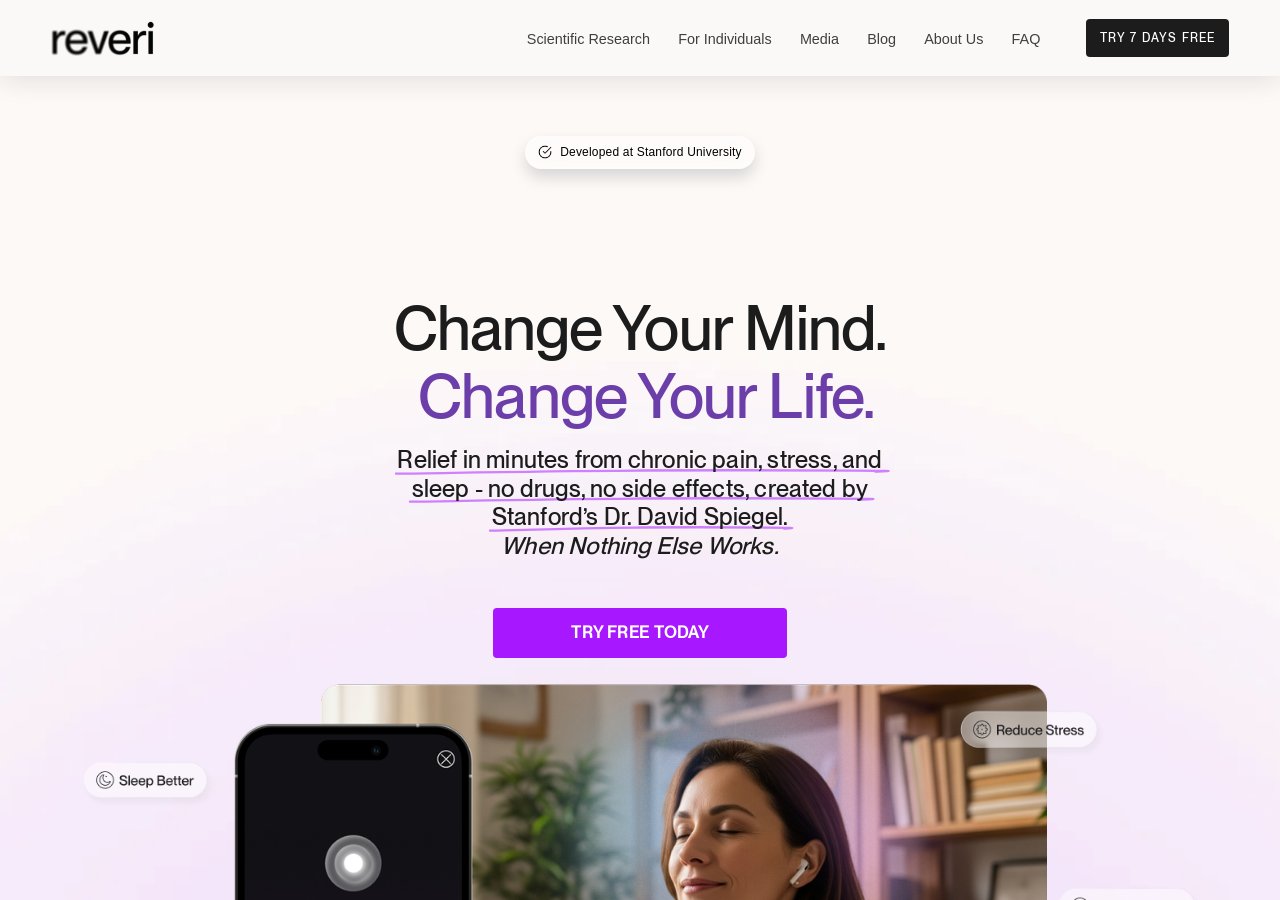
Reveri is a self-hypnosis app built by Dr. David Spiegel, professor of psychiatry at Stanford and one of the most-cited clinical hypnosis researchers of the last forty years. He developed the Hypnotic Induction Profile, a clinical tool for measuring hypnotic responsiveness that is still in widespread use. The app launched in 2020, raised venture capital, and has been positioned as a research-anchored, polished alternative to general meditation apps.

Pricing sits around fifteen dollars a month, with annual subscriptions and occasional free-trial windows. That is the same rough price band as Calm, Headspace, and most of the meditation app category. It is dramatically less expensive than in-person clinical hypnotherapy. A single in-person session with most credentialed practitioners runs from about one hundred and fifty to two hundred and fifty dollars depending on geography. CHC sessions are two hundred and twenty dollars.

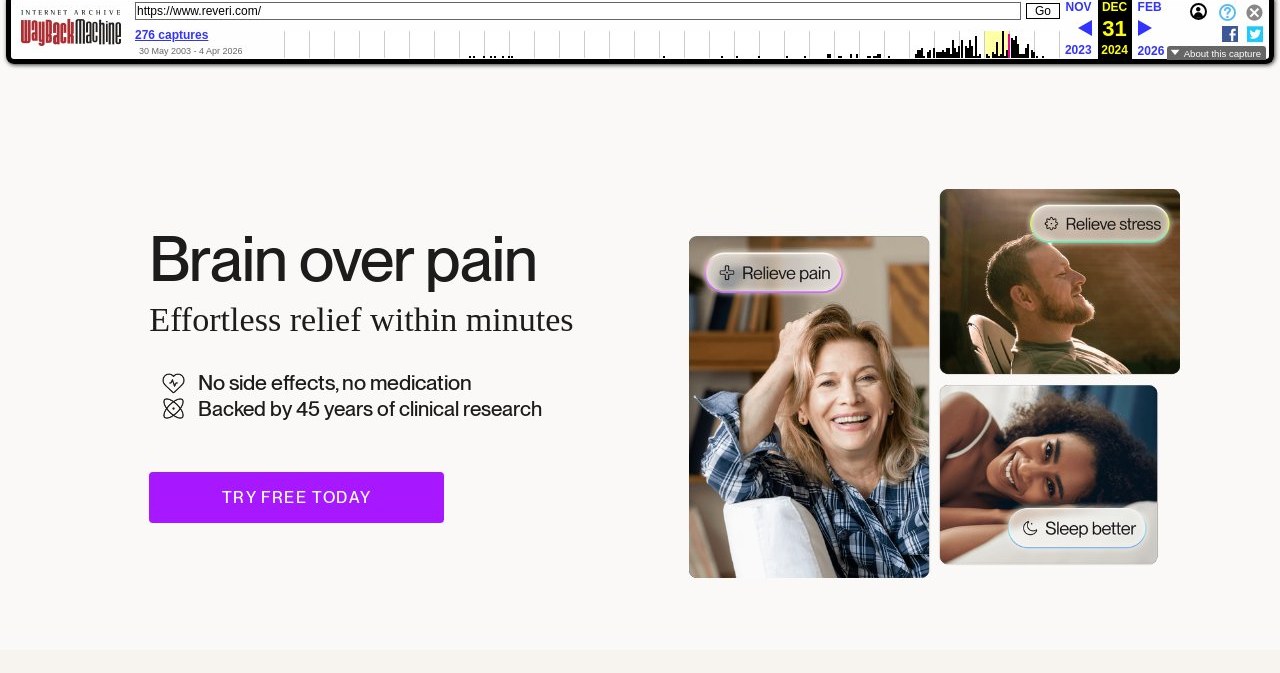
The app is organized into categories that map to common reasons people show up to hypnotherapy. Stress and anxiety. Sleep. Focus and performance. Pain management. Habits, including smoking and eating patterns. Inside each category there is a library of guided self-hypnosis sessions, typically eight to fifteen minutes long, with Spiegel as the voice in most of them. The library continues to expand and the production quality has stayed high across releases.

Reveri also includes a digital adaptation of the Hypnotic Induction Profile so users can get a real estimate of their own hypnotic responsiveness. That is a meaningful feature. Most meditation apps make no attempt to measure whether the technique is likely to work for the individual user. Reveri telling you up front that you are in the moderate or high suggestibility range, or in the low range where hypnosis tends to work less well, is a small honesty most of the category does not bother with.

Mainstream press coverage has been positive. The app gets covered by general technology and health press whenever a new feature lands. It is venture-funded, which has practical implications. Polished UX, ongoing development, more than the small one-person hobbyist energy that some self-hypnosis apps have. Polished does not always mean clinically right for the case in front of it, and we will get to that.

Worth saying clearly. I am a Registered Clinical Hypnotherapist in Calgary writing a review of an app whose product offering competes with my own service in some cases. The conflict of interest is real. The way I have tried to manage it is by being explicit about the cases where Reveri is the right tool and the client should not upgrade to in-person work, including cases where a less honest version of this page would push readers toward booking with me. If parts of this review read like an argument for staying with the app, that is the feature, not the bug.

Reveri feature anatomyDiagram of the main Reveri product surfaces: category library, typical session length, hypnotic induction profile, and pricing.Reveri at a glanceCategoriesStress and anxietySleepFocus and performancePainHabits (smoking, eating)Session formatGuided self-hypnosisSpiegel as primary voiceTypical length 8 to 15 minOn-demand libraryNo live practitionerHypnotic Induction ProfileBuilt-in suggestibility checkSpiegel-developed instrumentTells you if hypnosis is likelyto work well for youPricingAbout $15 per monthAnnual subscription optionOccasional free trialvs $220 per in-person session
Four product surfaces. The categories and session format are the core library. The Hypnotic Induction Profile and the pricing are what set Reveri apart from generic meditation apps.

What Reveri does well (genuinely)

Start with what the app gets right, because the strengths are real and they matter for figuring out who should use it.

Quality of induction is good. Spiegel is one of the leading hypnosis researchers of the last several decades and the inductions reflect that. The pacing is right. The suggestion language is aligned with the research literature on what tends to land. The audio production is clean. None of those things are guaranteed in self-hypnosis content, especially in the cheaper end of the category. Many self-hypnosis recordings you can find online are made by people with light training, pacing that is too fast, suggestions that are imprecise, and production that is distracting. Reveri is not in that group.

Pricing is accessible. Around fifteen dollars a month is roughly the cost of a single coffee a week, and it is orders of magnitude cheaper than in-person sessions. For someone with mild general stress, occasional difficulty falling asleep, or a focus issue around a deadline, the math is straightforward. The app is the more cost-rational starting point for a problem that is mild and general.

Available on demand. There is no scheduling. No waitlist. No cancellation policy. No gatekeeper. Three in the morning, wide awake, mind racing, looking for a sleep induction. The app delivers in under thirty seconds. That is real value that no in-person service can match. For the acute moments when something is happening right now and the right tool is whatever works in the next five minutes, an on-demand library is the right format.

For mild and general use cases, often sufficient. Most of the people I see who have used Reveri or a similar app for a while either continue using the app and never need in-person work, or they identify a specific pattern the app cannot reach and book in for the specific work. The first group is large and worth respecting. Many app users get real benefit and never need to upgrade. The second group is why this review exists.

The Hypnotic Induction Profile is a real differentiator. Most meditation apps assume the technique works for everyone. Hypnosis research has known for decades that hypnotic responsiveness varies meaningfully between individuals, with roughly fifteen percent of people scoring in the low range. Reveri is honest about that and gives users a way to check. If the Profile says you are in the low responsiveness range, that is useful information. It does not mean the app is useless. It does mean expectations should be calibrated, and that the relaxation layer is probably going to be more of what you get from the app than the deep suggestion layer.

Key Stat
81% more slow-wave sleep among highly suggestible participants vs control

Cordi 2014 demonstrated that listening to a hypnotic suggestion audio before sleep increased slow-wave sleep by approximately 81% compared to control in healthy young women who scored as highly suggestible. The effect was specific to highly suggestible participants and to the active hypnotic-suggestion audio rather than a control narrative. This is the kind of generalizable finding that audio-delivered hypnosis (which is essentially what an app like Reveri provides) has the strongest claim on.

Source: Cordi 2014 (PMID 24882902)

Where Reveri (and any hypnosis app) falls short

These limits are not unique to Reveri. They are structural to the self-hypnosis app format. A library of pre-recorded sessions, no matter how well produced, cannot do certain things. The honest review names them clearly so the reader can decide whether the limits matter for their case.

No personalization to your specific clinical history. The app does not know whether you have had three previous panic episodes that responded to a specific kind of grounding, or whether your insomnia started after a bereavement, or whether your anxiety has a specific trigger that needs a specific desensitization. A practitioner can build the suggestion content around those facts. A library cannot.

No personalization to comorbidities. If you have anxiety stacked with IBS, or insomnia stacked with chronic pain, or OCD with health anxiety, the right approach to either layer changes when the other layer is present. App content treats each category as if it stood alone. In real clinical work, comorbidities reshape the plan. Our guides on the anxiety and IBS overlap where Nerva can be a sensible app entry and the IBS-and-insomnia stack are examples of how the layers interact.

No interactive feedback. A live practitioner adjusts during the session. They notice when a suggestion is not landing and try a different angle. They notice when something emotional surfaces and slow the pace. They notice when the client has gone deeper than expected and adjust the language for that depth. A pre-recorded session cannot do any of that. The recording plays the same way regardless of what is happening in the listener.

No troubleshooting when sessions stop working. A common pattern with self-hypnosis apps is initial benefit, followed by a plateau at four to six weeks, followed by gradual disengagement when the same content stops producing the same effect. A practitioner can troubleshoot that plateau. Try a different induction. Tighten the suggestion to a more specific behaviour. Add an emotional-processing layer if the surface work has done what it can. An app cannot make those calls.

No scope-of-practice screening. This is the most important one for the reader to understand. A credentialed practitioner is trained to recognize when a presentation is outside the scope of what hypnotherapy can responsibly address, and to refer the client to the right kind of care instead. Active suicidality, untreated severe trauma, psychotic-spectrum presentations, severe dissociative conditions, untreated bipolar in an affective phase. None of those are hypnotherapy presentations and a responsible practitioner will say so and refer out. An app does not do screening. It will serve the same library to a person with mild stress and a person in active crisis. That is a real risk for the small minority of users whose presentation needed to be redirected to a different kind of care from the start.

Limited depth per session. Eight to fifteen minutes is useful for stress reduction, sleep onset, and general state regulation. It is short relative to the fifty to ninety minute sessions of structured in-person clinical hypnotherapy work. The shorter format trades depth for accessibility. For mild presentations the trade is worth it. For deeper or more complex presentations, the shorter format does not have time to do what needs doing.

Doesn't address the meta-anxiety layer. Many of the clients I see who have used self-hypnosis apps without getting traction have a specific issue. They start a session, notice that something is not landing, start doubting whether they are doing it right, get self-conscious, and the doubt itself derails the work. The relationship with a practitioner resolves that loop because the practitioner can name what is happening and redirect. The app cannot.

App vs in-person comparison matrixSide-by-side matrix comparing Reveri (and similar apps) against in-person clinical hypnotherapy across personalization, depth, scope-of-practice, troubleshooting, scheduling, and cost.Reveri (app)In-person hypnotherapyPERSONALIZATIONNone (generic library)Built around your caseDEPTH PER SESSION8 to 15 min50 to 90 minSCOPE SCREENINGNoneYes, with refer-outTROUBLESHOOTINGNoneLive, adaptiveSCHEDULINGOn demand, 24/7Booked, weekly cadenceCOST PER MONTHAbout $15About $880 at weekly $220BEST FITMild, general, maintenanceDiagnosed, complex, comorbid
Seven axes of comparison. Neither column is universally better. The right tool depends on which axes matter most for the case in front of you.

Not sure which side of this matrix your situation falls on?

A free 15-minute consultation is the cheapest way to find out. We will tell you honestly whether Reveri is enough, whether a condition-specific app like Nerva is a better fit, or whether your case needs in-person work.

Book a free consultation

When Reveri is enough (don't upgrade)

Many app users get real benefit and never need to upgrade. Pretending otherwise to drive bookings would be dishonest, and it would also be wrong about how the cases actually go. Here are the situations where Reveri is enough and the right move is to keep using it.

Mild general stress. The kind of stress that comes with a reasonable life and does not have a specific clinical character. Project deadlines, parenting load, the usual mid-week tension. Reveri's stress and focus categories are well suited to that. Daily fifteen minute sessions for two to four weeks are often enough to take the edge off and build a sustainable practice.

Occasional difficulty falling asleep. Not chronic insomnia. Not the three in the morning wake-up loop that does not resolve. Just the occasional wired night where falling asleep takes longer than usual. Reveri's sleep category is well designed for that. If your situation is the harder version, we cover the chronic case in our guide on hypnotherapy for insomnia where Reveri can be a good entry but is not enough on its own.

Focus support. The kind of focus that wavers around long work blocks, exam prep, or sustained creative effort. Hypnosis-based focus suggestions are well suited to short sessions and on-demand use. Reveri's focus content is appropriate for that case.

Maintenance after in-person work. This is the case I most often actively recommend the app for. Clients who have completed a course of in-person hypnotherapy for anxiety, sleep, smoking cessation, or chronic pain often want a way to maintain the work between any future sessions or after the formal course ends. Daily app practice with content that is reasonably aligned with what we did in person is a sensible maintenance pattern. The app is not replacing the in-person work in that case. It is extending it.

Highly suggestible, motivated, and the issue is mild. If the in-app Hypnotic Induction Profile puts you in the high responsiveness range, you have a clear pattern of being able to engage with experiential work, and the issue you are bringing to the app is mild and general, the odds are very good that the app will be enough. The combination of high suggestibility and mild presentation is the sweet spot for self-hypnosis.

Budget constraint. Fifteen dollars a month versus two hundred and twenty dollars per session is a real difference. For some people the right move is starting with the app, using it consistently for thirty to sixty days, and only upgrading if the app does not produce meaningful change. That is a defensible sequencing for someone whose budget will not support an in-person course right now. The app is not the same product as in-person work, but it is a reasonable first try, and many of those tries are sufficient.

Wanting to test hypnotic responsiveness before committing. A few clients want to know whether hypnosis is going to work for them at all before they spend on a structured in-person course. Spending a month with Reveri is a reasonable way to check. If the app produces a real response in that window, you have evidence that the in-person work is likely to land for you too. If the app produces nothing across thirty days of consistent use, that is also useful information about your hypnotic responsiveness or about the fit of the modality for the specific issue.

💡
An honest filter for staying with the app
If your situation matches at least three of the following, the app is likely enough and you should not upgrade. Presentation is mild and general, not severe and specific. Hypnotic Induction Profile in moderate to high range. Daily practice for thirty days has produced meaningful change. No comorbid conditions complicating the picture. Budget would be stretched by in-person work. Issue is sleep, stress, or focus rather than diagnosed anxiety, IBS, OCD, PTSD, or severe insomnia. If most of those apply, keep using the app.

When Reveri isn't enough (upgrade to in-person)

Equally honest about the other direction. Some cases need more than the app can deliver, and pretending otherwise leaves people stuck. Here are the situations where the app is the wrong tool and the right move is to upgrade.

Diagnosed condition that benefits from clinical-grade work. IBS with a confirmed diagnosis from a gastroenterologist where the gut-directed protocol is the indicated approach. OCD where exposure and response prevention is the gold standard and hypnotherapy plays a small adjunctive role. PTSD where trauma processing requires a trained practitioner present. Panic disorder where the somatic regulation work needs to be personalized. Severe chronic insomnia that has not responded to CBT-I. Chronic pain with central sensitization. None of those are app presentations. They need personalization, troubleshooting, and the practitioner relationship that an app cannot provide.

You have used the app for thirty plus days without meaningful progress. This is the most useful pattern to watch for. If you have given the app a real chance, with consistent daily use, content matched to your issue, and at least four to six weeks of practice, and nothing has shifted, the issue is probably one the app cannot reach. That is information worth acting on. Either move to in-person work for the same issue, or try a condition-specific app like Nerva if the issue is IBS specifically.

Comorbidity that needs personalized work. Anxiety stacked with IBS. Anxiety stacked with insomnia. OCD with health anxiety. Chronic pain with depression. The presence of a second condition usually changes how you should approach either one, and that is the kind of judgment a practitioner makes case by case. App content treats each category as if it were the only thing happening. For comorbid presentations that approach often misses the leverage point.

Trauma history that surfaces during app use. Sometimes a self-hypnosis session brings up something that the user was not expecting and did not choose to engage with. That is the kind of moment where a trained practitioner being present matters. An app cannot pause and check in. It cannot recognize that something traumatic is surfacing and adjust. If you have a known trauma history or if something has come up during app use that felt destabilizing, that is a clear signal that the app is the wrong primary tool. In-person work with a trauma-aware practitioner is the right next step. We cover the anxiety side of this in our guide on hypnotherapy for anxiety conditions where in-person work is the better fit.

You need scope-of-practice screening. If you are not sure whether your presentation is in hypnotherapy's zone or whether it needs a different kind of care altogether, an app cannot tell you. A practitioner consultation can. The first thirty minutes of a real intake is partly screening for whether hypnotherapy is the right tool for this case and whether the right move is referral to a psychologist, a physician, or a different kind of specialist instead. That screening function is not in any app.

The hypnotic experience itself produces discomfort. A small minority of users feel dissociative discomfort, emotional surge, or bodily strangeness during self-hypnosis. With a practitioner present, those reactions can be processed, the technique can be adjusted, and the work can continue safely. With the app alone, the user is left to manage the reaction without support. If self-hypnosis has produced any experience that felt unsafe or unsettling, that is a signal to pause the app and work with someone in person before continuing.

Per the scope-of-practice statement that I work to as a Registered Clinical Hypnotherapist, hypnotherapy is complementary care, not a replacement for medical or psychological treatment. An RCH does not diagnose mental or physical conditions, does not prescribe or adjust medication, and does not treat psychotic disorders, severe dissociative disorders, active suicidality, or untreated severe trauma as primary presentations. A self-hypnosis app operates with an even narrower scope, because there is no practitioner to do screening, no practitioner to refer out, and no practitioner to recognize when the app is the wrong tool. That is not an indictment of the app format. It is a reason to be honest about which presentations the format cannot serve.

Decision tree: when Reveri is enough vs when to upgradeBranching decision tree based on diagnosis status, severity, comorbidity, and prior app trial outcome, leading to a recommendation of staying with the app, switching to a condition-specific app, or upgrading to in-person work.Is the issue diagnosed?No (mild, general)stress, sleep, focusYes (IBS, OCD, PTSD,panic, severe insomnia)Try Reveri 30 daysCondition-specific?Working: stay with appIBS: try Nerva or MahanaPlateaued at 30 days:book in-personOther diagnosis:in-person, app as adjunctTrauma surfacing, comorbidity, or scope concerns override the tree: in-person work first.
A simplified decision tree. Trauma, comorbidity, and severe presentations override the branches and go straight to in-person work regardless of the rest.

What the research says about app-based hypnosis

The evidence base for app-delivered hypnosis specifically is thinner than the evidence base for clinician-delivered hypnotherapy. That is worth being precise about, because the app category often markets itself with general hypnosis research as if the research applied directly to the app product. It applies in part. Some of it generalizes. Some of it does not.

Direct Reveri RCT data is limited. Most of the public outcome numbers from Reveri come from in-app user surveys rather than independent randomized controlled trials. The often-quoted 90 percent of users felt more rested figure is Reveri's own unaudited number from in-app self-report, not validated research. That is not a knock on Reveri specifically. App companies in wellness more broadly publish their internal numbers and call them outcomes. The honest framing is that those numbers are marketing data, not RCT evidence, and they should be read as such.

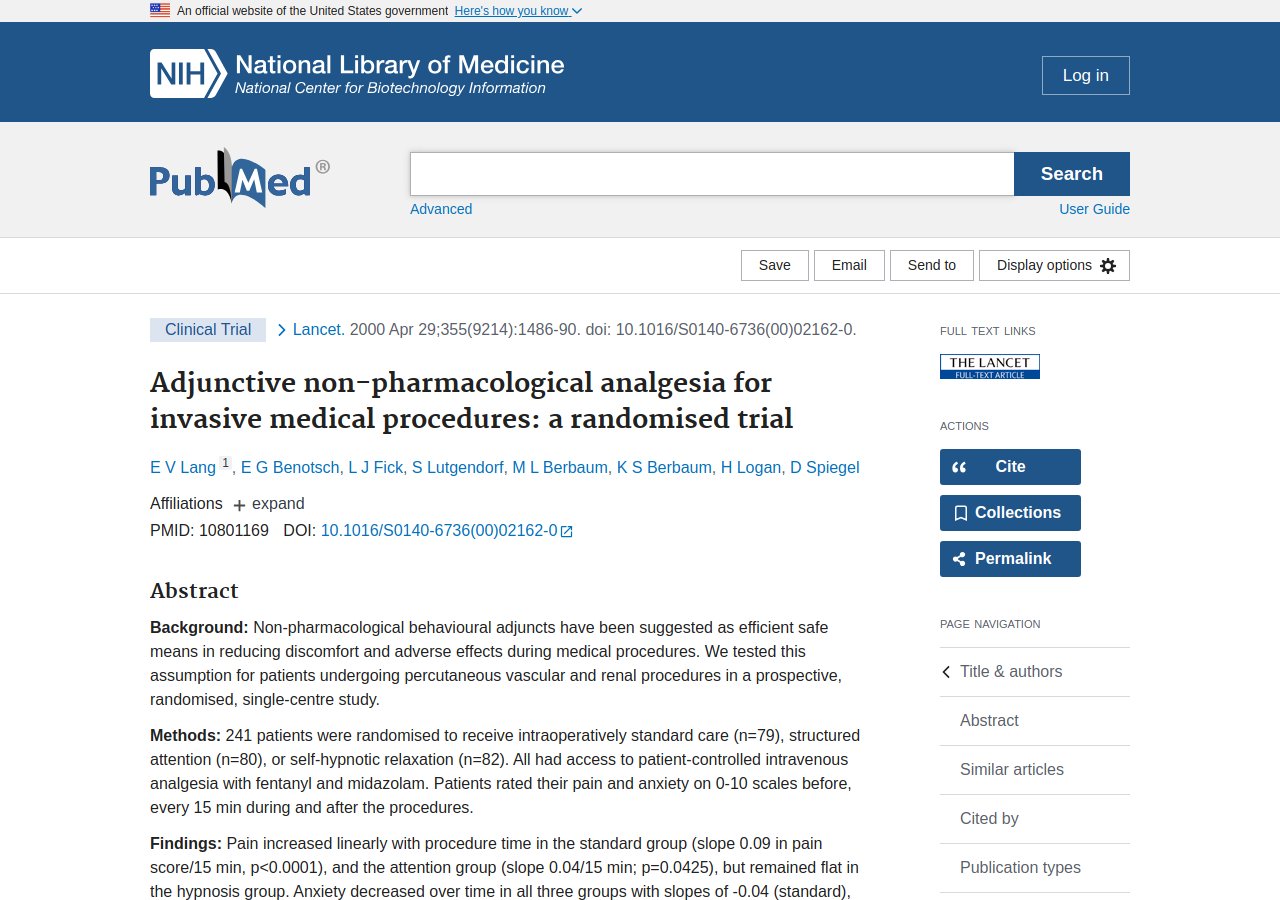
Generalizable hypnosis research applies in part. Several pieces of the broader hypnosis literature do bear on what an app like Reveri can plausibly deliver. Cordi 2014 (PMID 24882902) showed that listening to a hypnotic suggestion audio before sleep increased slow-wave sleep by approximately 81% compared to control in healthy young women who scored as highly suggestible. That study used an audio-delivered hypnotic suggestion, which is structurally similar to what an app session is. The effect was specific to highly suggestible participants and did not appear in low-suggestibility participants. It also did not test clinical insomnia, only sleep architecture in healthy participants. So the finding generalizes to the case of a highly suggestible app user using sleep content for general sleep support. It does not generalize to a chronic insomnia patient or to a low-suggestibility user.

Chamine 2018 (PMID 29952757) conducted a systematic review of hypnosis trials for sleep. Of 24 included trials, 13 of 24 (54%) reported a sleep benefit from hypnosis-based intervention, including improvements in sleep onset latency, total sleep time, and subjective sleep quality. The review noted heterogeneity in protocols, populations, and outcome measures, and concluded that the evidence supports hypnosis as adjunctive intervention rather than as monotherapy for chronic insomnia. The honest read on Chamine 2018 is that hypnosis helps for sleep in roughly half of the trials examined, which is positive and worth taking seriously. The other half did not show benefit, which is also worth taking seriously. CBT-I remains the first-line evidence-based treatment for chronic insomnia. App-delivered hypnosis is an adjunct or alternative in cases where CBT-I has failed or is unavailable, not a replacement.

Hammond 2010 (PMID 20183733) reviewed the evidence for hypnosis in anxiety and stress-related disorders and concluded that hypnosis is an effective adjunctive intervention for generalized anxiety, situational anxiety, pre-procedural anxiety, and stress-related symptoms, with effect sizes comparable to other psychotherapeutic interventions. That review covers clinician-delivered hypnosis. Direct evidence for app-only delivery in anxiety is thinner. The honest framing is that clinician-delivered hypnotherapy for anxiety has a real evidence base. App delivery probably captures part of that benefit for mild presentations and probably captures less of it for the more severe and complex cases that need personalization.

Apps work better for some conditions than others. Stress, sleep onset, and general focus support are categories where generic guided content has a reasonable chance of landing because the work is mostly state regulation. The target-state is similar across users, so generic content fits. OCD, PTSD, severe panic, and complex comorbidity stacks are categories where the work is mostly personalization. Generic content fits poorly because the target work is specific to the case. The honest summary is that an app is appropriate for the state-regulation end of the spectrum and inappropriate for the personalization-heavy end of the spectrum.

Key Stat
13 of 24 trials (54%) showed a sleep benefit

Chamine 2018 conducted a systematic review of clinical trials evaluating hypnosis interventions for sleep outcomes. Of 24 included trials, 13 (54%) reported a sleep benefit including improvements in sleep onset latency, total sleep time, and subjective sleep quality. The review noted heterogeneity in protocols and populations and called for standardized hypnosis protocols and larger RCTs. The evidence is strongest for hypnosis as an adjunctive intervention rather than monotherapy for chronic insomnia.

Source: Chamine 2018 (PMID 29952757)

Reveri vs Nerva vs Mahana vs Mindset positioningComparison matrix of four hypnosis-anchored apps across primary use case, evidence anchor, structure, and price band.AppPrimary use caseEvidence anchorStructureReveriabout $15 / monthGeneral (stress, sleep, focus)Spiegel / Stanford programOn-demand libraryNervaabout $15 / monthIBS specificallyMonash gut-directed research6-week structured programMahanaabout $15 / monthIBS specificallyGut-directed, FDA cleared (US)12-week structured programMindsetabout $15 / monthGeneral wellness, less hypnosis-anchoredMixed coaching contentLibrary plus trackingFor IBS specifically, Nerva or Mahana are usually the better starting point than Reveri.
Four apps in roughly the same price band. The right choice depends on which use case you are actually trying to solve. General Reveri, IBS-specific Nerva or Mahana, less hypnosis-focused Mindset.

Reveri vs. other hypnotherapy apps (Nerva, Mahana, Mindset)

Reveri is the strongest general-purpose hypnosis app on the market, but for some specific use cases it is not the best app for the job. A fair review names which app to consider for which case.

Reveri is the right pick for general use. Stress, sleep, focus, pain support, habit support, performance state. Across all of that, Reveri's general-purpose library is well built and Spiegel's research credibility is meaningful. If you do not have a specific condition that has its own dedicated app category, Reveri is the default reasonable choice.

Nerva is the right pick for IBS specifically. Nerva is built around the gut-directed hypnotherapy protocol developed at Monash University in Melbourne, which is one of the strongest condition-specific evidence bases in the entire hypnosis literature. The app delivers a structured 6 week program rather than an on-demand library, which mirrors the way gut-directed hypnotherapy is delivered in person. For an IBS-only use case, Nerva is more targeted than Reveri's general content. The trade is that Nerva is a single-purpose app. If your case is IBS plus general stress, Reveri or both is more flexible.

Mahana is also IBS-focused. Mahana takes a similar gut-directed framing to Nerva, runs as a structured program, and is FDA-cleared as a digital therapeutic for IBS in the United States. The FDA clearance is a regulatory marker that the other apps do not have. In Canada the practical difference between Nerva and Mahana for an IBS user is modest, and the right call usually comes down to which program structure feels more usable. Either is a more targeted IBS choice than Reveri.

Mindset is more of a general wellness tool with less hypnosis-anchored content. It is built more around coaching and goal-tracking than around the focused attention plus suggestion mechanism that Reveri, Nerva, and Mahana use. For a user who specifically wants hypnosis as the technique, Reveri is the closer fit than Mindset.

For non-IBS general use, the honest comparison says Reveri is the better-built general-purpose app. For IBS specifically, Nerva or Mahana have stronger condition-specific evidence than Reveri's general model. If your case is IBS with comorbid anxiety or comorbid insomnia, the right move is often a condition-specific app for the IBS layer plus an in-person consult on whether the comorbid layers need their own work. The free consultation can sort that out.

Evidence base depth: clinician-delivered vs app-monotherapyBar-style diagram comparing the depth of randomized-trial evidence for clinician-delivered hypnotherapy vs app-delivered self-hypnosis as monotherapy across six common use cases.Use caseClinician-delivered evidenceApp-monotherapy evidenceGeneral stressSleep onset supportChronic insomniaIBSAnxiety (adjunctive)OCD / PTSDBars are illustrative. App-monotherapy evidence is thinner across the board, with the gap widest for severe and complex presentations.
The evidence base for clinician-delivered hypnotherapy is wider than the evidence base for app-monotherapy across most use cases. The gap is smallest for general stress and sleep onset. The gap is widest for chronic insomnia, OCD, and PTSD.

Have you been on Reveri for 30 days and want a read on whether to upgrade?

The free 15-minute consultation is exactly that conversation. We will look at what worked, what did not, and recommend whether to keep the app, switch to a condition-specific app like Nerva, or move to in-person work.

Book a free consultation

Decision framework: should you stay with the app or upgrade?

A practical sequence. Use it in order. Five branches that cover most of the cases I see. None of these will give you a perfect answer because your situation has texture this page cannot see, but they will narrow the field to the right next move.

Branch 1. Used Reveri for 30+ days, seeing meaningful change

Continue. No need to upgrade. The app is doing what you needed it to do. Keep the daily practice, watch for plateau in the next thirty to sixty days, and revisit if the response starts to fade. Most users in this branch never need in-person work, and that is fine.

Branch 2. Used Reveri for 30+ days, no meaningful change

Upgrade pathway. Two reasonable next moves. If the issue is IBS specifically, switch to Nerva or Mahana for the condition-specific protocol before assuming the issue is untreatable by an app. If the issue is something else (sleep that the app cannot reach, anxiety that has not responded, a focus issue with a specific cognitive component), in-person hypnotherapy is the next step. The pattern of consistent practice without response usually signals that the case needs personalization the app cannot provide.

Branch 3. Diagnosed condition that needs clinical-grade work

Start with in-person, use the app for between-session reinforcement. Diagnosed IBS where gut-directed hypnotherapy is indicated. Diagnosed OCD where the protocol is exposure and response prevention with hypnotherapy as a small adjunct. Diagnosed panic disorder. Severe chronic insomnia that has not responded to CBT-I. Chronic pain syndromes. In each of those cases the in-person work is the lead and the app is an extender. We have a guide on how to choose a hypnotherapist if you are upgrading from app to in-person work that walks through what to look for in the practitioner you pick.

Branch 4. Mild and general use, budget-constrained

The app is a reasonable first step. Fifteen dollars a month for thirty to sixty days is a low-cost test. If the app produces meaningful change, you have your answer and the cost stays low. If it does not, you have the information you need to decide whether to invest in in-person work later. This is the most defensible sequencing for someone whose budget would be stretched by starting with in-person sessions.

Branch 5. Trauma history, OCD, PTSD, or severe presentation

In-person from the start. The app is risky as the primary tool in these cases. Not because the app is harmful in most use, but because the cases that need scope screening and a present practitioner are exactly the cases the app cannot serve. If your situation is in this branch, the first move is a consultation with a credentialed practitioner. The app can play a supportive role later if appropriate, but it should not be the lead tool.

30-day app trial frameworkTrack-and-decide structure for a thirty-day trial of Reveri, with weekly check-in points and a decision rule at day thirty.A 30-day Reveri trial: track and decideDay 0Baseline ratingDay 7First check-inDay 14Mid-trial checkDay 21Pattern visibleDay 30DecisionWhat to track0 to 10 rating of targetissue, weeklyFrequency of practiceSubjective fit of contentAny symptom changesDecision rule at Day 30Rating dropped 2+ pointsand practice stayed daily:continue with appLess than 2 point dropupgrade or switch appOverride conditionsTrauma surfacingSymptoms worseningDissociative discomfortDiagnosis upgrade neededstop trial, book in-person
A simple thirty day trial framework. Track a single 0-to-10 rating weekly, follow the decision rule at day thirty, and let the override conditions short-circuit the trial if any of them show up.

Frequently asked questions

Does Reveri work for IBS specifically?

Reveri has general-purpose self-hypnosis content that includes some gut and stress-related sessions, but it is not built around the gut-directed hypnotherapy protocol that has the IBS evidence base. For IBS specifically, Nerva is built on the Monash gut-directed hypnotherapy research and runs as a structured 6-week program. Mahana offers a similar gut-directed framing and is FDA-cleared in the US for IBS. If your reason for picking up an app is IBS, Nerva or Mahana are usually a better starting point than Reveri. If your IBS is moderate or severe, has comorbid anxiety, or has not responded to a 6 to 8 week app trial, in-person gut-directed hypnotherapy is the next step. We cover that crossover in our guide on the anxiety and IBS overlap where Nerva can be a sensible app starting point.

Can I use Reveri alongside in-person hypnotherapy?

Yes, and most practitioners are comfortable with this. The pattern that works is in-person sessions doing the personalized work (history, scope screening, individualized suggestions, troubleshooting when something stalls) and the app filling in the days between sessions for self-hypnosis practice and reinforcement. Tell your hypnotherapist you are using Reveri, what categories you are using, and how often. A practitioner who treats that as a problem is not the right fit. A practitioner who incorporates the app practice into the plan is doing something useful.

Is the Reveri pricing reasonable for what you get?

For a polished self-hypnosis library voiced by Dr. David Spiegel and built on Stanford research, around $15 a month is a fair price. Compared to in-person sessions at $220 each, the app is dramatically cheaper. The honest framing is that they are not the same product. The app gives you on-demand access to a library of generic guided sessions. In-person work gives you personalization, scope-of-practice screening, troubleshooting, and a practitioner who can adjust based on what is landing for you. Both can be reasonable buys for the right person. The wrong move is paying for either one and expecting it to do the other one's job.

What if I don't get a response from Reveri, am I un-hypnotizable?

Probably not. Roughly fifteen percent of people score low on standardized hypnotic suggestibility scales, and Reveri actually includes a built-in version of the Spiegel hypnotic induction profile so you can check. The more common reasons people do not get traction with an app are these. Generic content that does not match the specific issue. No personalization to the individual presentation. No troubleshooting when a session does not land. Mismatch between the app's general-purpose framing and a condition (like OCD, severe insomnia, or trauma) that needs a different approach. Trying the hypnotic induction profile inside Reveri tells you whether suggestibility is the limiting factor. If your score is in the moderate to high range and the app still is not moving things, the problem is usually fit, not your hypnotic capacity.

How is Reveri different from a meditation app like Calm?

Calm, Headspace, Insight Timer and similar apps are mindfulness-meditation apps. The mechanism is sustained, non-judgmental attention to present-moment experience. Reveri is a self-hypnosis app. The mechanism is focused-attention plus targeted suggestion. They overlap on the relaxation layer and on the breath-and-attention onramp, but the underlying tools are different. Mindfulness builds a generalized attentional skill that transfers across situations. Hypnosis uses focused attention as a vehicle for specific suggestions aimed at a specific change. Neither is better in the abstract. They are useful for different problems, and a person can reasonably use both for different layers of the same overall picture.

Will my hypnotherapist be offended if I'm using Reveri too?

A reasonable practitioner will not be. The clients I work with who use Reveri or a similar app between sessions are usually doing more practice than clients who do not, and the work tends to land faster as a result. The version that does not work is using the app instead of being honest with your hypnotherapist about a presentation that needs more than the app can deliver. If you feel a stuck point in the in-person work and you are reaching for the app to avoid the harder conversation, that is information worth bringing into the next session, not hiding from it.

If you have read this far you have done more diligence than most people who are choosing between an app and in-person work. The practical next step depends on what you found. If your situation is mild, general, and the app has been producing real change, keep using it. If your situation is IBS specifically, look at Nerva or Mahana before assuming any app will work. If your situation has the markers of needing personalization, scope screening, or troubleshooting that the app cannot give you, a free consultation is the cheapest way to confirm that and plan the in-person work. You can start the intake process when you are ready.

About the Author

Danny M., RCH

Registered Clinical Hypnotherapist (ARCH) practising in Calgary, Alberta. Clinical focus on anxiety, insomnia, chronic pain, and IBS. Virtual sessions across Canada and in-person in Calgary. Sessions are $220 CAD with no admin fees.

Learn more about our approach

Book a free consultation: app, in-person, or both

  • 15 minutes, no obligation
  • Honest read on whether Reveri (or Nerva, or Mahana) is enough for your case
  • A clear recommendation if in-person work is the better fit
  • Virtual across Canada or in-person in Calgary
Guarantee: If after session 1 you do not feel the work is a fit, session 2 is on us.
Book free consultation

📅 Currently accepting new clients