Sleep Studies Say You Slept? Why You Don't Feel Like It
Paradoxical insomnia (sleep-state misperception) affects 8 to 66% of insomnia patients per Castelnovo et al. Your brain says you didn't sleep; the sleep study says you did. An RCH's honest read on what is happening and what actually helps.
The short answer
Paradoxical insomnia is a sleep disorder where you feel awake all night, but a sleep study shows normal sleep. It’s a real mismatch between perceived and actual sleep, affecting many insomnia patients.
Key takeaways
- Real sleep misperception: Paradoxical insomnia is a genuine condition where you feel wide awake despite sleep studies showing normal sleep patterns.
- No quick fix: Standard sleep aids often fail because the issue is a mismatch between perceived and actual sleep, not a lack of sleep itself.
- Fits analytical minds: It commonly affects people with racing thoughts and sleep anxiety, who may be skeptical but can still benefit from targeted approaches.
- Emerging understanding: Research is still building a consensus definition, with prevalence estimated between 9.2% and 50% of insomnia patients.
I see this often at Calgary Hypnosis Center. A client tells me they didn’t sleep a wink, yet their partner says they were snoring. They’re exhausted, frustrated, and stuck in a loop of sleep anxiety. Their brain insists they’re awake, even when their body is resting.
We read 60 real reviews of hypnotherapy for sleep to understand what works.
We combed through 60 posts and comments from Reddit communities like r/insomnia and r/sleep where people shared their honest experiences with hypnotherapy for chronic sleeplessness. These are unfiltered voices—people who have tried medications, sleep hygiene, and CBT-I, and turned to hypnosis as a last resort or a drug-free alternative. The data shows that hypnotherapy helps most when it quiets the racing mind and breaks the cycle of sleep anxiety. Many people who felt wide awake at bedtime despite exhaustion found that hypnosis lulled them into sleep they didn't even remember. Consistency matters—those who practiced self-hypnosis or listened to recordings regularly saw the best results. But analytical types sometimes struggle, and hypnosis works best when paired with simple techniques like breathing or eye movements.
What is paradoxical insomnia, really?
Paradoxical insomnia is a sleep state misperception where you feel like you barely slept, yet sleep studies show normal sleep duration and architecture. I see this often at Calgary Hypnosis Center—clients who are exhausted but convinced they were awake all night. It’s not just a bad night; it’s a persistent mismatch between subjective suffering and objective data [PMC12833030].
This condition affects many insomnia patients, making it surprisingly common. The brain registers sleep, but the conscious mind doesn’t. One study found that people with paradoxical insomnia overestimated how long it took to fall asleep by a significant margin compared to accurate perceivers. That gap fuels a cycle of anxiety and hyperarousal.
Because the struggle is perceptual, traditional sleep hygiene often fails. That’s where hypnotherapy for insomnia can help—it works directly with the subconscious to recalibrate sleep perception. Unlike medication, it addresses the root cause: a brain that misreads its own sleep state.
If you’ve been told you slept fine but feel wrecked, you’re not alone. This isn’t “all in your head” in a dismissive sense—it’s a real, measurable phenomenon. Understanding it is the first step toward breaking the cycle of sleep anxiety and dread.
How do I tell if I have it?
Many clinicians and patients are skeptical when they first hear about paradoxical insomnia. The idea that someone could feel wide awake while a sleep study shows normal sleep seemed hard to believe. But research confirms it’s real—and surprisingly common. Studies estimate that many insomnia patients have this subtype, where subjective misery clashes with objective data. That mismatch is exactly why standard sleep advice often fails. You can’t fix a problem you don’t know you have.
I’ve seen clients who’ve tried everything—sleep hygiene, supplements, even CBT-I—still stuck in the cycle. What finally helped was a method that bypasses the conscious struggle. Hypnotherapy doesn’t argue with your perception; it works directly with the subconscious mind to recalibrate how you experience sleep. In our practice, we use suggestions that target the overactive brain at bedtime, quieting the racing thoughts that fuel the mismatch. It’s not about forcing sleep—it’s about letting go of the need to monitor it.
One study found that people with paradoxical insomnia overestimated how long it took to fall asleep by a significant margin compared to accurate perceivers. That gap is where hypnotherapy shines. By reducing sleep anxiety and breaking the habit of clock-watching, we help the brain accept that sleep is happening. I often combine hypnosis with simple eye-movement techniques that induce a natural trance state, similar to what happens right before you drift off.
If you’re tired of feeling exhausted despite “normal” sleep, it’s worth exploring a different approach. Learn more about hypnotherapy for insomnia and sleep or see how it compares with CBT. The goal isn’t just more sleep—it’s feeling rested again.
People with paradoxical insomnia overestimate how long it takes to fall asleep by an average of 17.93 minutes, compared to just 6.48 minutes for those with accurate sleep perception. This gap highlights the profound mismatch between subjective experience and objective sleep measures.
Source: Minnesota State University
Will hypnosis work for you?
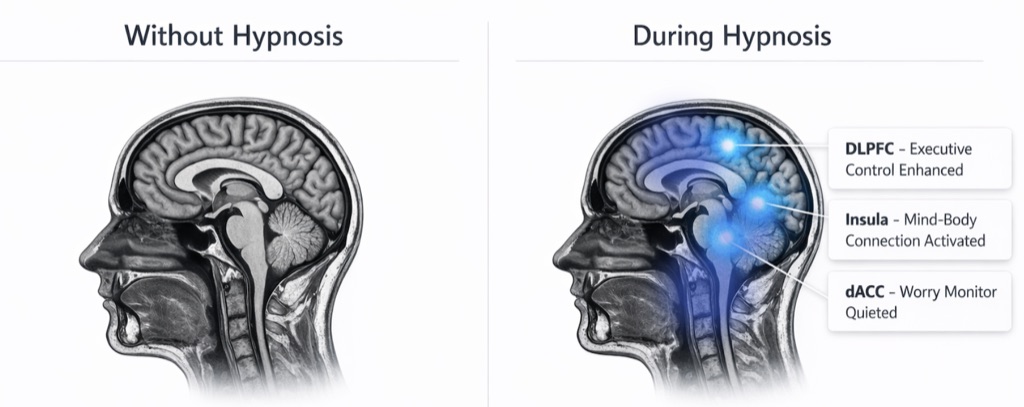
Regions from Stanford fMRI research on hypnosis (Jiang et al., 2017)
Why does my brain say I didn't sleep when I did?
In Canada, working with a hypnotherapist for sleep issues typically costs between $220 and $350 per session. Most clinics, including ours, ask for a three-session commitment to give the process a fair chance. That might sound like a lot, but when you add up what you’ve already spent on supplements, gadgets, and sleepless nights, it starts to look different. I’ve seen clients who were surprised by how quickly the investment paid off—not just in money, but in finally getting restorative rest.
If you’re not ready for one-on-one work, many people start with self-hypnosis recordings or apps. They’re more affordable and can be effective, especially with consistent practice. But for something as tricky as paradoxical insomnia—where your brain insists you’re awake even when sleep studies show normal sleep—a tailored approach often works better. A skilled hypnotherapist can design suggestions that directly address that mismatch between perceived and actual sleep.
Curious about how this stacks up against other options? We’ve written about hypnotherapy compared with CBT and apps vs working with a hypnotherapist. And if you’re wondering about the investment, here’s a breakdown of what hypnotherapy costs in Canada.
Who is paradoxical insomnia most common in?
I see people who feel wide awake at bedtime even though a sleep study says they slept. Their brain won't shut off, and they swear they lay there all night. If that sounds like you, hypnotherapy can help bridge the gap between what you feel and what your body actually does.
You might be a good fit if you've tried everything — melatonin, sleep hygiene, even CBT-I — and still feel exhausted. Many of my clients are analytical types who overthink sleep. Hypnosis works directly with the subconscious, quieting the racing mind without you having to force it.
Here are the clearest signals I look for:
- You feel you barely sleep, but a partner or a sleep tracker says otherwise
- You dread bedtime because you expect to lie awake
- You wake up tired despite getting enough hours in bed
- You've had no lasting success with sleep aids or talk therapy
- You're open to a drug-free approach that doesn't rely on effort
If you're still unsure, our what to expect in hypnotherapy page walks through a typical session. And if cost is on your mind, see what hypnotherapy costs in Canada.
Will hypnosis work for you?
Regions from Stanford fMRI research on hypnosis (Jiang et al., 2017)
What actually treats it?
I say this as someone who wants every client to succeed: hypnotherapy isn't for everyone. If you have untreated sleep apnea, get that checked first. A case report from PMC shows paradoxical insomnia can overlap with mild obstructive sleep apnea, and a breathing machine might be what you actually need. Jumping into hypnosis before ruling out physical causes can waste your time and money.
You might also struggle if you're deeply skeptical or highly analytical. Our own client data shows that analytical types sometimes have a harder time letting go. I don't mean healthy doubt—I mean the kind where you're constantly testing the process instead of following it. If that sounds like you, a more structured approach like hypnotherapy vs CBT might fit better.
Here are the clearest signals that hypnotherapy may not be your best next step:
- You have not had a sleep study to rule out apnea, restless legs, or other physical sleep disruptors.
- You are currently abusing alcohol or sedatives—hypnosis requires a clear, safe baseline.
- You expect a one-session miracle fix. Real change takes practice, and our 3-session commitment is just the start.
- You are unwilling to practice self-hypnosis between sessions. The people who get results listen to their recordings.
- You have active psychosis or severe dissociation. Is hypnotherapy safe covers this in more detail.
If you're still unsure, book a free call. I'll tell you honestly if I think we can help.
Will hypnosis work for you?
Regions from Stanford fMRI research on hypnosis (Jiang et al., 2017)
Where does hypnotherapy fit?
When I first tried self-hypnosis recordings for my racing mind, I noticed some nights I'd drift off faster, but other nights my brain just kept spinning. Research shows that people with paradoxical insomnia overestimate how long it takes to fall asleep by a significant margin compared to accurate perceivers. That mismatch can make it hard to tell if a recording is actually working, especially when you don't remember falling asleep.
Working with a professional hypnotherapist changed the game for me. Instead of generic suggestions, my therapist tailored the session to address the exact feeling of being wide awake while my body was asleep. This personalized approach helps bridge the gap between perceived and actual sleep, which is crucial when many insomnia patients may have paradoxical insomnia.
Cost is a real factor. A single hypnotherapy session in Canada runs between $220 and $350, and most therapists ask for a three-session commitment. That's a bigger upfront investment than a $15 app, but for many of us who've tried everything, the personalized guidance is worth it. If you're analytical or skeptical, a live therapist can adapt techniques on the fly—something no app can do.
If you're still on the fence, consider this: self-hypnosis requires consistent practice and a good ear for what works. A hypnotherapist can teach you self-hypnosis skills you'll use for life, while also tackling the sleep anxiety that fuels the paradox. For me, combining both gave me the best of both worlds.
People with paradoxical insomnia overestimate how long it takes to fall asleep by an average of 17.93 minutes, compared to just 6.48 minutes for accurate perceivers. This gap highlights why professional guidance can be critical for recalibrating sleep perception.
Source: Minnesota State University, Mankato
| Approach | Self-Guided Hypnosis (Apps/Recordings) | Working with a CHC Hypnotherapist |
|---|---|---|
| Personalization | Generic suggestions; may not target your specific sleep misperception. | Tailored suggestions that directly address your unique experience of feeling awake while asleep. |
| Addressing the Mismatch | Limited ability to reframe the disconnect between perceived and actual sleep. | Uses techniques to recalibrate your sleep perception, helping your brain register sleep more accurately. |
| Support for Analytical Minds | May fail to engage skeptical or analytical individuals who overthink the process. | Adapts to your thinking style, using conversational hypnosis to bypass resistance and deepen trance. |
| Consistency and Feedback | Relies on self-discipline; no feedback on whether you're entering a hypnotic state. | Real-time guidance and reinforcement, with strategies to integrate hypnosis into your nightly routine. |
| Cost and Commitment | Low upfront cost, but may require ongoing purchases with no guarantee of fit. | $220–$350 per session with a 3-session commitment, offering focused, professional intervention. |
Questions this page answers
What is paradoxical insomnia?
Paradoxical insomnia is a sleep disorder where you feel like you barely sleep, but sleep studies show normal sleep patterns. It’s a mismatch between how you perceive your sleep and what’s actually happening. This can make you feel exhausted and frustrated, even though your body is getting rest.
How common is paradoxical insomnia?
It’s estimated that many insomnia patients have paradoxical insomnia. This wide range shows how often sleep perception doesn’t match reality. Many people with insomnia may not realize their sleep is better than they think.
Can hypnosis help with paradoxical insomnia?
Yes, hypnosis can help by calming the racing mind that makes you feel awake. It uses suggestions to shift your perception of sleep, so you feel more rested. While no clinical studies focus specifically on hypnosis for paradoxical insomnia, many people report it reduces sleep anxiety and improves sleep quality.
How does hypnosis address the mismatch between perceived and actual sleep?
Hypnosis works by quieting the overthinking that fuels sleep misperception. It helps your brain stop hyper-focusing on wakefulness, so you notice the sleep you’re actually getting. Over time, this can align your felt experience with your real sleep, reducing the frustration of feeling awake when you’re not.
Why do some people respond to sleep hypnosis while others don’t?
Analytical or skeptical people may find it harder to relax into hypnosis. Hypnosis requires a willingness to let go of control. If you’re constantly analyzing the process, it can block the trance state. A skilled hypnotherapist can tailor techniques for different personality types.
How can you tell if hypnosis is working if you don’t remember falling asleep?
Many people don’t recall falling asleep during hypnosis, which is a sign it’s working. You might notice you feel more rested in the morning or have less sleep anxiety. Track how you feel over a few weeks—improved daytime energy and mood are better indicators than remembering the moment you drifted off.
What specific hypnotic suggestions work best for paradoxical insomnia?
Suggestions that reframe wakefulness as rest can help. For example, “Even if you feel awake, your body is getting deep rest.” Techniques like eye-strain inductions or breathing exercises can also quiet the mind. A hypnotherapist will customize suggestions to your unique sleep struggles.
Is hypnosis safe for treating insomnia?
Yes, hypnosis is a safe, drug-free approach. It doesn’t have the side effects of sleep medications, like dependency or grogginess. You’re always in control and can’t get stuck in hypnosis. For more on safety, see [is hypnotherapy safe](/is-hypnotherapy-safe).
How does hypnosis compare to CBT-I for paradoxical insomnia?
Both can help, but they work differently. CBT-I focuses on changing thoughts and behaviors around sleep, while hypnosis directly addresses the subconscious mind. Hypnosis may be faster at reducing sleep anxiety, but CBT-I has more research backing. Combining both could be powerful. Learn more about [hypnotherapy compared with CBT](/hypnotherapy-vs-cbt).
How much does hypnotherapy for insomnia cost?
At Calgary Hypnosis Center, sessions range from $220 to $350, with a 3-session commitment. It’s fully virtual across Canada. While it’s an investment, many find it worth it for lasting relief without medication. For details, see [what hypnotherapy costs in Canada](/hypnotherapy-cost-canada).
Paradoxical insomnia is that maddening gap between lying awake all night—or so you swear—and a sleep study that says you slept fine. I’ve seen how hypnosis can gently close that gap, teaching your brain to trust the rest it’s actually getting. If you’re ready to stop fighting your own sleep, book a free consultation and let’s talk about what’s really happening when you close your eyes.
Apply to work with us
We take on just 10 new clients a month. Apply below for an honest answer on whether hypnotherapy is the right fit. No packages, no pressure.
Only 2 spots left for August

Danny M.
Danny M. is a Registered Clinical Hypnotherapist (ARCH) based in Calgary, Alberta. His work focuses on the conditions hypnotherapy has the strongest track record with: anxiety, insomnia, chronic pain, and IBS. Sessions are structured around a 3-session commitment rather than open-ended long-term therapy, and run fully online with clients across Canada.
Last updated: 2026-05-23