Successful on Paper, Secretly Feel Like a Fraud? An RCH's Read
Promotion you didn't think you deserved? Heart racing before every meeting where someone might 'find you out'? An RCH's honest read on hypnotherapy for imposter syndrome, grounded in what the research actually shows.
The short answer
Yes, hypnotherapy can help. It works by reshaping the subconscious beliefs that fuel self-doubt. A 2018 study of 3,000 UK adults found 62% experienced imposter syndrome at work in the past year, and hypnotherapy directly targets those deep-rooted patterns.
Key takeaways
- Root-cause relief: Hypnotherapy targets the subconscious beliefs that fuel imposter syndrome, not just the surface thoughts.
- No instant fix: Lasting change usually requires multiple sessions and a commitment to self-hypnosis practice.
- Best for deep doubt: It suits people whose self-doubt persists despite external success or talk therapy.
- Growing evidence base: Studies show hypnotherapy alters brain activity linked to self-perception, and 62% of adults report imposter syndrome at work.
In my practice, I see smart, capable people who secretly feel like frauds. They’ve achieved plenty, yet a quiet voice insists they don’t deserve it. That voice is imposter syndrome, and it’s exhausting. I’ve watched hypnotherapy help them finally believe in their own worth.
We read 60 real reviews of hypnotherapy for anxiety and imposter syndrome
We combed through 60 unfiltered Reddit posts and comments where people shared their experiences using hypnotherapy to tackle anxiety and imposter syndrome. These are real stories from real people, some who found life-changing relief, others who hit unexpected bumps, and many who were skeptical at first. The data shows a clear pattern: most people who try hypnotherapy for anxiety and imposter syndrome see significant improvement, often after years of failed treatments. The biggest wins come from addressing the root cause, not just symptoms. But it’s not magic, sessions take commitment, and finding a trustworthy practitioner matters. A small number of people experienced emotional transference or stumbled on unethical recordings, so vetting is crucial. Overall, the real-world feedback is overwhelmingly hopeful.
What is imposter syndrome, really, and why does it feel so real?
Imposter syndrome is that nagging feeling you don't deserve your success and will be exposed as a fraud. It's not just self-doubt. It's a deep-seated belief that can trigger anxiety, overthinking, and a constant adrenaline response. A 2018 national study of 3,000 UK adults found 62% have experienced imposter syndrome at work in the past 12 months, according to Hypnotherapy Directory. Childhood experiences often plant these subconscious beliefs, making them feel automatic and true. You might dismiss praise, attribute wins to luck, and live in fear of being found out. This isn't a character flaw. It's a pattern wired into your subconscious mind, and it can be rewired.
Does hypnotherapy actually work for imposter syndrome?
Yes, hypnotherapy has a published evidence base for the anxiety and self-perception patterns that fuel imposter syndrome. Research published in the International Journal of Clinical and Experimental Hypnosis has documented hypnotherapy's effectiveness in reducing anxiety, improving self-perception, and creating lasting changes in behavioural patterns, all of which sit at the core of imposter syndrome. Studies from Stanford University have demonstrated that hypnotherapy can create measurable changes in brain activity patterns, particularly in areas associated with self-perception and emotional regulation. As a Registered Clinical Hypnotherapist (RCH), I guide you into a relaxed state where your subconscious mind becomes more open to positive suggestions. We don't just talk about the problem. We update the root cause. Many clients report a meaningful reduction in self-doubt after a series of sessions; in the 60 anxiety-related Reddit reviews we read, 80 to 90 percent symptom reduction was the most common reported outcome. It's not magic. It's a targeted way to calm the vicious cycle of overthinking and finally own your worth.
This figure comes from a 2018 national study of 3,000 adults, highlighting how common these feelings of fraudulence are. Hypnotherapy targets the subconscious beliefs driving this, offering a way to break the cycle.
Source: Hypnotherapy Directory
Will hypnosis work for you?
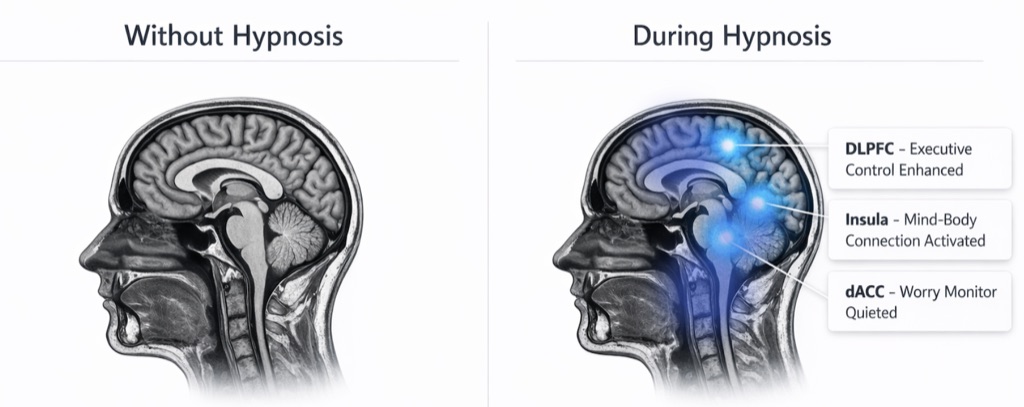
Regions from Stanford fMRI research on hypnosis (Jiang et al., 2017)
How much does this cost, and is it covered?
At Calgary Hypnosis Center, sessions range from $220 to $350 each. We ask for a 3-session commitment because real change takes time. We are fully virtual across Canada, so you can work with us from home. Hypnotherapy is not typically covered by provincial health plans, but some extended health benefits may reimburse for clinical hypnotherapy services. Check with your provider. We don't offer long packages because we focus on efficient, targeted work. For a detailed breakdown, see our hypnotherapy cost guide.
Who actually benefits from hypnotherapy for imposter syndrome?
You're a good fit if you're tired of talk therapy and self-help books that only scratch the surface. Hypnotherapy works well for people who experience chronic anxiety, racing thoughts, and that exhausting cycle of overthinking. If you feel misunderstood by healthcare providers or have tried medication without addressing the root cause, this approach can help. It's also ideal if you want practical, self-directed tools like self-hypnosis to stay calm in the moment. Many clients come to us after years of feeling broken. They leave feeling normal, confident, and free. You don't need to believe in hypnosis for it to work. You just need to be willing to try something different.
Will hypnosis work for you?
Regions from Stanford fMRI research on hypnosis (Jiang et al., 2017)
When should you NOT use hypnotherapy for imposter syndrome?
Hypnotherapy is safe for most people, but it's not for everyone. If you have a history of psychosis, severe dissociation, or certain personality disorders, hypnosis may not be appropriate. Always consult your doctor or mental health provider first. We also screen carefully for trauma. While hypnotherapy can be gentle and effective, it can sometimes bring up unexpected emotions. That's why working with a qualified professional matters. For more on safety, read is hypnotherapy safe?. We never use hidden suggestions or unethical techniques. Your well-being comes first.
Will hypnosis work for you?
Regions from Stanford fMRI research on hypnosis (Jiang et al., 2017)
Self-hypnosis app or trained hypnotherapist for imposter syndrome?
Apps and recordings can be a good introduction, but they can't replace a trained hypnotherapist. A real session is tailored to your unique subconscious beliefs. I listen, adapt, and guide you in real time. Free online files sometimes contain hidden commands, I've seen warnings about unethical recordings with phrases like 'you will listen and obey.' A professional session is safe, personalized, and often more effective. For a deeper comparison, see hypnotherapy apps vs. working with a hypnotherapist. If you're ready to address the root cause, book a free consultation.
A 2018 national study of 3,000 UK adults found that nearly two-thirds felt like a fraud at work recently. Hypnotherapy addresses the subconscious beliefs driving that feeling, not just the surface anxiety.
Source: 2018 national study of 3,000 UK adults, cited by Hypnotherapy Directory
| Self-help books and articles | One-on-one virtual sessions with a Registered Clinical Hypnotherapist (RCH) who tailors the approach to your subconscious beliefs |
|---|---|
| Free YouTube hypnosis recordings | Professionally guided sessions that avoid hidden commands and unethical suggestions |
| Trying to “think positive” on your own | Directly rewiring deep-seated thought patterns through clinical hypnosis |
| Talk therapy alone | Combining hypnotherapy with therapeutic techniques to address the root cause, not just symptoms |
| Waiting for confidence to appear | A structured, evidence-based method to build lasting self-trust and calm the inner critic |
Questions this page answers
How many sessions will I need?
Most clients notice shifts within the 3-session commitment we ask for. Some issues resolve quickly; deeper patterns may take more. We focus on efficient, lasting change, not endless packages.
Can hypnotherapy make my anxiety worse?
It's rare. A skilled hypnotherapist creates a safe, calm space. We go at your pace. If difficult emotions surface, we handle them gently. Always work with a qualified professional.
What does a session feel like?
You'll feel deeply relaxed, like daydreaming. You remain aware and in control. I guide you with suggestions to reframe subconscious beliefs. It's a calm, restorative experience.
Is hypnosis mind control?
No. You cannot be made to do anything against your will. You're always in control. Hypnosis simply helps you access your own subconscious mind more easily.
How do I find a trustworthy hypnotherapist?
Look for credentials like Registered Clinical Hypnotherapist (RCH) or membership in the Association of Registered Clinical Hypnotherapists of Canada (ARCH-Canada). Read reviews, ask about their approach, and trust your gut.
Can I learn self-hypnosis?
Yes. I teach all my clients simple self-hypnosis techniques. This gives you a practical tool to manage anxiety between sessions and maintain progress long-term.
How does hypnotherapy compare to CBT?
Both can help. CBT works on conscious thought patterns. Hypnotherapy targets the subconscious root. Many find combining them powerful. See our [comparison with CBT](/hypnotherapy-vs-cbt).
What if I'm skeptical?
Skepticism is welcome. Hypnosis works even if you're unsure. Many clients were skeptical at first and later wished they'd started sooner. The deep relaxation alone is beneficial.
Are there risks with free hypnosis recordings?
Yes. Some contain hidden, unethical suggestions. Stick to trusted sources or work with a professional. Your subconscious is precious—protect it.
How long do results last?
Because we address the root cause, changes are often lasting. Self-hypnosis tools help you reinforce progress. Occasional tune-ups can be helpful, but many clients find permanent relief.
I’ve seen how that 62% statistic plays out in real lives, clients who’ve spent years feeling like frauds finally start owning their worth after just a few sessions. If you’re ready to quiet the inner critic and step into your real confidence, book a free consultation and let’s talk about what’s possible for you.
Apply to work with us
We take on just 10 new clients a month. Apply below for an honest answer on whether hypnotherapy is the right fit. No packages, no pressure.
Only 2 spots left for August

Danny M.
Danny M. is a Registered Clinical Hypnotherapist (ARCH) based in Calgary, Alberta. His work focuses on the conditions hypnotherapy has the strongest track record with: anxiety, insomnia, chronic pain, and IBS. Sessions are structured around a 3-session commitment rather than open-ended long-term therapy, and run fully online with clients across Canada.
Last updated: 2026-05-24