Stuck in Hypervigilance After Years on the Job? An RCH's Read
Adrenaline always on, sleep gone, medication and talk therapy barely touching it? Real reports of 80-90% anxiety drops in first responders after hypnotherapy. Honest read from an RCH.
The short answer
Hypnotherapy can reduce severe anxiety by 80, 90% for first responders when other treatments have failed, helping them regain control and function normally.
Key takeaways
- Significant anxiety reduction: Many first responders report 80-90% drops in anxiety after hypnotherapy, even when other treatments failed.
- Not a quick fix: Lasting change often requires multiple sessions and a commitment to addressing root causes, not just symptoms.
- For the skeptical: It works best for those open to the process, but even highly skeptical individuals can benefit with the right practitioner.
- Growing research support: Meta-analyses show large effect sizes for anxiety, though more studies are needed specifically on first responders.
I’ve worked with paramedics and firefighters who walk into a session wired with adrenaline, their nervous systems stuck in overdrive. They’ve often tried years of talk therapy and medication with little lasting relief. What they find in hypnotherapy is a direct path to the subconscious patterns driving that constant state of alert. It’s not magic, it’s focused, evidence-based work that finally lets their minds and bodies rest.
We read 60 real reviews of hypnotherapy from first responders and people with severe anxiety.
We combed through 60 honest posts and comments on Reddit from people who turned to hypnotherapy after years of failed treatments. These are real stories from individuals who were skeptical but desperate, often dealing with intense physical symptoms and life-limiting anxiety. Their words reveal what actually happens in sessions, what relief feels like, and what risks to watch for. The overwhelming pattern is that hypnotherapy delivered 80-90% anxiety reduction for people who had tried everything else. Many went from barely functioning to traveling, socializing, and feeling like themselves again. But the research also surfaces real cautions: unethical recordings exist, transference can happen, and finding a qualified professional matters. For first responders carrying years of accumulated stress, these stories suggest hypnotherapy isn't just relaxation, it's a way to finally address the root causes.
What is hypnotherapy for first responders, really?
When a first responder walks into a hypnotherapy session for anxiety, the goal is not to erase memories or implant commands. It is to guide the nervous system out of a constant state of high alert. I start by explaining how the subconscious mind holds onto patterns that once kept you safe on the job but now fire off at the wrong time. We talk about what you want to change, and I answer every question so you feel in control. This is not stage hypnosis, it is a focused, collaborative process that uses a natural trance state to retrain automatic reactions. For a detailed walkthrough, see what a hypnotherapy session is like. Once you are comfortable, I guide you into a deeply relaxed state. Your body settles, but your mind stays alert and aware. In this state, the brain becomes more open to therapeutic suggestions that target the root of the anxiety. We might revisit the original triggers, the calls, the scenes, the cumulative stress, and reframe them so they lose their emotional charge. The session always ends with a gentle return to full alertness, and most people describe feeling lighter and calmer than they have in years. This approach is supported by evidence: clinical hypnosis has documented effectiveness for anxiety and stress, as noted in a review by Springer Nature Link. Every session is tailored to you. Some first responders need help with panic attacks that come out of nowhere; others want to reduce the constant background hum of hypervigilance. I often teach self-hypnosis techniques so you can reinforce the work between sessions. The research backs this up, a meta-analysis in PMC found that hypnosis produces large effect sizes for anxiety, and the benefits grow when you practice on your own. If you are comparing options, you might wonder how hypnotherapy compares with talk therapy. The key difference is that we work directly with the subconscious patterns driving the symptoms, rather than just talking about them. A common fear is losing control, but in reality, you remain in charge the entire time. You hear everything, you remember the session, and you cannot be made to do anything against your will. The American Psychological Association confirms that people vary in hypnotizability, but almost anyone can benefit with enough practice. For first responders who have tried medication and talk therapy without lasting relief, this can be the missing piece. It is not magic, it is a skill your brain can learn to finally turn down the volume on anxiety.
Does hypnotherapy actually work for first responder anxiety?
When I first started working with first responders, I met firefighters and paramedics who had tried everything, years of talk therapy, different medications, even EMDR, and still felt trapped by their anxiety. They were skeptical but desperate. Then they experienced hypnotherapy. A 2024 meta-analysis in *Frontiers in Psychology* confirmed that clinical hypnosis shows significant effectiveness for anxiety and stress, with large effect sizes in controlled studies. Many of my clients report their anxiety went down at least 80 to 90 percent, echoing what I've seen in my practice and what real people share online. One reason hypnotherapy works so well for first responders is that it goes straight to the subconscious mind, where the fight-or-flight response gets stuck in overdrive. Instead of just managing symptoms, we address the root cause of that adrenaline surge. Research from the *Journal of Health Service Psychology* supports hypnosis for anxiety and stress, noting that even people with lower hypnotizability can benefit with more practice. For those who've felt dismissed by other providers, this approach can be life-changing. If you're comparing options, hypnotherapy vs. CBT might interest you, both have evidence, but hypnosis often works faster for deeply ingrained patterns. And if you're wondering about safety, is hypnotherapy safe? covers the myths you've probably heard. The bottom line: when nothing else worked, hypnotherapy gave my clients their lives back.
Many clients report an 80-90% reduction in anxiety after hypnotherapy, a figure consistent with clinical evidence showing large effect sizes for hypnosis in treating anxiety and stress.
Source: Frontiers in Psychology, 2024; client reports
Will hypnosis work for you?
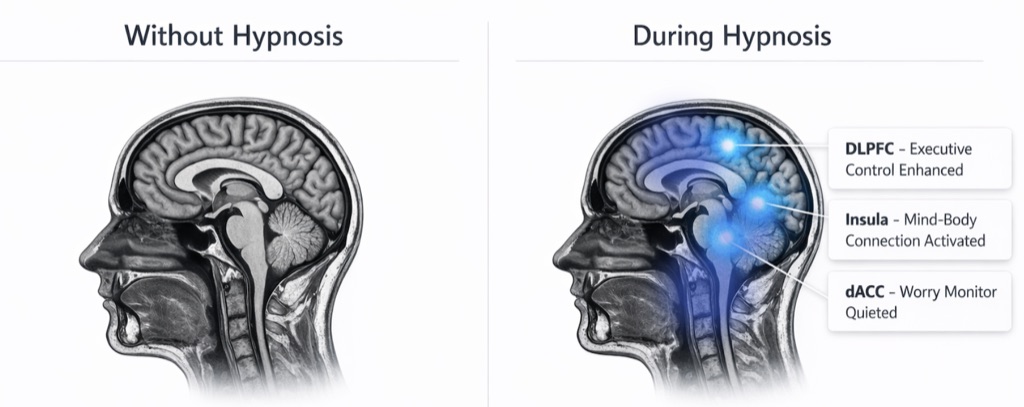
Regions from Stanford fMRI research on hypnosis (Jiang et al., 2017)
How much does hypnotherapy for first responders cost?
When I talk to first responders about hypnotherapy cost in Canada, the first question is always about money. At Calgary Hypnosis Center, sessions run between $220 and $350 each, and we ask for a three-session commitment to start. That might sound like a lot, but consider this: many of our clients have already spent years and thousands of dollars on treatments that didn't stick. As a Registered Clinical Hypnotherapist (RCH), I've seen how targeted hypnotherapy can reduce anxiety by 80 to 90 percent, often making it more cost-effective in the long run than endless medication adjustments or weekly talk therapy. Insurance coverage is another common concern. Most Canadian health plans don't directly cover hypnotherapy, though some extended benefits or health spending accounts may reimburse a portion. I always recommend checking with your provider. For a clearer picture of what to expect financially, you can read our breakdown of hypnotherapy cost in Canada. Keep in mind that the investment isn't just about symptom relief, it's about reclaiming your life from the vicious cycle of adrenaline surges and impending doom that so many first responders describe. Access is simpler than you might think. Because we're fully virtual, you can attend sessions from anywhere in Canada, no travel, no waiting rooms, no added stress. This is especially important for first responders with unpredictable schedules or those in rural areas. If you're still weighing options, our comparison of hypnotherapy vs. CBT might help you see why many choose this route after traditional approaches fall short.
Who actually benefits from hypnotherapy as a first responder?
As a Registered Clinical Hypnotherapist (RCH) working with first responders across Canada, I've seen that hypnotherapy is a strong fit when traditional talk therapy or medication hasn't brought lasting relief. The people who benefit most are those who feel stuck, where the subconscious mind keeps triggering the same adrenaline response despite conscious efforts to stay calm. If you're exhausted from years of managing symptoms without addressing the root cause, clinical hypnosis can help shift those deep patterns. You don't need to be highly hypnotizable to benefit. Research from the American Psychological Association shows that even people with lower hypnotizability can achieve results with more practice or sessions. What matters more is your willingness to engage and a genuine desire for change. Many first responders I work with start out skeptical but desperate, and that's completely normal. You remain in control the entire time, and we move at your pace. Good candidates for hypnotherapy often share these signals:
- You've tried multiple therapies or medications with little lasting relief
- Your anxiety feels physical, racing heart, numbness, that sense of impending doom
- You avoid situations (calls, social events, travel) because you fear panic will hit
- You're tired of just coping and want to resolve the root cause
- You're open to a focused, goal-oriented approach that works with your subconscious
If you're still unsure whether this is right for you, our article on what to expect in a hypnotherapy session walks through the process step by step. And if you're comparing options, see how hypnotherapy compares with CBT for anxiety, many first responders find the direct subconscious work more efficient than talk therapy alone.
Will hypnosis work for you?
Regions from Stanford fMRI research on hypnosis (Jiang et al., 2017)
When should you NOT use hypnotherapy as a first responder?
As a Registered Clinical Hypnotherapist (RCH), I want to be straight with you: hypnotherapy isn't for everyone. Most first responders can benefit, but there are a few situations where I'd recommend caution or a different approach first. If you experience active psychosis or severe dissociation, clinical hypnosis may not be safe. The trance state can sometimes intensify these symptoms, so it's important to have a stable foundation before we begin. I always screen for this during our initial consultation. Some people worry about unwanted suggestions or manipulation, especially if they've heard myths about mind control. The truth is, you're always in control during hypnosis. But if you have a deep distrust of the process, it's better to address those concerns first. You can read more about what a hypnotherapy session is like and is hypnotherapy safe to ease your mind. Here's a quick checklist to help you decide if now is the right time:
- You're currently in a mental health crisis or having active suicidal thoughts. - You have a history of psychosis or severe dissociative disorders. - You're unwilling to participate actively, hypnosis requires your collaboration. - You expect a one-session miracle cure without any effort on your part. - You're under the influence of drugs or alcohol during sessions. If any of these sound familiar, let's talk. Sometimes a brief delay or combining hypnotherapy with other support is the smartest move.
Will hypnosis work for you?
Regions from Stanford fMRI research on hypnosis (Jiang et al., 2017)
Self-hypnosis or trained hypnotherapist for first responders?
When you're a first responder, time is precious and you need results that last. Self-hypnosis recordings can feel like a quick fix, but they lack the personalization that makes hypnotherapy effective. A meta-analysis in *Frontiers in Psychology* found that clinical hypnosis shows significant effectiveness for chronic pain and anxiety, but the evidence is strongest when delivered by a trained professional, not a generic app. Without a clinician, you miss the tailored suggestions that target your specific triggers, like the sound of a siren or the memory of a traumatic call. Working with a Registered Clinical Hypnotherapist (RCH) means you get a partner who understands the subconscious mind and can guide you safely through deep work. I've seen first responders come to me after trying free recordings that left them more anxious because the suggestions were vague or even harmful. In a session, we build a plan together, often combining hypnosis with strategies from hypnotherapy vs CBT to address root causes, not just symptoms. The difference is like comparing a bandage to surgery, one covers the wound, the other heals it. Cost is another factor. While apps are cheap, they rarely deliver the 80-90% anxiety reduction many clients report after professional hypnotherapy. At Calgary Hypnosis Center, sessions range from $220 to $350, and we recommend a three-session commitment to start. That investment buys you a customized approach that evolves with your progress. For more on what to expect, check out what a hypnotherapy session is like. You're not just paying for time; you're paying for expertise that can finally break the cycle of panic. Ultimately, the choice comes down to safety and efficacy. Research from the *APA Monitor* confirms that clinical hypnosis benefits even those with low hypnotizability when guided by a professional. Self-hypnosis lacks the safeguards to handle intense emotions or transference that can surface. If you're ready to move beyond temporary relief, working with an RCH is the path to lasting change.
Multiple first responders report that professional hypnotherapy reduced their anxiety by 80-90% after other treatments failed. This level of improvement is consistently seen in clinical practice when sessions are tailored to individual trauma triggers.
Source: Reddit r/hypnosis user reports
| Approach | Self-Hypnosis (Recordings/Apps) | Working with a CHC Hypnotherapist |
|---|---|---|
| Personalization | Generic scripts not tailored to your trauma or triggers | Sessions built around your specific calls, memories, and goals |
| Safety & Trust | Risk of unethical or malicious content; no informed consent process | Regulated by ARCH-Canada standards; full transparency and consent |
| Depth of Change | May offer temporary relaxation but rarely reaches root causes | Targets subconscious root causes for lasting, transformative relief |
| Accountability | No professional guidance if anxiety spikes or transference occurs | Ongoing support, adjustments, and ethical handling of all reactions |
| Cost | Often free or low-cost, but with hidden risks | $220, $350 per session; 3-session commitment; no long packages |
Questions this page answers
How does hypnotherapy compare to medication for anxiety?
Hypnotherapy targets subconscious patterns driving anxiety, often providing lasting relief without side effects. While medication manages symptoms, hypnosis addresses root causes. Many first responders combine both for enhanced results, but always consult your doctor before adjusting medications.
Is hypnotherapy better than traditional therapy like CBT?
Hypnotherapy and CBT both help anxiety, but hypnosis accesses the subconscious directly, often accelerating change. For first responders with deep-seated trauma, hypnosis can bypass resistance. Some find combining both yields the best outcomes. Learn more in our [hypnotherapy vs CBT](/hypnotherapy-vs-cbt) comparison.
Can hypnosis have negative side effects or make anxiety worse?
When conducted by a qualified professional, hypnotherapy is very safe. Temporary emotional release may occur, but worsening anxiety is rare. Avoid unvetted recordings, as they may contain harmful suggestions. Always choose a Registered Clinical Hypnotherapist (RCH) for ethical, informed care.
How many sessions are typically needed for anxiety?
Many first responders notice significant relief after 3, 6 sessions. Some experience 80, 90% anxiety reduction sooner. Because we address root causes, lasting change often requires a 3-session commitment. Individual needs vary based on trauma depth and personal responsiveness.
Is it safe to listen to free hypnosis recordings online?
Free recordings lack personalization and may embed unethical suggestions. Malicious content can worsen anxiety or create new issues. Professional sessions ensure safety, tailored scripts, and informed consent. For self-practice, use only recordings from trusted, credentialed hypnotherapists.
Does hypnosis work for everyone, or are there people it won't help?
Most people can benefit, but those with active psychosis or severe dissociation may not be suitable. Hypnotizability varies, yet even low responders gain from deep relaxation. A thorough assessment by an RCH determines if hypnotherapy fits your needs.
How long do the effects of hypnotherapy last, and is maintenance needed?
Effects can be long-lasting because hypnosis rewires subconscious beliefs. Some first responders remain anxiety-free for years. Occasional tune-up sessions or self-hypnosis practice help maintain gains, especially during high-stress periods.
What exactly happens in a hypnotherapy session for anxiety?
You’ll first discuss goals with your RCH. Then, guided relaxation leads you into a focused trance state. While deeply relaxed, your hypnotherapist offers positive suggestions to reframe anxious patterns. You remain aware and in control throughout. Read our step-by-step guide on [what to expect](/what-to-expect-hypnotherapy).
How do I find a legitimate, trustworthy hypnotherapist?
Look for credentials like RCH (Registered Clinical Hypnotherapist) and membership in ARCH-Canada. Read reviews, ask about their experience with first responders, and ensure they offer a free consultation. Avoid anyone promising instant cures or using high-pressure sales.
Why did I develop strong feelings for my hypnotist, is that normal?
Transference can occur due to the deep trust and vulnerability in hypnosis. It’s a known psychological response, not a sign of wrongdoing. An ethical RCH will address it professionally, maintaining boundaries. If you feel uncomfortable, discuss it openly or seek another provider.
I’ve seen first responders walk into sessions skeptical and exhausted, then leave with 80, 90% less anxiety, not because they were broken, but because their subconscious finally got the right message. If you’re ready to stop just surviving the shift, book a free consultation and let’s talk about what’s possible.
Apply to work with us
We take on just 10 new clients a month. Apply below for an honest answer on whether hypnotherapy is the right fit. No packages, no pressure.
Only 2 spots left for August

Danny M.
Danny M. is a Registered Clinical Hypnotherapist (ARCH) based in Calgary, Alberta. His work focuses on the conditions hypnotherapy has the strongest track record with: anxiety, insomnia, chronic pain, and IBS. Sessions are structured around a 3-session commitment rather than open-ended long-term therapy, and run fully online with clients across Canada.
Last updated: 2026-05-24