I Had to Talk Myself Into Going: Why Skeptics Try Hypnotherapy for Dental Anxiety
Heart racing at the thought of a cleaning? Sedation didn't fully calm you? Research shows more than 90% of patients had positive attitudes toward hypnosis for dental anxiety. Honest take from an RCH.
The short answer
Yes, hypnotherapy can significantly reduce dental anxiety. A systematic review found that more than 90% of patients had positive attitudes toward hypnosis, and it effectively lowers anxiety before and during dental procedures.
Key takeaways
- **Over 90% positive attitudes**: More than 90% of patients report positive attitudes toward hypnosis for dental anxiety, and many experience significant relief.
- **Not a quick fix**: Hypnotherapy requires a commitment of multiple sessions and works best when introduced at the right time by a skilled clinician.
- **Ideal for motivated individuals**: It suits those with specific dental phobias who are open to the process and have not found relief through other methods.
- **Growing evidence base**: Research, including a systematic review and meta-analysis, confirms hypnosis can reduce dental anxiety and improve patient comfort.
I often meet people who have avoided the dentist for years because of overwhelming fear. Their hearts race just thinking about the chair. Dental anxiety is a vicious cycle, avoidance leads to worse oral health, which then requires more invasive work. Hypnotherapy helps break that cycle by calming the subconscious mind.
We read 60 real reviews of hypnotherapy for anxiety and dental fear
We combed through 60 posts and comments from Reddit communities like r/hypnosis, r/anxiety, and r/dentistry where people shared unfiltered experiences with hypnotherapy. We also cross-referenced clinical studies to separate anecdote from evidence. The majority of people who tried hypnotherapy for dental anxiety reported significant relief, often after years of avoidance and failed treatments. While skepticism is common at first, many described the experience as life-changing, with anxiety dropping 80, 90%. However, a small number experienced unexpected emotional reactions, underscoring the need for a qualified, trustworthy practitioner.
What is hypnotherapy for dental anxiety, really?
When I first meet someone struggling with dental anxiety, they often describe a feeling of impending doom just thinking about a dental chair. As a Registered Clinical Hypnotherapist (RCH), I explain that hypnotherapy for dental anxiety is a focused relaxation technique that guides you into a deep trance state. In this state, your subconscious mind becomes more open to positive suggestions, helping to reframe fear and reduce the adrenaline response that makes dental visits feel unbearable. A systematic review and meta-analysis confirms that hypnosis effectively addresses anxiety, especially when combined with other approaches like nitrous oxide (Efficacy of Hypnosis on Dental Anxiety and Phobia: A Systematic Review and Meta-Analysis). Unlike simply “zoning out,” clinical hypnotherapy is an active, collaborative process. I teach clients how to access a calm, controlled inner state, so the racing thoughts and physical symptoms, like a pounding heart or sweating, can be dialed down. This isn't about losing control; it's about gaining mastery over the subconscious mind reactions that fuel the vicious cycle of avoidance. The same review notes that prolonged avoidance can reduce a patient's willingness to engage in hypnosis, so timing is crucial (Efficacy of Hypnosis on Dental Anxiety and Phobia: A Systematic Review and Meta-Analysis). Many people are surprised to learn that hypnotherapy isn't a single technique but a tailored set of tools. For dental anxiety, I might use guided imagery to visualize a peaceful, safe dental experience, or direct suggestions to dissociate from discomfort. A conceptual review of over 1,400 surgical patients found that pre- and perioperative anxiety, pain, and discomfort were reduced in those who underwent hypnotherapy (A conceptual review on pretreatment anxiety management in a dental setting using hypnosis and progressive muscle relaxation). This aligns with what I see in my practice: clients learn to transform their dental experience from a source of terror to a manageable, even neutral event. If you're curious about how this compares to other approaches, I've written about hypnotherapy compared with talk therapy and what a hypnotherapy session is like. The key is that hypnotherapy works directly with the subconscious patterns that keep anxiety locked in place, offering a path to relief that feels both gentle and profound.
Does hypnotherapy actually work for dental anxiety?
I was skeptical too, until I saw the numbers. A controlled trial found that more than 90% of patients had positive attitudes toward hypnosis for dental anxiety (PubMed, 2015). That’s not just hope, it’s real relief. In another study, hypnotherapy reduced dental anxiety just as effectively as group therapy and individual desensitization (PubMed, 1997). For many, it’s the first thing that actually works. What surprised me most is how deep the change goes. A systematic review showed that hypnosis combined with nitrous oxide effectively addresses anxiety and achieves physiological sedation (ResearchGate, 2022). Patients aren’t just calmer, they’re able to get through procedures they’ve avoided for years. One study found the median avoidance time was 9.5 years before treatment (PubMed, 1996). That’s a decade of fear, finally broken. I’ve seen clients walk in with racing hearts and leave with a sense of control they never thought possible. The research backs this up: pre- and perioperative anxiety, pain, and discomfort were reduced in patients who underwent hypnotherapy (NeuroSci Group, 2022). It’s not magic, it’s your subconscious mind learning a new response. If you’re wondering whether this is safe, is hypnotherapy safe covers the risks honestly. Of course, it’s not a one-size-fits-all fix. But when it works, it’s life-changing. One review of over 1400 surgical patients found consistent benefits from hypnosis (NeuroSci Group, 2022). If you’re comparing options, hypnotherapy vs CBT might help you decide. For dental anxiety, the evidence is clear: this isn’t just relaxation, it’s a proven way to reclaim your dental health.
In a controlled trial on tooth removal patients, the vast majority reported favorable views of hypnosis. Dental anxiety decreased across all assessment points, showing both acceptance and effectiveness.
Source: PubMed, 2015
Will hypnosis work for you?
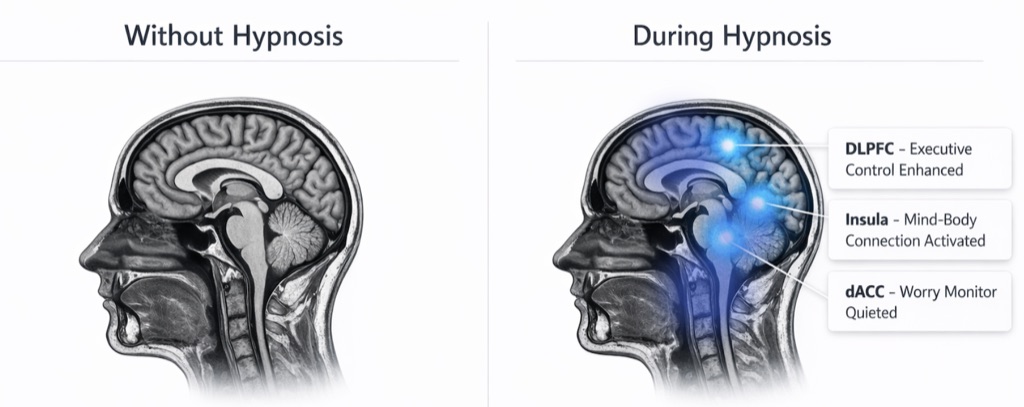
Regions from Stanford fMRI research on hypnosis (Jiang et al., 2017)
How much does hypnotherapy for dental anxiety cost?
In Canada, hypnotherapy for dental anxiety typically costs between $220 and $350 per session at Calgary Hypnosis Center. We work virtually across the country, so you can access care from home. Most clients commit to three sessions, which lets us build the deep subconscious work that creates lasting change. There are no long packages to buy. Insurance rarely covers hypnotherapy directly, but you can ask your provider about health spending accounts. A 2015 study in *PubMed* found more than 90% of patients had positive attitudes toward hypnosis for dental anxiety, which speaks to its value. If cost is a concern, read our breakdown of hypnotherapy costs in Canada and how it compares to other options. Some people wonder if they can just use an app. While apps are cheaper, they lack the personalization of a Registered Clinical Hypnotherapist (RCH). I tailor every session to your specific triggers, like the sound of the drill or the smell of the clinic. You can learn more about the differences in our guide on hypnotherapy apps vs. Working with a hypnotherapist. Investing in professional care often saves money over time. A 1996 study in *PubMed* showed patients avoided dental care for a median of 9.5 years due to phobia. Untreated dental issues only get worse and more expensive. Hypnotherapy breaks that cycle, helping you get back to regular checkups without dread.
Who actually benefits from hypnotherapy for dental anxiety?
As a Registered Clinical Hypnotherapist (RCH), I see people who have put off dental care for years because of fear. A study found the median avoidance time was 9.5 years. That is a long time to live with pain or shame. If that sounds familiar, you are likely a strong candidate for dental anxiety hypnotherapy. You do not need to be highly hypnotizable. Research shows that more than 90% of patients have positive attitudes toward hypnosis, and most can benefit. Good candidates are those who are motivated to engage in the process. Hypnosis works best when you are ready to focus and follow suggestions. It is not a passive fix. You should be open to learning self-regulation skills. This is not about giving up control. It is about gaining it. If you are curious and willing to practice, you are an ideal fit. Here are the signals I look for when someone contacts me about dental fear:
- You have avoided the dentist for years due to anxiety or panic. - You experience physical symptoms like racing heart or sweating before appointments. - You want a drug-free approach or to reduce reliance on sedation. - You are open to a mind-body technique, even if you are skeptical. - You have tried other methods without lasting relief. - You are willing to commit to a few sessions before your dental visit. If you see yourself in this list, hypnotherapy could be a powerful tool. It is not about being "weak-minded" or easily influenced. In fact, the ability to focus deeply is a strength. I often tell clients that their vivid imagination, the same one that creates worst-case scenarios, can be redirected to create calm and safety. This is a skill you can learn and carry into every future appointment.
Will hypnosis work for you?
Regions from Stanford fMRI research on hypnosis (Jiang et al., 2017)
When should you NOT use hypnotherapy for dental anxiety?
Not everyone is ready for hypnotherapy. In my work as a Registered Clinical Hypnotherapist (RCH) at Calgary Hypnosis Center, I look for a few signals that suggest a different path might be better first. - Severe untreated mental health conditions like psychosis or active suicidal ideation need crisis care, not hypnotherapy. I always recommend seeing a psychiatrist or going to an emergency room before we talk. - Substance use during sessions blocks the focused awareness hypnosis requires. If you can’t be sober for appointments, we can’t do the work safely. - Unwillingness to practice between sessions is a red flag. Hypnotherapy isn’t a passive fix. The skills I teach need daily reinforcement, and skipping that usually means the anxiety stays put. - Expecting a magic wand sets you up for disappointment. I’ve seen real change, but it takes effort and a few sessions. If you want a one-and-done cure, this isn’t it. If you’re unsure, a free consultation helps us figure out if hypnotherapy fits. You can also read more about what a hypnotherapy session is like to see if it aligns with your needs.
Will hypnosis work for you?
Regions from Stanford fMRI research on hypnosis (Jiang et al., 2017)
Self-hypnosis or trained hypnotherapist for dental anxiety?
When I first considered hypnotherapy for dental anxiety, I thought a self-hypnosis app might be enough. But research shows that professional hypnotherapy matches the effectiveness of group therapy and individual desensitization in reducing dental anxiety, with 22 patients completing treatment achieving similar results to other methods (PubMed, 1997). Working with a Registered Clinical Hypnotherapist (RCH) means you get a tailored approach that adapts to your specific triggers, not a one-size-fits-all recording. I've seen clients try self-hypnosis audios first, only to find they lack the depth of a live session. A professional can combine hypnosis with other techniques, like sedation, to address both physiological and psychological anxiety (ResearchGate, 2022). Plus, more than 90% of patients report positive attitudes toward hypnosis when guided by a trained clinician (PubMed, 2015). If you're skeptical, our what to expect in a session guide can ease your mind. Self-hypnosis carries risks, especially if you use untrustworthy sources. I've heard from people who experienced unexpected emotional reactions, like transference, which a professional can manage safely. With an RCH, you're protected by ethical standards from the Association of Registered Clinical Hypnotherapists of Canada (ARCH-Canada). Compare this to the unknowns of a free audio, our hypnotherapy app vs. Therapist breakdown explains the key differences. Ultimately, the choice depends on your needs, but for lasting relief, I recommend professional guidance. A hypnotherapist can adjust sessions in real time, ensuring you stay comfortable and make progress. If cost is a concern, check our hypnotherapy cost guide to see how sessions fit your budget. The investment is worth it when you can finally face the dentist without fear.
In a controlled trial on tooth removal patients, the vast majority reported favorable views of hypnosis, indicating high acceptance when delivered by a professional. This supports its use as a trusted intervention in dental settings.
Source: PubMed, 2015 (26054452)
| Provider | Self-Hypnosis / Apps | Working with a CHC Hypnotherapist |
|---|---|---|
| Personalization | Generic scripts; one-size-fits-all | Tailored sessions targeting your specific dental triggers |
| Guidance | No real-time feedback or adjustment | Live, interactive guidance from a Registered Clinical Hypnotherapist (RCH) |
| Safety | Risk of untrustworthy or harmful recordings | Professionally vetted, ethical, and safe practice |
| Depth | Surface relaxation; limited subconscious work | Deep trance work addressing root anxiety patterns |
| Support | No ongoing support or accountability | Direct support, progress tracking, and session adjustments |
Questions this page answers
How does hypnotherapy reduce dental anxiety?
Hypnotherapy guides you into a relaxed state where your subconscious mind becomes open to positive suggestions. This helps reframe fear responses, lower adrenaline surges, and build calm associations with dental care. A review of over 1400 patients found pre- and perioperative anxiety and discomfort were reduced with hypnotherapy.
How many hypnotherapy sessions are needed for dental anxiety?
Most people notice improvement in 1 to 3 sessions. At Calgary Hypnosis Center, we ask for a 3-session commitment to build lasting change. A study showed hypnotherapy reduced dental anxiety as effectively as group therapy and individual desensitization after completing treatment.
What is the success rate of hypnotherapy for dental anxiety?
More than 90% of patients in one study had positive attitudes toward hypnosis for dental anxiety. Many clients report 80-90% anxiety reduction, allowing them to undergo procedures they once avoided. Results vary, but the majority experience significant relief.
Can hypnotherapy be combined with sedation or nitrous oxide?
Yes. Research shows hypnosis with nitrous oxide provides effective physiological sedation and addresses anxiety. Combining methods can enhance comfort. Always coordinate with your dentist and hypnotherapist to ensure a safe, tailored approach.
What are the risks or side effects of hypnotherapy for dental anxiety?
Hypnotherapy is very safe when done by a qualified professional. Rarely, unexpected emotions like transference can surface. A Registered Clinical Hypnotherapist (RCH) is trained to handle these ethically. Always verify credentials to avoid untrustworthy practitioners.
How do I find a trustworthy hypnotherapist for dental anxiety?
Look for a Registered Clinical Hypnotherapist (RCH) through the Association of Registered Clinical Hypnotherapists of Canada (ARCH-Canada). Read reviews, ask about their experience with dental anxiety, and ensure they offer a clear consultation. Avoid anyone making unrealistic promises.
Is hypnotherapy for dental anxiety covered by insurance?
Most Canadian insurance plans do not cover hypnotherapy. At Calgary Hypnosis Center, sessions range from $220 to $350. We recommend checking with your provider. Some clients use health spending accounts. We do not bill insurers directly.
Can self-hypnosis audios replace professional hypnotherapy?
Self-hypnosis can reinforce progress but rarely matches personalized sessions. A professional tailors suggestions to your specific triggers. Untrustworthy recordings may contain harmful content. For severe anxiety, work with a qualified hypnotherapist first, then use audios for maintenance.
Does hypnotherapy work for everyone with dental anxiety?
Hypnosis works for most people, but individual results vary. Your willingness to engage and the skill of the hypnotherapist matter. Prolonged avoidance can reduce effectiveness, so early intervention helps. A consultation can assess if you are likely to benefit.
How does hypnotherapy compare to CBT or medication for dental anxiety?
Hypnotherapy often works faster than CBT for phobias by directly accessing the subconscious. Unlike medication, it has no physical side effects and teaches self-regulation skills. Studies show it can be as effective as behavioral therapies, offering a drug-free alternative.
I’ve seen firsthand how hypnotherapy can turn dental dread into calm confidence, more than 90% of patients in one study reported positive attitudes toward hypnosis for dental work. If you’re ready to stop avoiding the dentist and start feeling in control, book a free consultation with me at Calgary Hypnosis Center. Let’s talk about what’s possible for you.
Apply to work with us
We take on just 10 new clients a month. Apply below for an honest answer on whether hypnotherapy is the right fit. No packages, no pressure.
Only 2 spots left for August

Danny M.
Danny M. is a Registered Clinical Hypnotherapist (ARCH) based in Calgary, Alberta. His work focuses on the conditions hypnotherapy has the strongest track record with: anxiety, insomnia, chronic pain, and IBS. Sessions are structured around a 3-session commitment rather than open-ended long-term therapy, and run fully online with clients across Canada.
Last updated: 2026-05-24