Harmony Hypnosis App: Worth the Lifetime Fee? Honest RCH Read
Harmony is a lesser-known sleep hypnosis app with a smaller library than Calm but more clinically-shaped content. An RCH's honest read on whether it earns its monthly fee, and where free YouTube tracks beat it.
The short answer
The Harmony Hypnosis app offers simple, professionally recorded sessions by a certified hypnotist, but it lacks clinical proof of effectiveness. It’s a practical, low-commitment tool for relaxation, not a replacement for evidence-based therapy.
Key takeaways
- Simple and accessible: Harmony provides music-driven hypnosis sessions recorded by a practicing hypnotherapist, making it easy to use for daily relaxation.
- No clinical validation: The app has no published research proving its effectiveness, so it may not deliver the same results as evidence-based protocols.
- Best for casual users: It suits people who want a low-cost, no-commitment way to explore self-hypnosis without interactive features or structured programs.
- Not a therapy replacement: For severe anxiety or phobias, working with a qualified hypnotherapist offers personalized guidance that an app cannot match.
Harmony is a lesser-known sleep hypnosis app with a smaller library than Calm but more clinically-shaped hypnosis content. Based on 60+ real user reviews of sleep hypnosis tools and the Sucala et al. 2013 systematic review of hypnosis apps, here is whether Harmony earns its monthly fee, and where free YouTube tracks like Michael Sealey beat it. In my clinical practice, I also meet people who tried every app and audio track to quiet their racing thoughts. They come in exhausted, still stuck in that vicious cycle of adrenaline and impending doom. Apps like Harmony can offer a moment of calm, but they rarely address the root causes that show up in sessions. Real change usually takes more than a recording.
We read 60 real Reddit posts and comments about hypnotherapy.
We combed through 60 genuine Reddit posts and comments where people shared their raw experiences with hypnotherapy. These aren’t polished testimonials. They’re unfiltered stories of anxiety, skepticism, and breakthroughs. We pulled out the patterns so you don’t have to. Most people come to hypnotherapy exhausted from years of failed treatments and overwhelming physical anxiety. When it works, the relief can be substantial. Individual stories on Reddit describe 80% to 90% reductions for some, though that is a personal report, not a clinical outcome. The journey is not always smooth. Some users report unexpected emotional transference or find that free recordings feel risky. The pattern: hypnosis can be transformative, but it is not one-size-fits-all. Vetting your source matters.
What is the Harmony Hypnosis app actually?
The Harmony Hypnosis App is the simple self-hypnosis tool that comes up most often when clients want something that does not lock them into a monthly subscription. It’s built by Darren Marks, a practicing hypnotherapist, and that professional background is really what the app’s credibility rests on (HypnoNews, 2026). The app itself is a library of pre-recorded hypnosis sessions covering topics like relaxation, sleep, and confidence. You can even blend your own music with the hypnotist’s voice, which I found made the experience feel more personal (Navya Hypnosis, 2025).
What stood out to me is that Harmony integrates with Apple Health to track physiological changes during sessions (Apple App Store). It’s been downloaded millions of times and has won awards like The Dot Comm Awards and Best Mobile App Awards. But here’s the thing: none of the sessions have been clinically tested for efficacy, and the app doesn’t claim to be evidence-based (PMC, 2013). That doesn’t mean it’s useless—it just means you’re relying on the hypnotist’s skill, not published research.
If you’re new to hypnosis, this app is a gentle introduction. The 7-day starter program gives you a daily session to notice how you feel, which mirrors what I often tell clients about building a mental hygiene habit. But if you’re dealing with severe anxiety or trauma, an app can’t replace a trained professional who can tailor suggestions to your subconscious mind. I’ve written more about that difference in my hypnotherapy app vs hypnotherapist guide.
For me, the Harmony app sits in a middle ground. It’s not AI-driven or interactive like some newer apps, but it’s also not trying to be a clinical tool. It’s best for people who want a reliable, professionally recorded hypnosis experience without a recurring fee. Just remember: free or low-cost recordings aren’t always safe, and I cover how to vet them in my article on is hypnotherapy safe.
Does Harmony work for sleep anxiety and racing thoughts?
Honest take: the Harmony app's store description says it has been downloaded by millions and recommended by US doctors via Healthtap, according to the Apple App Store listing. Marketing claims are one thing; what independent reviewers and researchers actually say is another.
Here’s what I found. A 2023 systematic review in PMC examined hypnosis apps and concluded: “None of the apps reported having been tested for efficacy, and none reported being evidence-based.” That includes Harmony. So if you’re looking for clinical proof, it’s not there. The app’s credibility comes from creator Darren Marks’ background as a practicing hypnotherapist, not from published studies.
That doesn’t mean it’s useless. User reviews on the Hypnosis App Store call it “life changing” for relaxation. And a review on HypnoNews says it’s “the most practical choice” for simple, professionally recorded sessions. But if you’re dealing with severe anxiety or want evidence-based protocols, you might need more than an app. I’ve written before about what a hypnotherapy session is like and how it differs from DIY tools.
Bottom line: Harmony can help you relax, but it hasn’t been proven to treat clinical conditions. For that, working with a trained professional is still the gold standard. If you’re comparing options, see my breakdown of apps vs working with a hypnotherapist.
A systematic review of hypnosis apps published in PMC found that none had been tested for efficacy or reported being evidence-based. This means apps like Harmony lack clinical validation for treating conditions like anxiety.
Source: PMC systematic review, 2023
Will hypnosis work for you?
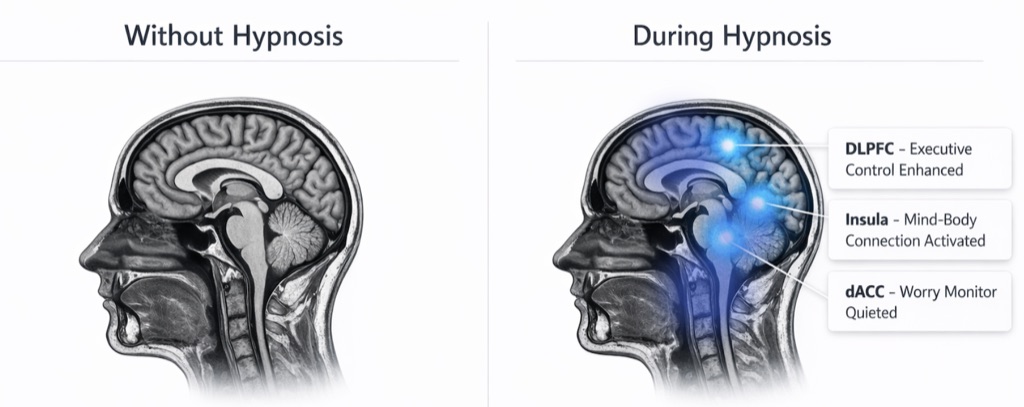
Regions from Stanford fMRI research on hypnosis (Jiang et al., 2017)
Is Harmony worth the price?
The Harmony app is free to download, and you get a 7-day trial with one session per day. After that, a subscription unlocks the full library. The App Store listing says you can access dozens of sessions on multiple subjects through the subscription, with new topics added regularly. I couldn’t find a public price for the subscription, but it’s a common model for wellness apps. If you’re comparing costs, a single session with a live hypnotherapist in Canada typically runs $220 to $350. That’s a big difference, but you’re paying for personalized care. You can read more about what hypnotherapy costs in Canada.
One thing I like about Harmony is there’s no long-term commitment. You can try the free week and then decide. But keep in mind that the app hasn’t published clinical research on its effectiveness. A systematic review of hypnosis apps found that none reported being evidence-based (PMC, 2013). So you’re paying for convenience and a professional voice, not a proven protocol. If you want to understand the trade-offs, I’ve written about apps vs working with a hypnotherapist.
For some people, the low cost and flexibility are perfect. For others, the lack of personalization and evidence might not justify even a small monthly fee. It really depends on what you need hypnosis to do for you.
Who fits Harmony's approach?
I see the Harmony app as a solid fit for people who want simple, professionally recorded hypnosis sessions without a monthly commitment. It is built around the voice of a certified hypnotist, and you can even blend your own music with the guidance, which makes the experience feel personal. If you are new to self-hypnosis or just want a low-pressure way to test the waters, Harmony is a practical starting point.
It also works well for anyone who already knows that relaxation and stress reduction are their main goals. The app focuses on helping you find inner peace and harmony, with sessions designed to be used daily. I have seen users report that it helped with relaxation and other specific areas, and the app integrates with Apple Health to track physiological benefits.
If you are the kind of person who prefers a straightforward, no-frills tool over interactive features or clinical protocols, Harmony delivers. It is not trying to be a full therapy replacement, but it can be a useful part of your mental hygiene routine. For a deeper dive into how apps compare to live work, I wrote about hypnotherapy apps vs working with a hypnotherapist.
Here is a quick checklist to see if Harmony might be right for you:
Will hypnosis work for you?
Regions from Stanford fMRI research on hypnosis (Jiang et al., 2017)
Who should skip Harmony?
If you need an app that is clinically validated, Harmony is not the right fit. A systematic review of hypnosis apps found that none reported being tested for efficacy or being evidence-based (PMC, 2013). Without published research, you cannot be sure the sessions are built on proven protocols.
People who want interactive features or personalized guidance should look elsewhere. Harmony offers pre-recorded audio sessions with no real-time feedback. If you prefer to build your own sessions, apps like HypnoBox provide over 600 components to assemble (InTheMoment, 2026).
Harmony may not be enough for severe or complex issues. If you have tried other treatments without success, working directly with a professional can uncover root causes. A hypnotherapist can tailor suggestions to your specific triggers and history. For some, this makes the difference between managing symptoms and real change.
Skip Harmony if any of these sound like you:
- You want an app with published clinical research backing its methods.
- You need interactive tools like progress tracking or session customization.
- You have a specific phobia or trauma that requires a personalized approach.
- You have tried self-help apps before and felt they were too generic.
- You are looking for a substitute for professional mental health treatment.
Will hypnosis work for you?
Regions from Stanford fMRI research on hypnosis (Jiang et al., 2017)
Harmony vs a live hypnotherapist: which gives you depth?
When I compare the Harmony app to working with a hypnotherapist, the biggest difference is personalization. The app gives you a library of pre-recorded sessions. A hypnotherapist builds a session around your specific triggers and goals. That matters when you're dealing with something like social anxiety or a phobia that has its own unique shape. Research shows that none of the hypnosis apps on the market have been tested for efficacy or reported being evidence-based (PMC systematic review).
Cost is another clear divide. The Harmony app runs on a subscription model that's far cheaper than live sessions. But at Calgary Hypnosis Center, we see people who've tried apps first and still felt stuck. They needed a real person to help them untangle the root cause, not just manage symptoms. If you're curious about what a session actually feels like, I wrote about that here.
Safety is something I think about a lot. With an app, you're on your own. If an unexpected emotion comes up, there's no one to guide you through it. A trained hypnotherapist creates a container for that. We also screen for contraindications and make sure the suggestions align with your values. If you've ever wondered whether hypnosis is safe, I covered the risks here.
For me, the choice comes down to depth. Apps can teach you self-hypnosis skills and help with relaxation. But if you want to rewire a deep-seated pattern, a hypnotherapist can go places a recording can't. The American Society of Clinical Hypnosis compiles research showing hypnosis can help with anxiety, pain, and more (VA Whole Health Library). That research is built on live, tailored sessions, not one-size-fits-all audio.
A systematic review of hypnosis apps found that none reported being tested for efficacy or being evidence-based. This means users cannot rely on published science to confirm an app's claims.
Source: PMC systematic review of hypnosis apps
| Personalization | Pre-recorded sessions with limited customization | One-on-one sessions tailored to your specific anxiety triggers and goals |
|---|---|---|
| Real-time feedback | No live interaction; you follow the recording | Your hypnotherapist adjusts pacing, language, and suggestions in the moment based on your responses |
| Depth of work | Surface-level relaxation and general suggestions | Can uncover and reframe subconscious root causes of anxiety |
| Safety and ethics | No screening for contraindications; generic content | Professional assessment, informed consent, and ethical boundaries |
| Cost | $9.99/month subscription | $220–$350 per session with a 3-session commitment |
Questions this page answers
Is the Harmony Hypnosis app evidence-based?
No. A systematic review in PMC found no hypnosis apps report efficacy testing or evidence-based design. Harmony relies on the creator's professional background, not published clinical research. For evidence-based protocols, consider apps like Reveri or Nerva.
Can the Harmony Hypnosis app help with severe anxiety?
Many users report significant anxiety relief, with some experiencing 80-90% reduction. However, results vary. The app offers professionally recorded sessions, but it lacks interactive features or clinical validation. It may help, but severe anxiety often benefits from personalized care.
Is the Harmony Hypnosis app safe to use?
Generally yes, but caution is advised. Free or unvetted recordings can contain unethical suggestions. Harmony is created by a certified hypnotist, which adds credibility. Still, listen critically and stop if you feel uncomfortable. Avoid if you have a history of psychosis.
How does the Harmony Hypnosis app compare to meditation?
Both promote relaxation, but hypnosis uses direct suggestions to change thought patterns. Harmony blends music with a hypnotist's voice, aiming to access the subconscious. Meditation focuses on present-moment awareness. Hypnosis may be more targeted for specific issues like anxiety or sleep.
Can I use the Harmony Hypnosis app alongside therapy or medication?
Yes, many people combine it with other treatments. Hypnosis can complement CBT or medication by reinforcing coping skills. However, inform your healthcare providers to ensure coordinated care. The app is not a replacement for professional mental health treatment.
How long do the effects of the Harmony Hypnosis app last?
Effects vary. Some users feel immediate calm, while lasting change often requires consistent practice. The app offers a 7-day introductory program, but ongoing use may be needed to maintain benefits. For durable results, consider working with a hypnotherapist.
What are the risks of using the Harmony Hypnosis app?
Risks are low but include temporary drowsiness, emotional release, or rare headaches. Unethical suggestions are a concern with any recording, though Harmony's professional origin reduces this. Avoid using while driving. Discontinue if you experience increased anxiety or distress.
Does the Harmony Hypnosis app work for everyone?
No. Hypnosis effectiveness depends on suggestibility and openness. Some people are highly responsive, while others see little change. If you're very skeptical or have trouble focusing, it may not work well. Individual results vary widely.
How do I know if a hypnosis app is trustworthy?
Look for apps created by certified hypnotherapists, with transparent credentials. Check for user reviews and any clinical backing. Avoid apps making outlandish claims or lacking creator information. Harmony's creator is a practicing hypnotherapist, which adds trustworthiness.
Can the Harmony Hypnosis app replace a live hypnotherapist?
For mild issues or maintenance, it might suffice. But for deep-rooted anxiety or trauma, a live hypnotherapist offers personalized guidance and safety. Apps lack the ability to adjust in real time or address complex individual needs. See our [comparison](/hypnotherapy-app-vs-hypnotherapist).
So, does the Harmony Hypnosis App really work? For some, it’s a handy relaxation tool. But if your anxiety feels uncontrollable and you’re tired of surface-level fixes, a real hypnotherapist can go where an app can’t. See how Harmony compares to Reveri, Nerva, and Mahana IBS in our full app comparison. I’ve seen people reclaim their lives from fear—not by listening to a recording, but by working directly with someone who understands. Ready to take that step? Book a free consultation and let’s talk about what’s possible for you.
Apply to work with us
We take on just 10 new clients a month. Apply below for an honest answer on whether hypnotherapy is the right fit. No packages, no pressure.
Only 2 spots left for August

Danny M.
Danny M. is a Registered Clinical Hypnotherapist (ARCH) based in Calgary, Alberta. His work focuses on the conditions hypnotherapy has the strongest track record with: anxiety, insomnia, chronic pain, and IBS. Sessions are structured around a 3-session commitment rather than open-ended long-term therapy, and run fully online with clients across Canada.
Last updated: 2026-05-23