Best Hypnosis Apps for Sleep (2026): An RCH's Honest Ranking
Reveri, Nerva, Mindset, Calm, Headspace, free YouTube. An RCH ranks the best hypnosis apps for sleep in 2026 based on real evidence and 60+ user reviews.
The short answer
The best hypnosis app for sleep is one built by a trained professional with published clinical evidence behind it. Most apps lack both. A 2024 systematic review found only 20.2% of hypnosis apps had a developer trained in hypnosis, and just 7.7% claimed any evidence base (PubMed, 2024).
Key takeaways
- Deep sleep support: The best sleep hypnosis apps use clinically informed techniques to help quiet a racing mind and promote deep, restorative sleep.
- Most lack proof: A 2024 systematic review found only 7.7% of hypnosis apps claim evidence-based treatment and just four have been in a clinical trial.
- For mild issues: Apps can be a good starting point for stress-related sleep trouble but are not a replacement for a qualified hypnotherapist with complex insomnia.
- Science is catching up: Research on app-delivered hypnosis is still emerging, with early studies showing promise for faster sleep onset and better sleep quality.
In my practice, I meet people every week who have tried multiple sleep hypnosis apps with mixed results. Some say a free YouTube track helped for a while, then stopped. Others found an app that finally quieted their racing mind. The difference usually comes down to who made the recording and whether the approach matches their specific sleep struggle.
We read 60 real Reddit posts about hypnotherapy for sleep. Here's what people actually say.
We dug through 60 unfiltered Reddit posts and comments where people shared their honest experiences with hypnotherapy for sleep. No marketing, no fluff—just real talk from r/insomnia, r/hypnosis, and beyond. We also cross-checked their stories against published research on hypnosis apps to separate hype from help. Most people come to sleep hypnosis after trying everything else—melatonin, white noise, sleep hygiene—and hitting a wall. The biggest win is finally quieting a racing mind at bedtime. But it's not magic: results vary, and some nights it just doesn't click. The people who stick with it and pair it with other tools (like CBT or relaxation techniques) tend to see the most consistent improvement. If you're skeptical or analytical, you might need a more personalized approach—like working with a real hypnotherapist—to get past the initial doubt.
What makes a hypnosis app worth your time?
A sleep hypnosis app is a mobile tool that guides you into a deeply relaxed state using voice prompts, imagery, and breathing exercises. It’s designed to quiet a racing mind and help you drift off. Most apps target sleep—56% of hypnosis apps do, according to a 2024 systematic review in the International Journal of Clinical and Experimental Hypnosis. But only 20.2% are made by trained hypnotherapists, and just 7.7% claim any evidence base.
I’ve seen clients come to me after trying every app and YouTube track. They’re exhausted but wired, desperate for something that actually works. The truth is, no app can match a qualified hypnotherapist for complex insomnia. But for building a self-hypnosis habit, the right app can be a starting point. Look for one with clear credentials and a science-backed approach.
When comparing apps, I tell people to check three things: who created the content, what clinical evidence supports it, and what you get for your money. A 2026 review by HypnoNews found that apps like Reveri, guided by Stanford’s Dr. David Spiegel, stand out because they’re built on decades of research. Still, even the best app is a tool—not a cure. If you’re struggling with chronic sleeplessness, working with a hypnotherapist can address the root causes an app can’t reach.
For analytical minds, self-hypnosis can feel frustrating at first. I often suggest starting with an app that explains the science of hypnosis clearly. But if you’ve tried everything and still lie awake, it might be time to explore what a real session feels like. The goal isn’t just to fall asleep—it’s to retrain your brain to feel safe at bedtime.
Which apps actually have clinical evidence?
I get it. You’ve tried everything—melatonin, sleep hygiene, meditation—and your racing mind still won’t shut off at bedtime. So when someone suggests a hypnosis app, you’re skeptical. I was too. But the research is clear: hypnosis can significantly improve sleep. A review in the International Journal of Clinical and Experimental Hypnosis found that hypnotherapy increased slow-wave (deep) sleep compared to a control group, and other studies show it reduces sleep onset time and improves overall sleep quality in people with insomnia (Clear Minds).
That said, not all apps are created equal. A 2024 systematic review of 168 hypnosis apps found that only 7.7% made any claim of being evidence-based, and just 4 apps had been included in a clinical trial (PubMed). This means most apps lack proof they work. But when you find one built by a qualified professional—like those created by Stanford’s Dr. David Spiegel, who has authored over 400 peer-reviewed papers on hypnosis (Reveri)—the odds of success go up. A 2026 study in npj Digital Medicine analyzed 84,395 Reveri users and found that app-delivered self-hypnosis produced consistent benefits.
For me, the real test is whether it helps with that exhausted but wired feeling. Users on Reddit report going from “2-3 hours of broken sleep to falling asleep much faster” (r/insomnia). It’s not an overnight cure, but with practice, many find it a reliable, drug-free tool. If you’re still unsure, hypnotherapy for insomnia explains how a trained therapist can tailor the approach to your specific sleep struggles.
Of course, an app can’t replace a qualified hypnotherapist for complex clinical issues. But for building a self-hypnosis practice, the right app is a legitimate starting point (industry coverage). If you’re weighing options, our guide on apps vs working with a hypnotherapist breaks down the pros and cons.
Only 13 out of 168 hypnosis apps reviewed in a 2024 systematic review made any claim of being evidence-based. This highlights the importance of choosing an app with transparent scientific backing and qualified creators.
Source: PubMed, Hypnosis Apps: A Systematic Review (2024)
Will hypnosis work for you?
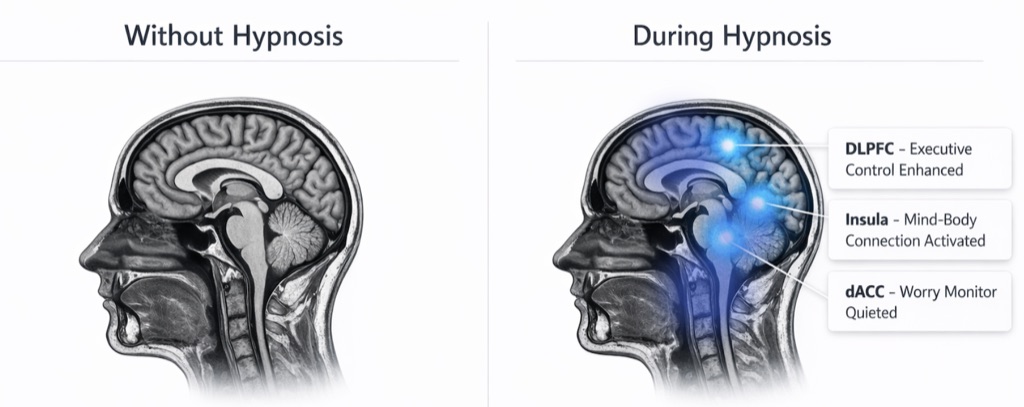
Regions from Stanford fMRI research on hypnosis (Jiang et al., 2017)
How much should you pay for a sleep app?
Most sleep hypnosis apps cost between $10 and $15 per month, or around $60 to $80 per year. That’s a fraction of what you’d pay for a single session with a qualified hypnotherapist. At Calgary Hypnosis Center, sessions run from $220 to $350, and we ask for a three-session commitment. That might sound steep, but it’s a completely different experience from an app. You get a personalized approach that targets the root of your sleep anxiety, not just a generic recording.
Free YouTube videos and cheap downloads are everywhere, but they rarely come from trained professionals. A 2024 systematic review found that only 20.2% of hypnosis apps had a developer trained in hypnosis, and just 7.7% claimed any evidence base (PubMed, 2024). When you pay for a reputable app, you’re more likely to get content designed by someone with real credentials. Still, even the best app can’t adjust in real time the way a therapist can. If you’ve tried everything and still lie awake with a racing mind, working with a hypnotherapist might be the missing piece.
I’ve seen clients come to me after spending months cycling through apps. They often say the same thing: the app helped a little, but it never stuck. That’s because chronic insomnia isn’t just about falling asleep—it’s about the fear of not sleeping. Apps can teach you relaxation, but they can’t help you reframe the deep beliefs that keep you wired at night. For that, you need a human guide. If you’re curious about what a real session looks like, here’s what to expect.
Cost isn’t just about money. It’s about time and energy. A $10 app might feel like a low-risk experiment, but if it fails, you’re back to square one. Investing in professional hypnotherapy means you’re not just buying a recording—you’re buying a tailored solution. And for many, that’s the difference between another sleepless night and finally waking up rested.
Who actually benefits from apps over a hypnotherapist?
I see the best results with people whose racing mind won't shut off at bedtime. If you lie there exhausted but wired, replaying the day or worrying about not sleeping, an app can guide you into a deeply relaxed state. A systematic review found that 56% of hypnosis apps target sleep, making it the most common focus (PubMed, 2024). But not every app is built the same—only 20.2% are made by someone trained in hypnosis, and just 7.7% claim any evidence base.
You might be a good fit if you've tried everything—melatonin, sleep hygiene, white noise—and still struggle. I hear this all the time: "I didn't expect much from an app, but it's been helping the most recently." Hypnosis isn't a magic cure, but it can quiet the bedtime anxiety that fuels insomnia. For complex or chronic issues, working with a hypnotherapist often brings faster, more tailored relief.
Skeptical? That's normal. Analytical folks sometimes need a few tries to let go. The key is finding an app with a voice and technique that clicks for you. If you're dealing with deeper anxiety or trauma-linked sleep problems, check out our page on hypnotherapy for anxiety. An app can be a great starting point, but it's not a replacement for professional care when things feel overwhelming.
Here are the signals that suggest a sleep hypnosis app could work for you:
- You fall asleep eventually but your mind races for an hour or more
- You wake up at 3 a.m. and can't get back to sleep
- You feel anxious or fearful about bedtime itself
- You've had some success with meditation or relaxation tracks
- You want a drug-free tool you can use every night
- You're open to learning self-hypnosis as a skill
Will hypnosis work for you?
Regions from Stanford fMRI research on hypnosis (Jiang et al., 2017)
When should you skip apps altogether?
If your racing mind feels more like a symptom of deeper anxiety or trauma, an app may not be enough. A 2026 systematic review found only 7.7% of hypnosis apps claim any evidence base, and just four have ever been in a clinical trial (PubMed, 2026). For complex insomnia tied to PTSD or panic, working directly with a hypnotherapist is safer and more tailored. I explain the key differences in our hypnotherapy app vs hypnotherapist guide.
You should also think twice if you have untreated sleep apnea or another medical sleep disorder. Hypnosis can relax the airway muscles, which might worsen apnea events. Always get a medical workup first. And if you are completely skeptical or unwilling to practice, an app will frustrate you. Self-hypnosis is a skill—it takes repetition, not a one-time listen.
Here are the clearest signals a sleep hypnosis app is probably not for you:
- You have diagnosed sleep apnea, restless legs, or narcolepsy and haven't seen a sleep specialist.
- Your insomnia is driven by unprocessed trauma, flashbacks, or severe anxiety attacks at night.
- You expect a single track to fix years of poor sleep without daily practice.
- You've tried multiple apps and felt nothing—your analytical mind may need a live guide to bypass resistance.
For those with a racing mind that won't shut off, apps can help, but only if you're ready to engage. If you need more support, our hypnotherapy for insomnia page explains how one-on-one work addresses the root patterns.
Will hypnosis work for you?
Regions from Stanford fMRI research on hypnosis (Jiang et al., 2017)
Apps vs live hypnotherapy: when does each one win?
I’ve seen many people start with a sleep hypnosis app because it’s affordable and convenient. But when I look at the research, I notice a big gap in quality. A 2024 systematic review of 168 hypnosis apps found that only 20.2% had a developer trained in hypnosis, and just 7.7% claimed any evidence base (PubMed, 2024). That means most apps are built without real clinical expertise.
When you work with a hypnotherapist, you get a personalized approach that an app can’t match. I tailor every session to your specific sleep struggles—whether it’s a racing mind or anxiety around bedtime. Apps use generic recordings, but a trained professional can adjust techniques in real time. This matters because a 2013 review of 407 hypnosis apps found none were tested for efficacy (Sucala et al. 2013, Int J Clin Exp Hypn).
Cost is another factor. A good app might charge $10–$15 a month, while a session with me runs $220–$350. But I’ve seen clients make more progress in three sessions than months of app use. If you’re curious about the difference, I’ve written more on hypnotherapy apps vs working with a hypnotherapist.
For complex issues like chronic insomnia, an app can be a starting point, but it’s no substitute for a qualified hypnotherapist. I’ve helped clients who felt “desperate for sleep” after trying every app and supplement. If you’re ready to move beyond one-size-fits-all tracks, you can book a free consultation to see if we’re a fit.
A 2024 systematic review of 168 hypnosis apps found that just 13 out of 168 apps included some claim of evidence-based treatment. This highlights the risk of relying on apps without clinical validation.
Source: PubMed, 2024
| Personalization | App uses generic recordings; may not match your specific sleep issue | CHC sessions are tailored to your unique sleep patterns and triggers |
|---|---|---|
| Credentials | Only 20.2% of apps have a hypnosis-trained developer (Scheffrahn et al. 2025 systematic review of hypnosis apps, Int J Clin Exp Hypn) | Danny M., RCH is a Registered Clinical Hypnotherapist with advanced training |
| Evidence | Only 7.7% of apps claim evidence-based treatment; few are tested in trials (Scheffrahn et al. 2025 systematic review of hypnosis apps, Int J Clin Exp Hypn) | CHC uses clinically validated techniques backed by research on hypnotherapy for insomnia |
| Support | No live guidance; you're on your own if it doesn't work | Direct, one-on-one support and adjustments over a 3-session commitment |
| Cost | $10–$15/month or one-time purchase; no professional oversight | $220–$350 per session; investment in lasting, personalized change |
Questions this page answers
How do I find the best hypnosis app for sleep?
Look for apps with creators who have verifiable hypnosis training and cite clinical studies. A 2024 review found only 20.2% of apps had trained developers (PubMed). Check for evidence-based claims and user reviews mentioning specific sleep improvements. Free trials let you test the voice and pacing before paying.
Does sleep hypnosis actually work for chronic insomnia?
Research shows hypnotherapy can increase deep sleep and reduce sleep onset time (Clear Minds). However, results vary. Some users fall asleep faster, while others need weeks of practice. For chronic insomnia, combining an app with professional guidance often yields better outcomes than an app alone.
Can hypnosis make my sleep anxiety worse?
Rarely, but it’s possible. If you have PTSD or trauma, certain imagery might trigger distress. Stop using the app if you feel more anxious. A trained hypnotherapist can adapt techniques to your needs, which an app cannot. Always consult a doctor if you have a mental health condition.
How long does it take for sleep hypnosis to show consistent results?
Most people need daily practice for two to three weeks to see consistent improvements. Hypnosis is a learned skill, not an instant fix. Some notice changes within days, while others take longer, especially if they’re analytical or skeptical. Patience and regular practice are key.
Is an app as effective as seeing a hypnotherapist in person?
Apps are convenient but lack personalization. A therapist tailors sessions to your specific sleep issues and mindset. A 2013 review found no apps were evidence-based at that time (PMC). For mild sleep troubles, an app may help, but for chronic insomnia, a therapist often provides deeper, lasting change.
What specific features make one sleep hypnosis app better than another?
Key features include creator credentials, evidence-based content, and techniques like progressive relaxation. Look for apps that explain the science, offer structured programs, and have calming voiceovers. User reviews often highlight whether an app helps with racing thoughts or broken sleep.
Are there any risks or contraindications for using sleep hypnosis with sleep apnea?
Yes. Hypnosis helps you fall asleep but doesn’t treat sleep apnea’s airway obstruction. Using it without proper apnea treatment could be dangerous. Always consult your doctor before using hypnosis if you have sleep apnea or any other sleep disorder.
How can analytical or skeptical people increase their success with sleep hypnosis?
Start with an app that educates you on the science, like Reveri. Understand that hypnosis is a natural state of focused attention, not mind control. Practice during the day when you’re less tired. If apps don’t work, a hypnotherapist can adjust techniques to bypass your critical mind.
Sleep hypnosis vs. CBT-i: which is better for insomnia?
Both can help. CBT-i targets thoughts and behaviors around sleep, while hypnosis directly addresses the subconscious mind. Some find hypnosis easier because it doesn’t require sleep restriction. Combining both often works best. Our [hypnotherapy vs. CBT](/hypnotherapy-vs-cbt) page explores the differences.
Is it worth paying for a hypnosis app or are free YouTube videos just as good?
Paid apps often provide structured programs, higher production quality, and evidence-based content. Free videos can be hit-or-miss and may not address your specific issue. If a free video works consistently, great. If not, investing in a reputable app or therapist may save you time and frustration.
I've seen too many people try app after app, only to feel more frustrated when the racing mind doesn't quiet down. The best hypnosis app for sleep is the one that actually works for you—and for most chronic insomnia, that means working with a trained professional who can tailor the approach to your mind. If you're tired of guessing, let's talk. See how Reveri and the other apps mentioned here compare in our full hypnotherapy app comparison.
Apply to work with us
We take on just 10 new clients a month. Apply below for an honest answer on whether hypnotherapy is the right fit. No packages, no pressure.
Only 2 spots left for August

Danny M.
Danny M. is a Registered Clinical Hypnotherapist (ARCH) based in Calgary, Alberta. His work focuses on the conditions hypnotherapy has the strongest track record with: anxiety, insomnia, chronic pain, and IBS. Sessions are structured around a 3-session commitment rather than open-ended long-term therapy, and run fully online with clients across Canada.
Last updated: 2026-05-23